Rubio's Modi Invite: U.S.-India Relations
Rubio emphasizes India's role in U.S. Indo-Pacific strategy.
Model Diplomat2 min readAsia
Rubio’s Modi Invite Signals a Fragile U.S.-India Reset
Rubio called India central to the Indo-Pacific, but the real test is whether Washington can turn a symbolic Modi invite into trade, energy and security gains.
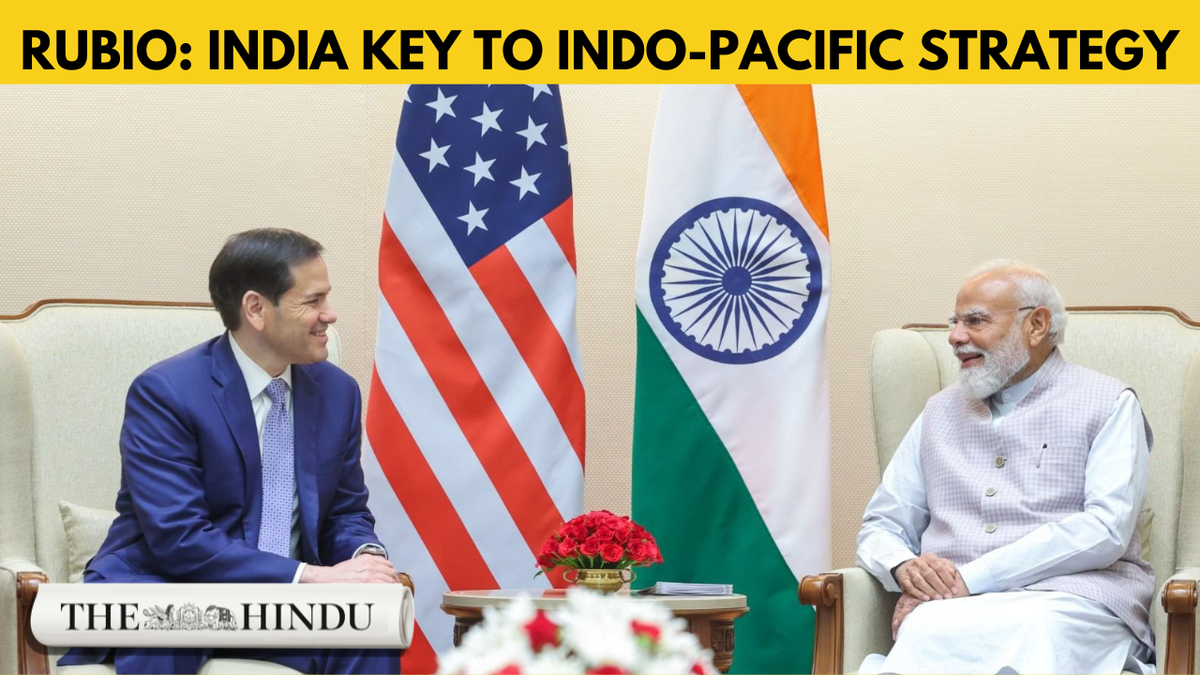
Marco Rubio used his meeting with Narendra Modi in New Delhi to do two things at once: reaffirm India’s strategic value to Washington and deliver an invitation from Donald Trump for Modi to visit Washington later this year, according to The Hindu. The two sides said they discussed defence, trade, technology, energy and connectivity, which is the standard language of a relationship both governments want to keep moving even after a rough patch.
Leverage is shifting back to economics
The politics are straightforward: the U.S. needs India in its Indo-Pacific architecture, but India is not buying alignment on cheap terms. Rubio’s public line — that India is “key” to America’s Indo-Pacific strategy — matters because it confirms where Washington still sees leverage: not in coercion, but in partnership against China, and in the ability to offer energy, technology and market access, as reported by CNA and
CNA.
That framing also reflects the damage done over the past year. CNA said the relationship had been battered by U.S. tariffs, by Washington’s warmer outreach to Pakistan and China, and by unresolved trade talks. In that context, the invitation to Washington is less a breakthrough than a pressure-release valve: a way to keep the top line positive while the harder bargaining continues.
For India, the benefit is obvious. Modi gets a fresh Oval Office channel, and New Delhi gets another reminder that the U.S. still wants India inside the core of its regional strategy. For the White House, the gain is more conditional: India can help hold the Indo-Pacific line, but only if Washington can stop the bilateral relationship from being dragged down by tariffs and energy disputes. That is why Rubio also pushed U.S. energy as a diversification tool for India, and why U.S.-India trade remains the real constraint, not the rhetoric. See also India on
Global Politics.
What this means for the Quad
The timing matters because Rubio is not only resetting the bilateral channel; he is also keeping the Quad alive. CNBC TV18 said Rubio highlighted the partnership as central to America’s Indo-Pacific strategy during the inauguration of the new U.S. embassy facility, alongside expanding defence, commercial and visa cooperation. That reinforces the broader message: the U.S. wants India embedded in a regional security network even as bilateral friction persists.
The key question is whether this becomes a substantive summit or just a photo-op. If Modi goes to Washington, watch for three decisions: a trade announcement, concrete steps on energy procurement, and language on technology and defence co-production. If those do not materialize, the invitation will have bought time, not momentum. The next date that matters is the planned Quad foreign ministers’ meeting, where both sides will have to show whether this reset has a policy payload, not just diplomatic choreography.
Discover more
India
BJP's Misunderstanding of Women's Quota Needs
The BJP's linking of the Women Reservation Bill to delimitation risks delaying women's empowerment in India, misreading the aspirations of female voters.

Conflict & Security
Drone Warfare Killing Aid Workers at Unprec
Over 1,000 humanitarian workers killed in three years as cheap armed drones collapse legal protections. Gaza, Sudan, Ukraine, and DRC see deliberate targeting of aid convoys and hospitals with zero prosecutions.

Global
World Normalises Taliban as Afghan Women Eras
UN data shows Afghan women erased from public life as Russia recognises the Taliban, EU hosts officials in Brussels, and ICC warrants for gender persecution go unenforced.
Conflict & Security
West Africa Food Crisis: Three Shocks in 2026
Conflict, climate extremes, and the Strait of Hormuz closure drive a severe food crisis in West and Central Africa, with fertilizer prices surging 80% and millions displaced.

