Trump's AI Order Delay Reveals White House Rr
Internal conflict over AI regulation in the Trump administration
Model Diplomat3 min readNorth America
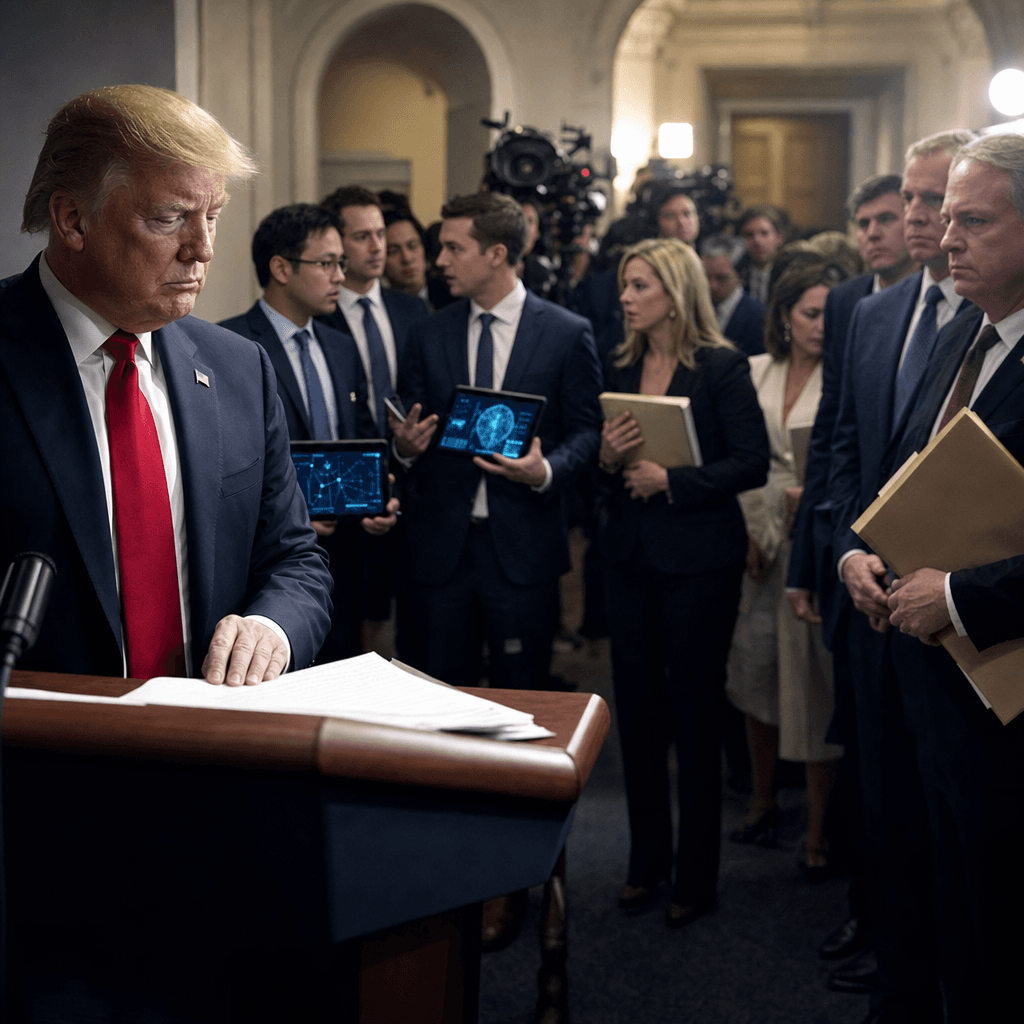
Trump’s AI U-Turn Exposes the White House Tech Split
Trump shelved an AI order after objecting to safeguards, revealing a fight inside the White House over whether Washington should move fast or police the frontier.
President Donald Trump postponed signing an executive order on artificial intelligence because he “didn’t like certain aspects” of the draft and did not want anything that could weaken the U.S. position versus China, according to The Globe and Mail and
CNN. That is the power dynamic in one sentence: the president is now the final brake on an order his own team had been preparing to showcase with tech CEOs at the White House (
The Globe and Mail,
CNN).
What the draft would have done
The order would have created a voluntary framework for AI companies to share advanced models with the government before public release, with one draft allowing up to 90 days of pre-launch review, CNN reported (CNN). It also would have set up a cybersecurity “clearinghouse” involving the Treasury Department and other agencies to identify vulnerabilities in unreleased models, and it called for more hiring at the U.S. Tech Force, CNN said (
CNN). Reuters, via
The Globe and Mail, reported the administration also wanted to use advanced models to improve cybersecurity for federal systems and critical sectors like banks and hospitals.
That mix explains why the issue split the building. The security side sees frontier models as a national-defense problem: Anthropic has warned that its Mythos system could supercharge cyberattacks, while the White House has already been working with major firms on early-access evaluations, according to Reuters and CNN (The Globe and Mail,
CNN). The growth side sees the same process as a regulatory choke point that could slow product launches and blunt U.S. competitiveness, Reuters reported (
The Globe and Mail).
Who wins, who loses
For now, the lighter-touch camp has the upper hand. That benefits the largest AI firms — OpenAI, Anthropic, xAI and their investors — because it preserves speed and limits the chance of a formal federal gatekeeping regime, Reuters and CNN reported (The Globe and Mail,
CNN). It also fits Trump’s broader posture: softer than Biden toward Big Tech, but still willing to invoke national security when it strengthens the case for U.S. dominance (
The Globe and Mail).
The losers are the agencies and officials trying to turn AI policy into a standing government process. CNN’s reporting shows Treasury, NIST-linked evaluation work and cybersecurity offices were all being pulled into the framework; The Washington Post has already described a separate internal battle over giving U.S. intelligence agencies a bigger role in evaluating AI models. That is the deeper divide: not pro- versus anti-AI, but which power center gets to define “safe enough” before a model reaches the market (
CNN,
The Washington Post).
What to watch next
Watch for the rewritten order, if it returns at all. The key question is whether the White House strips out the model-review language and keeps only a looser cybersecurity partnership, or whether it restores the 90-day review concept in softer form. Reuters said no new signing date had been announced, which means the next signal will come from the text — not the ceremony (The Globe and Mail,
CNN).
Discover more
Global Politics
Trump's Conflicting Messages on Iran War
Trump's mixed messages on Iran reflect a strategy of audience management, benefiting Tehran amid a complex geopolitical landscape.

Conflict & Security
Drone Warfare Killing Aid Workers at Unprec
Over 1,000 humanitarian workers killed in three years as cheap armed drones collapse legal protections. Gaza, Sudan, Ukraine, and DRC see deliberate targeting of aid convoys and hospitals with zero prosecutions.

Global
World Normalises Taliban as Afghan Women Eras
UN data shows Afghan women erased from public life as Russia recognises the Taliban, EU hosts officials in Brussels, and ICC warrants for gender persecution go unenforced.
Conflict & Security
West Africa Food Crisis: Three Shocks in 2026
Conflict, climate extremes, and the Strait of Hormuz closure drive a severe food crisis in West and Central Africa, with fertilizer prices surging 80% and millions displaced.