Trump Presses Xi on Iran
Trump seeks leverage over Iran through China amid trade tensions.
Model Diplomat3 min readAsia
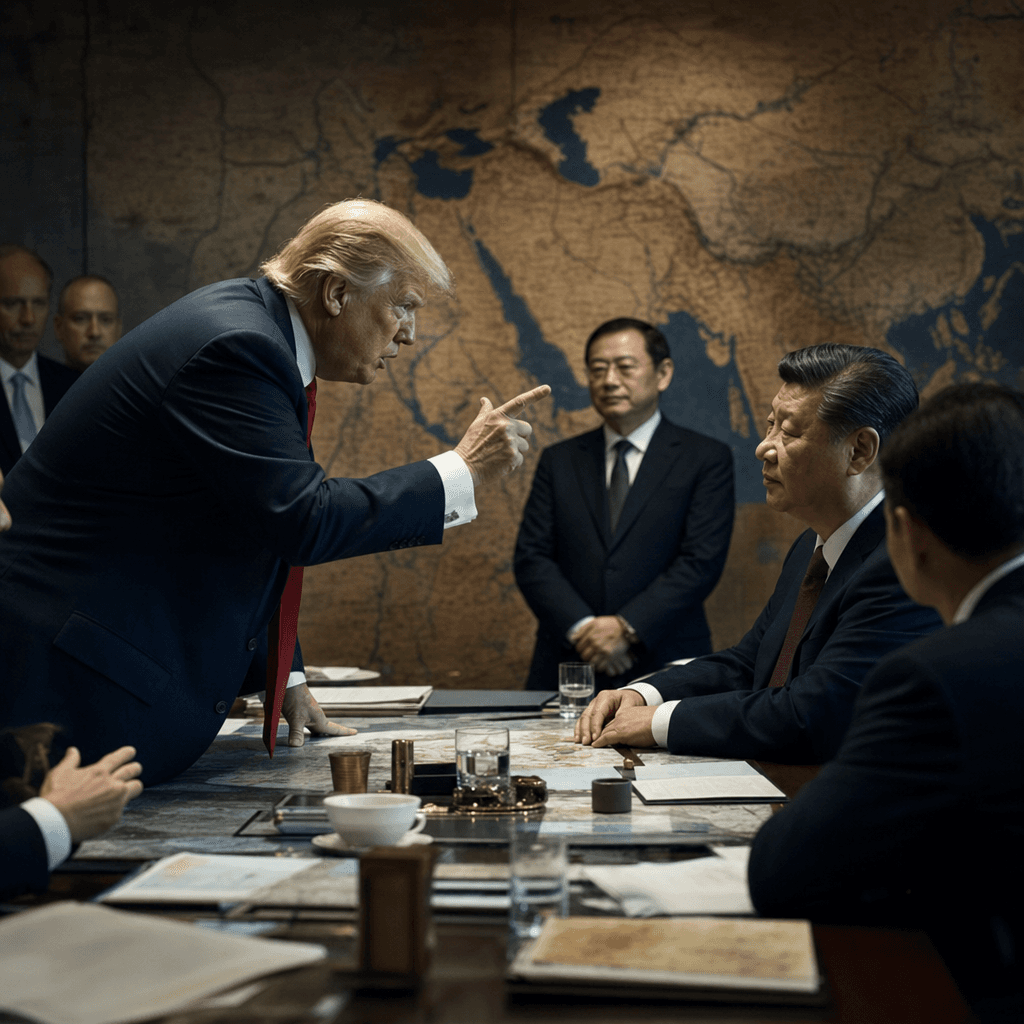
Trump Presses Xi on Iran — But China Holds the Cards
Trump is trying to turn Beijing into a lever on Tehran, yet China’s oil ties to Iran and its trade friction with Washington give Xi room to bargain.
Trump’s planned Beijing trip is being framed by the White House as a chance to “rebalance” the relationship with China, but the immediate agenda is narrower and more urgent: Iran. According to Al Jazeera, Trump will raise the Iran war with Xi Jinping while in Beijing, with US officials saying he may press China on Iranian oil sales and on purchases of dual-use goods that Washington says help Tehran sustain the fight. White House spokeswoman Anna Kelly said the trip is meant to restore “reciprocity and fairness,” while a senior administration official said Trump could “apply pressure” on China over Iran.
Power runs through the oil market
The leverage problem is simple: China buys the oil, so China can hurt Iran or cushion it. BBC reported this week that Chinese foreign minister Wang Yi told Iran’s Abbas Araghchi that reopening the Strait of Hormuz is an “urgent priority,” underscoring how much Beijing wants the waterway stabilized. But the same report says China imported about 1.38 million barrels a day from Iran in 2025 — roughly 12 percent of its crude imports — meaning Beijing is not just a mediator, it is a customer with skin in the game.
That gives Xi a counterweight to Trump’s pressure. Washington wants China to help choke off Iran’s revenue and, ideally, help normalize shipping through Hormuz. Beijing wants to avoid a deeper energy shock and protect access to discounted Iranian crude. If Xi offers anything useful, he will want something in return: tariff relief, a softer line on technology controls, or at least a pause in escalation.
Washington is using Iran to widen the China agenda
This is not just about Tehran. It is about whether Trump can force a broader bargain with Beijing from a position of crisis. The Washington Post reports that the White House sees the trip as a chance to raise trade, rare earths, and China’s ties to Russia as well as Iran. That is the real structure of the meeting: Iran is the pressure point, but trade is the prize.
The beneficiaries are obvious. If Beijing leans on Tehran, Trump can claim he used China to secure a strategic win and lower oil-market risk. If China uses the summit to buy breathing space on tariffs or sanctions, Xi gets to present himself as the indispensable middle power. The losers are Iran — which faces tighter scrutiny over oil exports — and any White House team that thinks one meeting can convert Chinese influence into obedience.
What to watch next
The key decision point is whether Trump asks for specific Chinese action — tighter enforcement on Iranian oil, a public push for Hormuz access, or new limits on dual-use trade — and whether Xi trades any of that for concessions on tariffs or export controls. Watch the Beijing talks this week, and watch for any Treasury move afterward against Chinese refiners or shipping networks. The meeting will tell you less about goodwill than about how much each side thinks it can extract under pressure.
Discover more
Conflict & Security
De la Espriella's Razor Win Resets US-Colomb
De la Espriella's razor-thin election win signals a reset in US-Colombia relations, reshaping security ties and the agenda under a Trump-aligned approach.
International Relations
Colombia's Razor-Thin Rightward Pivot
Colombia swings right as Abelardo de la Espriella narrowly wins the presidential runoff by under one percent, exposing a deeply divided and polarized nation.
Global Politics
Iran Demands US Enforce Ceasefire
Iran insists the United States must enforce a ceasefire in Lebanon to uphold the memorandum of understanding, raising pressure on Washington and Netanyahu.

Conflict & Security
Trump's Iran Deal Faces Bipartisan Backlash
Trump's Iran deal draws fierce criticism from both Republicans and Democrats, exposing deep political divides over the ceasefire and the terms of the agreement.