Israel's Death Penalty Bill: Ben-Gvir's Win
Knesset's vote marks a symbolic victory for the far right.
Model Diplomat3 min readMiddle East
Israel's Death-Penalty Bill Is Ben-Gvir's Latest Win
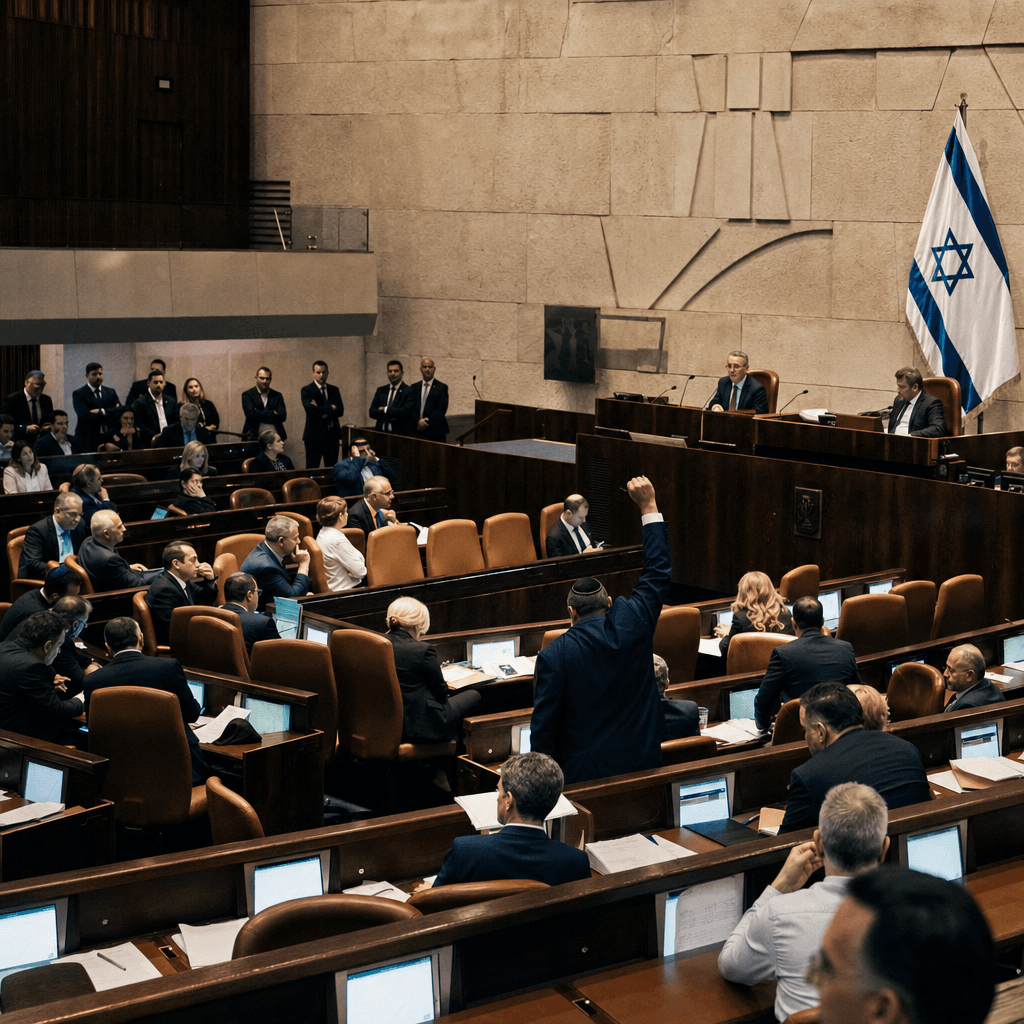
The Knesset’s 93-0 vote gives Israel’s far right a symbolic victory, but the real fight is over trial standards, Gaza detainees and the backlash.
Israel’s parliament has approved a bill that would allow a special military court to impose the death penalty on Palestinians accused of taking part in the Hamas-led attacks of 7 October 2023, and to broadcast key stages of the proceedings, according to BBC News Polska and
Al Jazeera. The vote was 93-0, with 27 lawmakers absent or abstaining, and it hands Itamar Ben-Gvir another coalition win after months of pushing tougher punishment for Palestinians,
BBC News Polska.
Why this is more politics than punishment
The immediate effect is narrower than the headlines suggest. This is not a general reintroduction of capital punishment in Israel; it is a special legal track for October 7 detainees, layered on top of a March law that already allowed death sentences for some Palestinian “terrorists” but did not apply retroactively, BBC News Polska and
Al Jazeera. That design matters. It shows the government is not just seeking deterrence; it is creating a forum built for a politically charged reckoning with October 7, where the spectacle of public proceedings is part of the message.
That message is for three audiences: Israeli voters who want punishment, coalition partners who need a visible win, and Hamas detainees who may now face a harsher negotiating environment. For readers following the wider file, this sits squarely inside Global Politics and the broader
Conflict track.
Who gains, who loses
Ben-Gvir and his Otzma Yehudit allies gain first. The law turns their signature demand into statute and lets them claim the state is responding forcefully to the October 7 atrocities, Al Jazeera. Netanyahu also gains coalition breathing room by accommodating a far-right partner without immediately changing battlefield realities.
The losers are the legal norms that still constrain Israel’s treatment of detainees. Rights groups cited by BBC News Polska and
Al Jazeera say the new framework weakens fair-trial safeguards and encourages convictions built on coerced testimony. That critique is not abstract. The bill targets a class of prisoners already held in a system where Gaza detainees are often in military custody, and where the state can now argue that extraordinary crimes justify extraordinary procedure. In practice, that shifts leverage away from defense counsel and toward prosecutors and the military court.
The next pressure point is outside the chamber
The diplomatic cost is already visible. Haaretz reported that Germany, France, Italy and the United Kingdom pressed Israel to drop the bill before the vote. That matters because the government is not just managing a domestic legal change; it is testing how far it can push allies while the Gaza war and the hostage file remain politically open.
What to watch next is procedural: whether prosecutors actually bring the first October 7 indictments under the new regime, how the special military court is staffed, and whether the government uses the law to harden its posture in any remaining hostage negotiations. If the first cases are filed quickly, the bill becomes more than a message. It becomes a template.
Discover more

Tech Policy
Iran's Cavern Manticore Targets Israel's IT
Cavern Manticore, an Iran-linked hacking group, targets Israeli IT vendors, prompting a shift in Israel's cybersecurity policy and legislative efforts.

Tech Policy
Iran's Cavern Manticore Cyber Threat
Iran's Cavern Manticore cyber group exploits Israeli IT networks, leading to new cybersecurity regulations in Israel.

Conflict & Security
UN Report: Israel Targets Palestinian Kids
A UN report accuses Israel of genocide against Palestinian children in Gaza, citing grave human-rights violations and intensifying scrutiny of the war's toll.

Conflict & Security
Israel's Annexation Strategy Escalates
Israel's annexation push goes public as minister Smotrich declares intent in Hebron, signaling an open strategy to entrench West Bank settlements and control.