Trump Ends Iran MoU Amid Gulf Tensions
US-Iran tensions escalate after tanker attacks.
Model Diplomat7 min readMiddle East
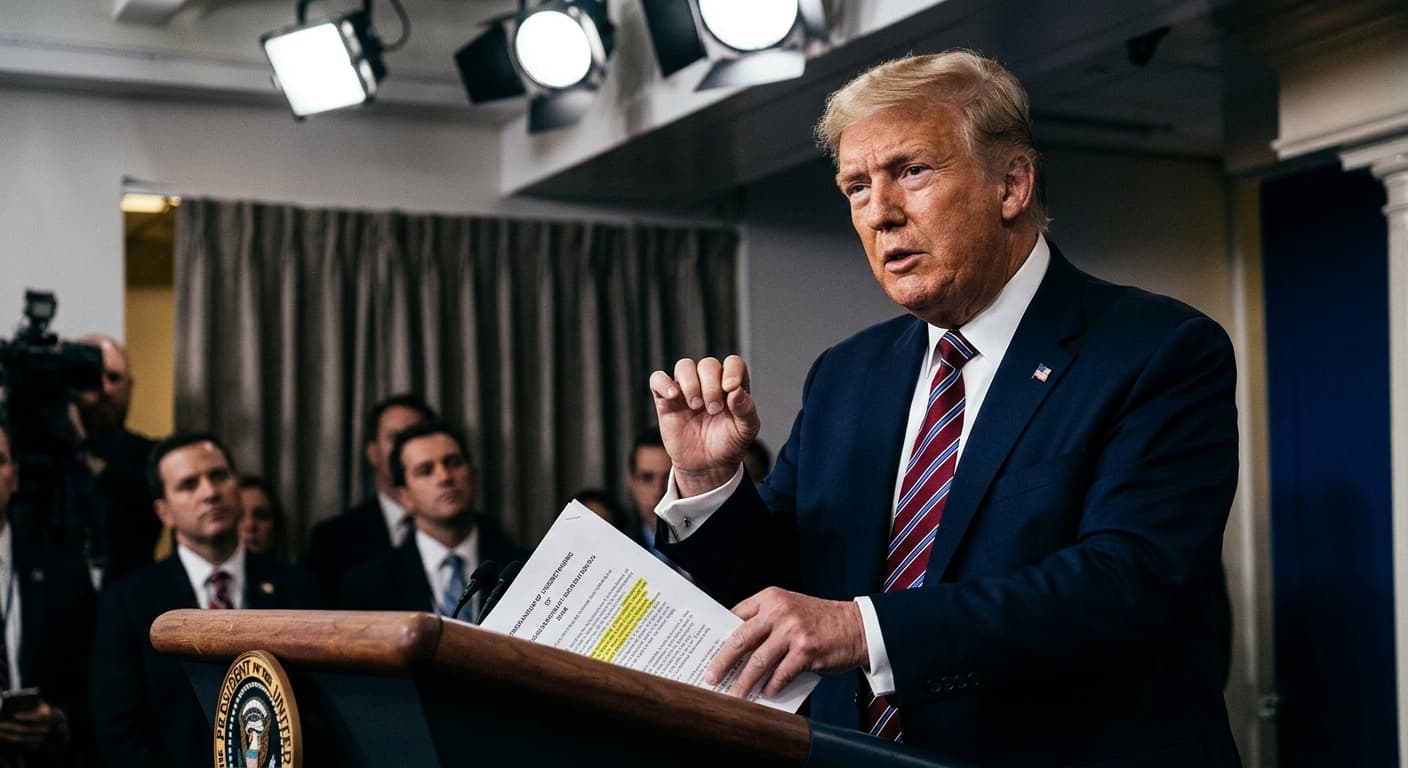
Trump kills Iran MoU as Gulf tanker war reopens Hormuz front
Trump declared the 14-point US–Iran memorandum "over" on July 8, 2026, after Iranian strikes on US bases in Bahrain and Kuwait — reopening the Gulf oil war and shredding the Islamabad framework.
President Donald Trump's declaration in Ankara on July 8, 2026 that the 14-point Islamabad Memorandum with Iran is "over" is not a rhetorical outburst — it is the moment Gulf-state diplomacy loses its shock absorber, because the deal that Riyadh, Doha and Abu Dhabi had quietly built their post-war security posture around no longer restrains either Washington or Tehran. Twenty-one days after Trump signed the memorandum in Versailles, Iranian projectiles have hit two Gulf tankers, US Central Command has struck more than 80 targets in southern Iran, and Iran claims 85 return strikes on American bases in Kuwait and Bahrain, according to reporting by Al Jazeera and
BBC News. Brent crude jumped more than 3% to $76 a barrel. The Gulf's bet on managed de-escalation just failed its first stress test — and the Gulf, not Washington, will pay the coupon.
The MoU was always about Article 5
Read the Islamabad text carefully and one clause carries most of the weight. Point 5 — released verbatim by the White House in June and published in full by the BBC — commits Iran to "make arrangements using its best efforts for the safe passage of commercial vessels with no charge for 60 days" through the Strait of Hormuz, and to negotiate the waterway's "future administration and maritime services" with Oman and other littoral states.
That last phrase is the trap door. Chatham House warned days after the signing that the wording amounts to an "implied licence" for Tehran and Muscat to charge fees for pilotage and traffic management, writing that "the 14-point document accommodates virtually the full catalogue of Iranian demands." The Doha Institute reached a similar conclusion: the memorandum "resembles a framework agreement" that lets Iran "transform its influence into a source of legitimacy and economic gain," according to
its June 2026 analysis.
Iran's chief negotiator, parliamentary speaker Mohammad Bagher Ghalibaf, said the day the ink dried that "the Strait of Hormuz will not return to pre-war conditions" and Tehran would "receive a fee for services." That is the dispute that produced Monday's tanker fires — not a spontaneous flare-up, but Tehran enforcing its interpretation of Article 5 on ships that used the US-designated southern lane instead of the Iranian-controlled northern route.
Gulf capitals lose their hedge
The GCC's response tells you what changed. On July 8, GCC Secretary-General Jasem Albudaiwi issued a statement, carried by Qatar News Agency, calling for the international community to take "a firm and deterrent stance" against Iran after the strikes on the Saudi tanker Wedyan and the Qatari LNG carrier Al Rekayyat. Bahrain's foreign ministry went further, invoking UN Security Council Resolution 2817 and the Islamabad MoU in the same breath and demanding "unrestricted freedom of navigation in the Strait of Hormuz without imposing any illegal tolls," according to a statement
published by QNA.
That language matters. Six weeks ago the Gulf states embraced the MoU precisely because it ended the shooting. As Al Jazeera reported in a June 25 feature on Gulf reactions, "all six GCC member states welcomed" the deal — despite Iranian missiles hitting their airports and hotels during the war — because ending the conflict outranked distrust of Tehran. Now those same capitals are citing the memorandum against Iran and demanding UNSC action. Pragmatism has flipped to escalation, and the Gulf's carefully constructed diplomatic ambiguity toward Iran has less room to operate.
The uncomfortable second-order effect is that the Gulf's hedge — a US security umbrella backstopped by simultaneous outreach to Tehran and Beijing — no longer covers the specific risk it was designed for. The Quincy Institute's Annelle Sheline told Al Jazeera on July 2 that US bases in the Gulf during the war "actually … had the opposite of a deterrent effect. These military bases became targets," according to her analysis. The July 8 Iranian claim of 85 strikes on the US Fifth Fleet headquarters in Bahrain and Ali Al Salem air base in Kuwait proves the point in real time. Every additional US strike now increases, not reduces, the physical risk to the host state.
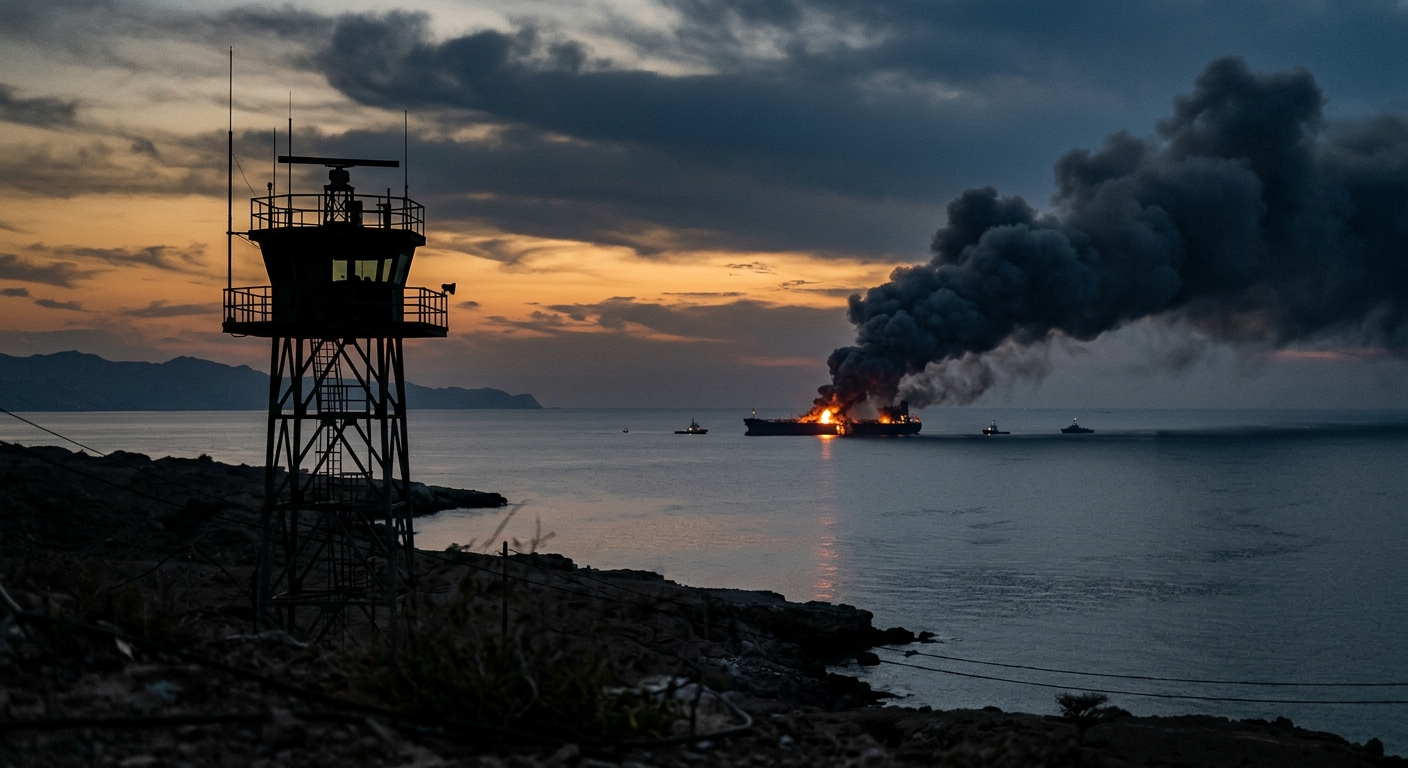
Oil is the leverage — and the vulnerability
The economic architecture of the memorandum unwound within hours. Late on July 7, the US Treasury's Office of Foreign Assets Control revoked the 60-day sanctions waiver on Iranian oil sales issued on June 21, using a wind-down instrument the agency has now labelled General License X1. Transactions will be blocked from 12:01 a.m. EDT on July 17, as first reported by
Al Jazeera.
OFAC has also promoted a May 1, 2026 alert — "Sanctions Risks of Iranian Demands for Strait of Hormuz Passage" — to the top of its Iran sanctions page, warning shippers that paying Iranian transit fees may itself trigger secondary sanctions. That single line collapses the commercial workaround Tehran was building. Iran had insisted on a northern route with mandatory Iranian coordination; the US Treasury has now made using it a sanctions risk.
The next escalation lever Trump named in Ankara is Kharg Island — the terminal that handles roughly 90% of Iranian crude exports, according to Argus Media, and about 94% in 2025 volumes per
Energy Intelligence. Trump told reporters the US could "take over" Kharg and there would be "nothing" Iran could do about it, per
NPR's coverage of the Ankara press conference. Iran has been fortifying the island since March with additional air defence systems and mines along landing zones,
OilPrice.com reported, citing CNN. A seizure would take out roughly 90% of Iranian export revenue at a stroke — and, according to regional officials cited in that reporting, "trigger wider retaliation across the Gulf."
The legal frame is fraying, and everyone knows it
There is a reason the memorandum was never a treaty. Chatham House's legal read notes the parties "jointly agreed" rather than formally bound themselves, avoiding US Senate advice and consent. The "final deal" was to be endorsed by a binding UN Security Council resolution within 60 days. That resolution now looks impossible before the August deadline. OSW, the Warsaw-based analytical centre, warned on June 26 that Iranian distrust was reinforced by "negative past experiences, including the US unilateral withdrawal from the 2018 nuclear agreement" and that both sides' "maximalist demands" could block a final compromise,
in its assessment.
The primary military record is equally telling. CENTCOM's public account of Operation Epic Fury, published on the Pentagon site, described the February 28 campaign as designed to "dismantle the Iranian regime's security apparatus." July's strikes on Qeshm Island, Bandar Abbas and Sirik hit exactly the categories — coastal surveillance, anti-ship missiles, IRGC fast boats — that would enable a permanent Iranian squeeze of the strait. Washington is not merely retaliating for tanker fires; it is trying to neutralise the capabilities that give Article 5 its teeth.
That is why Emmanuel Macron's intervention in Ankara — the French president agreed the Iranian strikes violated the MoU but urged that talks continue, per Al Jazeera's live blog — misreads the moment. The problem is not that talks paused; it is that the strategic bargain underneath them (Iranian control of Hormuz traded for sanctions relief and reconstruction cash) has become incompatible with what Gulf states, and now Washington, will publicly accept.
What to watch
- July 17, 2026 — the OFAC wind-down deadline; transactions with Iranian oil buyers become sanctionable in the US financial system.
- August 16, 2026 — the outer edge of the 60-day MoU window for a "final deal." Absent renewed talks, both sides will be in open breach of Point 3.
- NATO Ankara summit communiqué — watch whether allies signal support for further US strikes on Iranian energy infrastructure or press for a de-escalation off-ramp.
- Chinese and Indian tanker behaviour — the two largest buyers of Iranian crude will decide within days whether to keep loading at Kharg despite the waiver revocation. Their answer sets the ceiling on how much pressure Washington can actually apply.
Diplomat View
The MoU is not dead because Iran attacked ships or because Trump was rude in Ankara. It is dead because Article 5 tried to paper over an unbridgeable gap: Tehran treats Hormuz as sovereign leverage, the Gulf treats it as an international waterway, and Washington will not lose face by acquiescing to Iranian tolls after two of its Gulf partners' tankers were hit. The base case for the next 30 days is escalating tit-for-tat targeting Iranian oil export capacity — Kharg included — with the Gulf states publicly aligned with Washington but privately pressing for a Qatari-Omani rescue of the framework. Our forecast would revise if two conditions emerge: a UN Security Council resolution codifying non-Iranian management of Hormuz (unlikely with Russian and Chinese vetoes) or a private Saudi–Iranian channel — the one Beijing brokered in 2023 — producing an interim Hormuz protocol independent of Washington. Absent either, the Islamabad Memorandum will be remembered as the shortest post-war deal in modern Gulf history, and 2026 will end with the same problem it began with: no one has agreed who runs the strait.
The Bottom Line
Trump did not walk away from a peace deal; he confirmed what Chatham House, the Doha Institute and Gulf capitals had already flagged — that the Islamabad MoU's Article 5 could not survive Iran actually trying to enforce it. The Gulf, not Iran or the US, is the actor whose strategy has been most disrupted: its bet on hedging between Washington and Tehran while collecting the peace dividend is now stranded, and its own tankers are burning. What comes next will be decided less in Ankara than at Kharg Island — and by whether Beijing tells its refiners to keep buying.
Related: Conflict coverage.
Discover more
India
Romanian Coalition Party Demands PM Resign
Romania's Social Democrats withdrew from coalition, joining far-right AUR to topple PM Bolojan, risking €10 billion in EU funds by August 2026.
US Politics
House Ethics Committee Pushes Sexual Miscond.
The House Ethics Committee has shifted responsibility for sexual harassment settlement records to the Office of Congressional Workplace Rights, complicating disclosure efforts.

US Politics
SNAP Food Assistance Faces Legal Challenges
In 2026, SNAP faces stricter eligibility rules and mounting legal challenges, threatening food assistance for the millions of Americans who rely on the program.

Conflict & Security
Drone Warfare Killing Aid Workers at Unprec
Over 1,000 humanitarian workers killed in three years as cheap armed drones collapse legal protections. Gaza, Sudan, Ukraine, and DRC see deliberate targeting of aid convoys and hospitals with zero prosecutions.