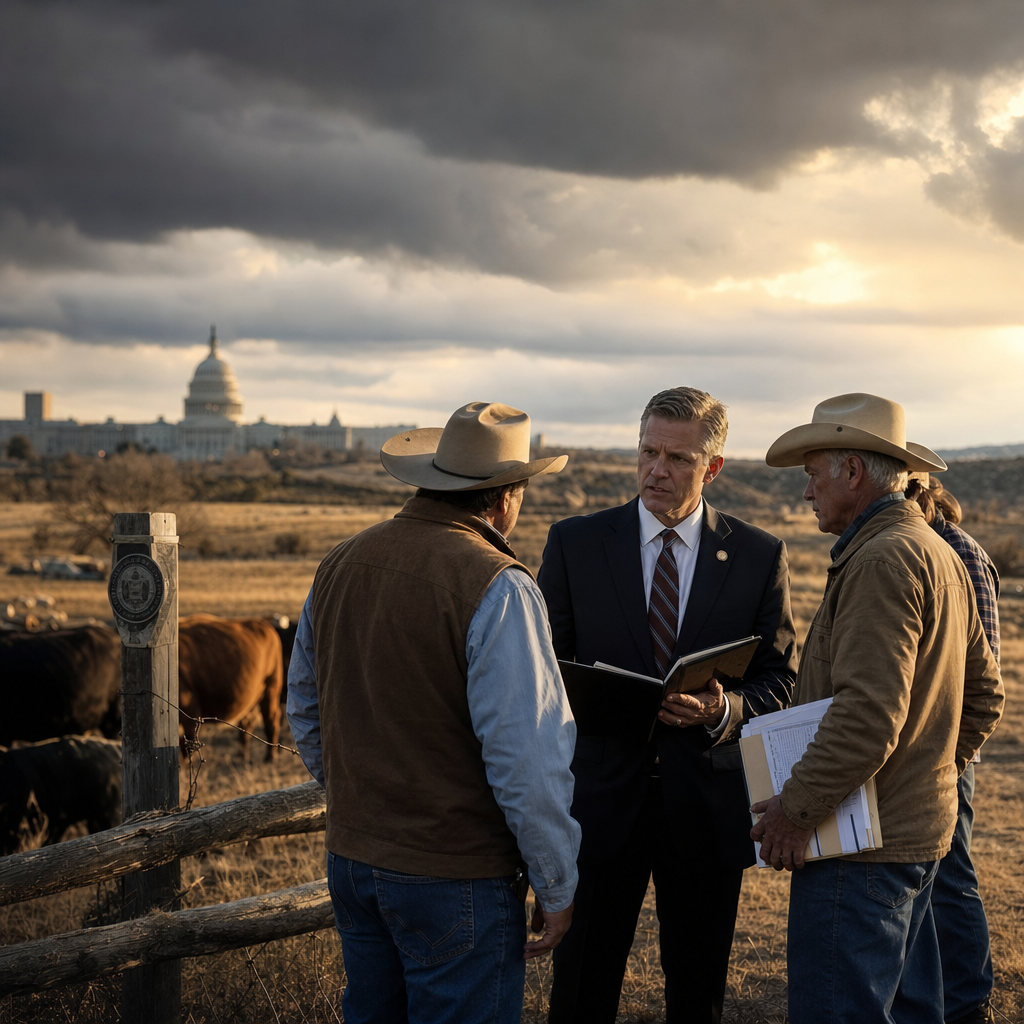
Interior’s Grazing Rewrite Exposes a Trump Ethics Risk
Karen Budd-Falen says she is shaping grazing policy that benefits her family’s ranching interests, turning a land-management rewrite into a conflict case.
A top Trump Interior appointee has acknowledged she is involved in changes to grazing policy that benefit ranching businesses like her family’s, according to a video cited by  The Washington Post. That puts Karen Budd-Falen, Interior’s associate deputy secretary and the department’s third-ranking official, at the center of a simple power problem: the agency that controls federal grazing rules is being steered by someone with direct ranching interests. For readers tracking the broader fight over federal lands, this lands squarely in
  US Politics and the management of United States public lands.
The leverage point is policy, not rhetoric
Interior decides who gets access to grazing on federal land, how permits are administered, and how aggressively the department rewrites the rules. Budd-Falen’s leverage comes from that bureaucratic position, not from public speeches.  Public Domain reported that she returned to Interior with a broad ethics waiver issued on March 11, even though her family’s ranching holdings and related BLM grazing interests create direct and imputed financial stakes in those decisions. The same outlet reported that, in her first Trump term, she signed a recusal barring her from any discussion of grazing matters.
That is the core issue for ethics watchers: Interior is not just enforcing old rules, it is actively changing them. If the department’s leadership is loosening grazing restrictions while a senior appointee with ranching ties helps shape the outcome, the appearance of private benefit is unavoidable, and the legal exposure follows.
Ranchers gain; conservation groups get squeezed
The policy direction matters because the administration is pushing grazing to the forefront.  Capital Press reported that Interior and USDA agreed in a March 31 memorandum to “bring federal land grazing to the forefront,” speed permitting, and expand grazing-related access across vast stretches of federal land. That is a clear win for ranching interests that want cheaper, faster, and more durable access to public forage.
It is also why the backlash is predictable. The same policy shift alarms conservation groups that see grazing expansion as a threat to habitat, endangered species, and existing land-use rules.  Center for Western Priorities has been warning for weeks that Budd-Falen’s prior work representing ranching interests and her current role at Interior create a standing conflict around grazing. The outlet also noted that she was already under scrutiny over her family’s ties to the Thacker Pass lithium mine, adding a second ethics shadow to the same official.
What to watch next
The next decision point is whether Interior releases the full waiver and whether the department’s inspector general or ethics office is forced into a formal review. Watch, too, for whether House Democrats escalate their requests for an internal probe, as Public Domain reported they already have in the Thacker Pass matter. If this becomes a sustained oversight fight, Budd-Falen is the test case for how far Trump’s Interior will go in merging policy execution with personal industry ties.