White House Eases AI Regulation for Big Tech
AI oversight shifts as White House eases regulatory approach
Model Diplomat3 min readNorth America
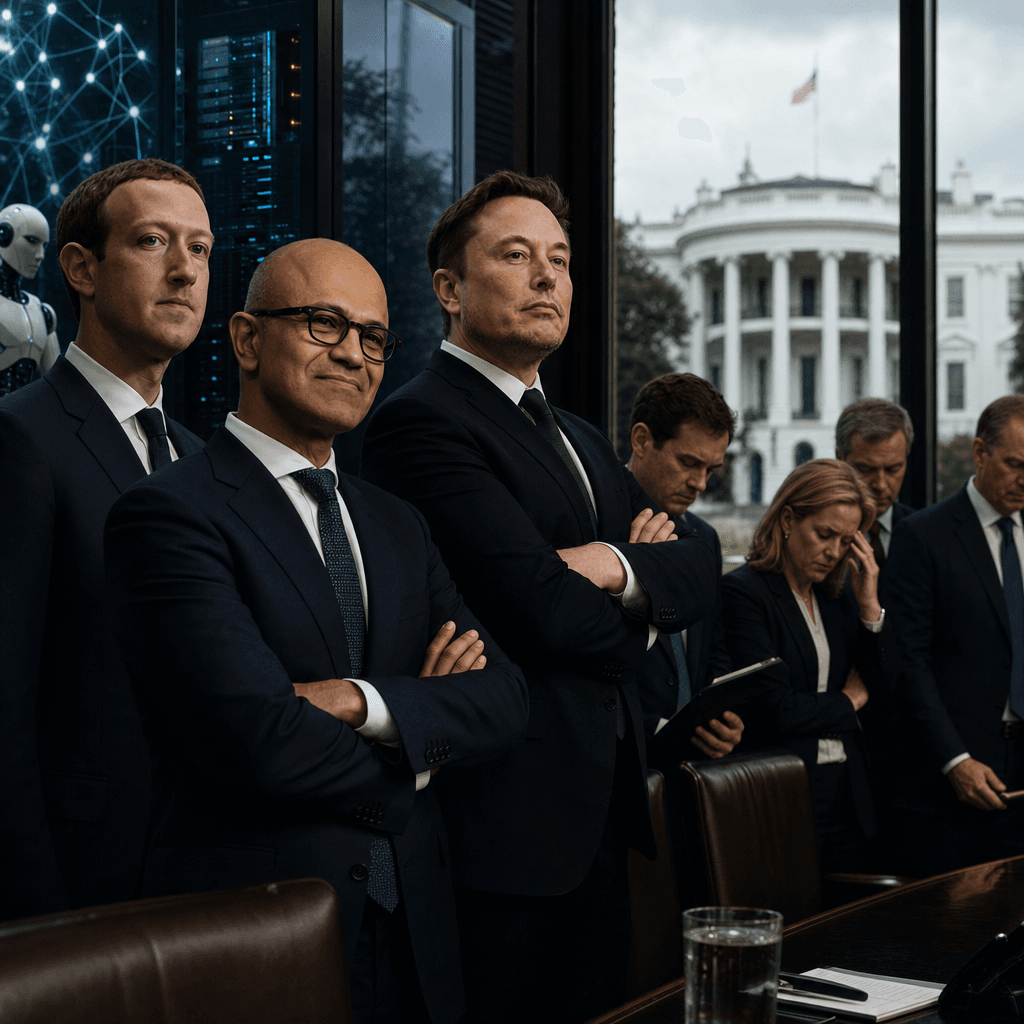
White House Pullback on AI Rules Gives Big Tech Breathing Room
The White House is softening its public line on AI rules while Commerce expands testing, leaving Washington with oversight in name only.
Politico says the White House is distancing itself from tighter AI regulation even as the Commerce Department’s standards arm begins pre-deployment testing of frontier models from Google, Microsoft, and xAI, according to The Washington Post and CNN. That split is the point: the administration wants the leverage of oversight without paying the political cost of a full regulatory regime. Politico,
The Washington Post,
CNN
Public restraint, private control
The White House is using a narrow message to keep its options open. CNN reported that a White House spokesperson said any policy announcement would come directly from the president and that discussion of executive orders was “speculation,” even as officials consult experts on a possible review process for new AI models. At the same time, NIST’s Center for AI Standards and Innovation is already evaluating unreleased systems, which means the real gatekeeping power is shifting to the Commerce Department rather than Congress. CNN,
The Washington Post
That matters because it lets the administration claim it is acting on national-security risk without endorsing a broader federal framework that would bind the industry. For United States policymakers, this is a classic executive-branch move: test, warn, and signal seriousness, but stop short of rules that would trigger a fight with Silicon Valley or Congress.
Who wins, who loses
The biggest immediate winner is frontier AI developers. Google, Microsoft, and xAI gain a government channel that can be framed as voluntary and technical rather than punitive, while avoiding the more open-ended liability that a formal licensing or approval regime would create. The losers are state regulators and AI-safety advocates, who had been hoping for clearer federal standards after Washington spent most of the last year arguing over whether states should fill the vacuum. CNN reported in March that the White House had already pushed a “single national framework” and sought to preempt state AI laws, underscoring how much the administration prefers centralized control to a patchwork of state rules. CNN,
CNN
The deeper political calculation is that the White House can now tell two audiences two different things. To the tech sector, it can say the federal government is not moving toward Europe-style regulation. To skeptics, it can point to model testing and national-security reviews as evidence that the administration is not ignoring the risk. That balance may satisfy neither camp for long, but it buys time.
What to watch next
The next decision point is whether the White House turns this into a formal executive order or keeps it as a set of agency-by-agency tests. Watch for any presidential statement on AI policy, and for whether Commerce broadens the testing regime beyond Google, Microsoft, and xAI. The other clock is political: if Congress does not move before the November midterms, NIST will keep becoming the de facto AI regulator by default. The Washington Post,
CNN
For more on the broader policy fight, see Global Politics.
Discover more
US Politics
Congress Targets AI Chatbot Access for Terror
House Chair Andrew Garbarino proposes government access to AI chatbot queries to combat terrorism, igniting privacy debates.

Global Politics
Iran Releases $12B Frozen Assets Deal
Iran secures $12 billion in frozen assets as US lifts oil sanctions under new deal.

India
India-UK Trade Pact Removes Tariffs on 99%
India's trade pact with the UK eliminates tariffs on 99% of exports, but execution risks loom.
International Relations
US Releases $12 Billion in Frozen Iranian Aid
The US releases $12 billion in frozen Iranian assets, signaling a shift in negotiations.