South Korea's 12.5% Tariff Trap Explained
Washington's new tariff strategy impacts South Korea's economy.
Model Diplomat8 min readAsia
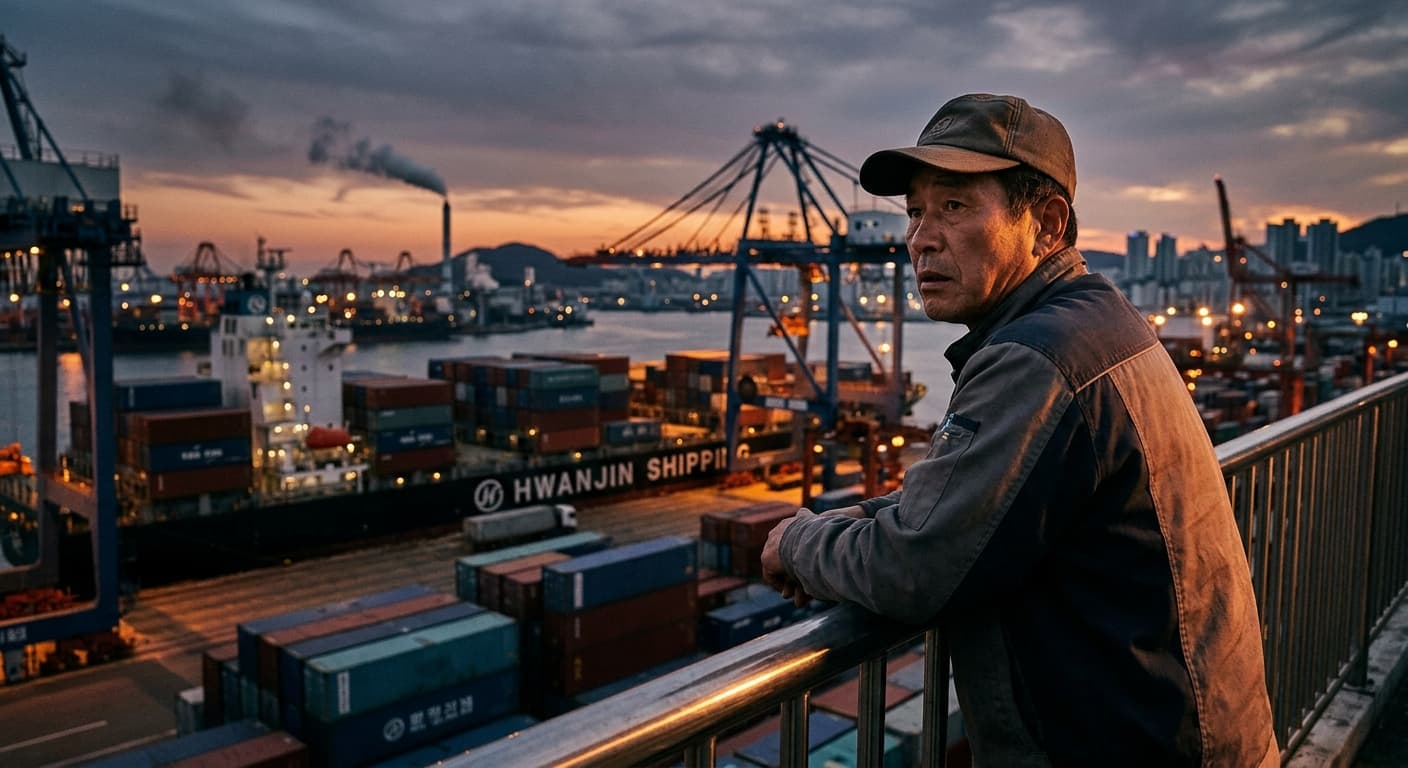
South Korea's 12.5% Tariff Trap: Washington Rewrites the Deal
After the US Section 122 global levy expires July 24, 2026, Washington plans to slot South Korea into a 12.5% Section 301 "forced-labor" tariff — a legal switch that could break the 15% ceiling Seoul thought it had bought for $350 billion.
The 12.5% additional tariff the Office of the United States Trade Representative proposed on June 2, 2026, is not really about forced labor — it is Washington's third attempt in six months to keep South Korea inside a tariff wall, and this time the legal ground is much firmer than the two authorities the courts have already gutted. Seoul paid $350 billion in investment commitments last November to cap its tariff at 15%. The Trump administration is now stacking a new Section 301 duty on top of the deal, using labor rights as the pretext and Section 122's July 24 expiry as the deadline. The switch turns a bilateral tariff ceiling into a floor — and gives Washington a permanent lever to extract more concessions on the Coupang probe, agricultural access, and the $20 billion first tranche of investment Seoul has yet to disburse.
The three-act legal shuffle
To understand why 12.5% matters, follow the statutory bouncing ball. On February 20, 2026, the Supreme Court ruled 6-3 in Trump v. V.O.S. Selections that the International Emergency Economic Powers Act does not authorize tariffs, killing the "Liberation Day" duties, according to the Congressional Research Service. Hours later, President Trump invoked Section 122 of the Trade Act of 1974 to impose a 10% global surcharge, which he briefly raised to 15%,
per the White House proclamation of February 24. That statute self-destructs after 150 days — the clock runs out on July 24, 2026.
Section 122 was always a bridge. The Court of International Trade already invalidated it in a narrow May 7 ruling for two importers and Washington State, finding the administration conflated a trade deficit with a balance-of-payments deficit, as CSIS documented. The Peterson Institute's read is blunt: "It is more likely that the tariffs will lapse in 150 days, prior to any such judgment," while the White House uses the window to "lay the procedural groundwork" to impose tariffs under other authorities,
PIIE argued in February 2026. That is precisely what happened.
The Section 301 forced-labor investigation, initiated March 12 on 60 economies, is the vehicle. USTR's June 2 Federal Register notice — Docket USTR-2026-0265 — proposes a two-tier structure: 10% for economies with their own forced-labor import bans or reciprocal trade commitments, and 12.5% for everyone else, per the notice published at 91 FR 34272. South Korea sits in the higher tier because USTR concluded Seoul has not enacted an import ban comparable to Section 307 of the US Tariff Act of 1930 or the Uyghur Forced Labor Prevention Act. USTR's own
Section 301 report states that South Korea's practices "are unreasonable and burden or restrict U.S. commerce" — the statutory magic words that unlock tariff authority.
The 15% ceiling was never a ceiling
Under the November 14, 2025 Joint Fact Sheet issued by the White House, South Korea's reciprocal tariff was capped at 15% in exchange for a $350 billion investment package announced during Trump's state visit to Gyeongju. Seoul understood that number as a bilateral ceiling covering the full stack of US tariff actions. Washington did not.
The gap between those two readings has already opened once. President Trump threatened on January 27, 2026 to raise the rate to 25%, citing the South Korean National Assembly's failure to ratify implementing legislation, Al Jazeera reported. Prime Minister Kim Min-seok had met Vice President JD Vance in Washington only days earlier, and the Observer Research Foundation notes that "even the hotline established immediately after the Prime Minister and Vice President's meeting failed to play a constructive role in resolving the issue,"
ORF wrote in early 2026. That episode revealed the alliance's communication architecture was decorative. The forced-labor tariff will test whether it has been repaired.
Victor Cha of CSIS put the trap plainly in a Brookings roundtable: "If Trump is already upset that the investments are not moving quickly enough, and he hears that the Korean side wants to reduce that number because of the Supreme Court ruling, he'll go ballistic," Cha told Brookings. His co-panelist Dukgeun Ahn, a former ROK trade negotiator, added that the investment MOU is legally independent of the tariff arrangements — meaning Seoul cannot recover leverage by slowing disbursements without inviting sectoral retaliation.
The Korea International Trade Association argues in its July 6 submission to USTR that 12.5% "lacks sufficient grounds" because Seoul is party to the ILO Forced Labour Convention and enforces domestic bans, per Yonhap News. KITA Chairman Yoon Jin-sik personally asked Ambassador Jamieson Greer to defer or lower the rate. The request is unlikely to move the determination — the docket is legal cover, not a negotiation.
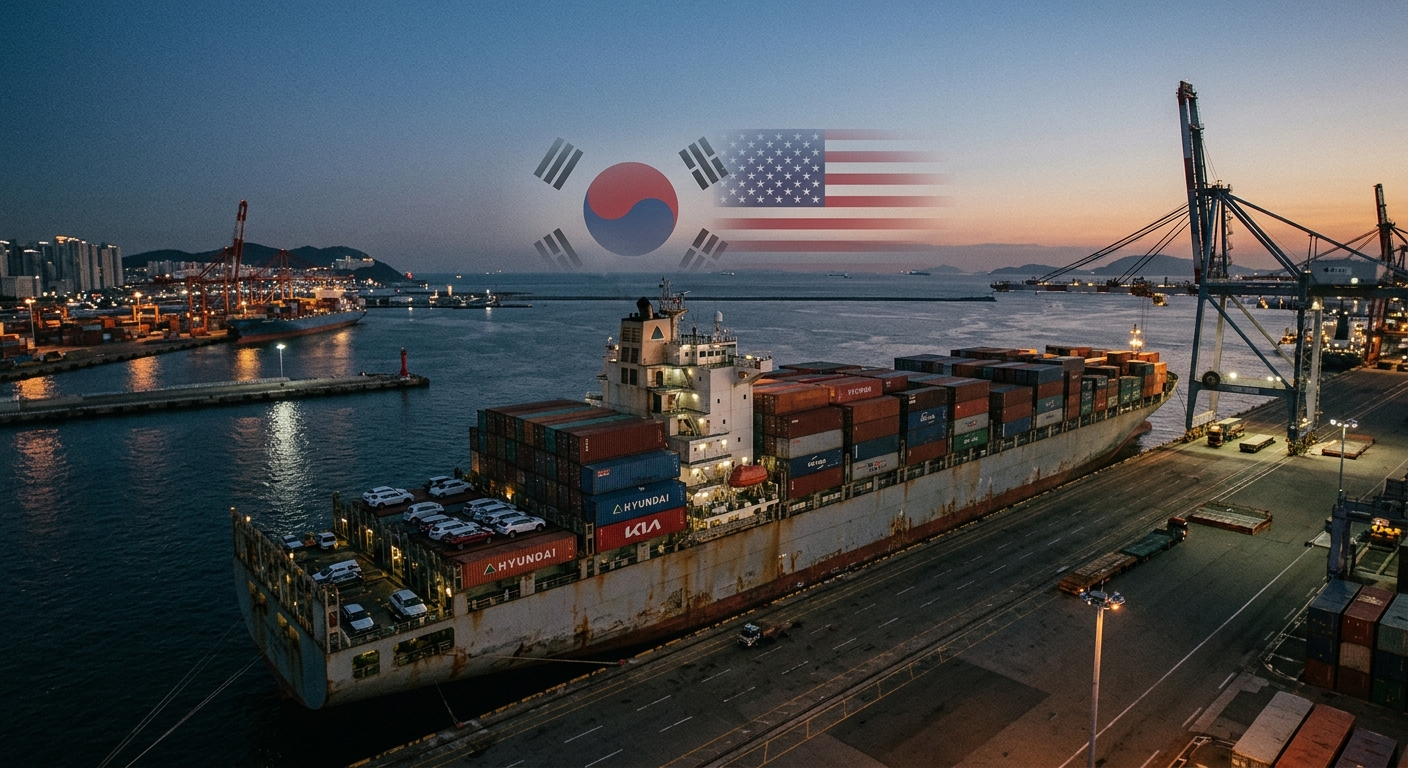
The geopolitical read: leverage, not labor
The Korea Institute for International Economic Policy, Seoul's premier trade think tank, argues in a July 2026 brief that the Section 301 process is being used to fill a "policy gap" created by Section 122's expiry rather than to remedy a genuine forced-labor problem. KIEP notes that USTR did not invoke the expedited procedure under 19 U.S.C. §2414(b) — meaning the record was built deliberately, on the ordinary sequence, to survive appellate review. Translation: Washington is done losing tariff cases and is stacking an administrative record thick enough to withstand the Federal Circuit.
The geopolitical implication runs three ways.
First, the alliance premium is gone. The Trump administration's June 8, 2026 steel proclamation explicitly lists the Republic of Korea alongside Japan, Switzerland, and Taiwan in a 50% Section 232 regime — treaty allies and non-allies are indistinguishable in the tariff architecture. A 15% floor rule for derivative articles now applies to Korean steel even when Column 1 duty rates would be lower. When Ahn observed that "the Korean side essentially has little choice but to simply accept," he was describing a structural asymmetry, not a negotiating tactic.
Second, the $350 billion becomes hostage capital. The White House Joint Fact Sheet caps annual disbursement at $20 billion — a concession Seoul won because the Bank of Korea feared won destabilization. But the Center for a New American Security reports that no specific investments under the program have yet been announced, and warns that "if implementation remains slow, there is a risk the Trump administration could respond by once again threatening new tariffs." The forced-labor duty creates a new reason for Washington to hold the disbursement schedule over Seoul: comply faster, or face 12.5% plus whatever excess-capacity duty USTR conjures next.
Third, the coming excess-capacity ruling is the real threat. USTR's parallel Section 301 investigation into "structural excess capacity" covers 16 economies including China, the EU, Japan, Mexico, and India, Brookings notes. South Korea is not currently on that list — but The Herald Business reports Seoul's Ministry of Trade fears the overproduction measure could stack on top of the forced-labor duty, potentially pushing the effective rate on Korean goods above 15% and breaking the November deal. Emily Kilcrease of CNAS
testified May 5, 2026 that unilateral capacity tariffs "will push that capacity elsewhere but are unlikely to address the underlying causes" — a warning USTR appears prepared to ignore.
The historical parallel: Nixon 1971, in reverse
Section 122 was written in 1974 as a direct response to President Richard Nixon's use of the Trading with the Enemy Act to impose a 10% import surcharge in 1971, as the American Enterprise Institute has documented. Congress meant to constrain the executive: 15% for 150 days, then bring it to the Hill. Fifty-two years later, the Trump administration used that same rein-in statute for exactly the sweeping tariff Congress designed it to prevent. Now, with the CIT and SCOTUS having narrowed both IEEPA and Section 122, USTR is falling back on Section 301 — the authority Trump used against China in 2018, and the only tariff instrument the courts have consistently upheld.
For Seoul, the parallel is that South Korea's exposure to US trade is far larger today than Japan's or West Germany's was in 1971. The OECD reports that trade accounted for 85% of South Korea's GDP in 2024, and Korean exports to the US fell from $127.8 billion in 2024 to $122.86 billion in 2025 — the first annual decline since 2016. Autos and auto parts account for roughly 31% of goods sent to the US,
according to the Congressional Research Service. A 12.5% forced-labor duty layered on the existing 15% auto tariff would push effective rates on Hyundai, Kia, and Hyundai Mobis exports toward levels last seen during the April–August 2025 shock.
Who benefits, who loses
The winners of the switch are not obvious. Japan gets equal treatment under the Section 232 regime but escapes the 12.5% forced-labor tier because Tokyo committed to reciprocal trade obligations. The Peterson Institute's Chad Bown has noted that this creates a structural preference for Japanese autos and steel derivatives in the US market — a marginal but real advantage that could reallocate roughly $2–3 billion in annual auto-parts trade from Ulsan-based suppliers to Aichi-based ones.
The losers are more concentrated. South Gyeongsang Province, whose auto industry is more US-dependent than Ulsan's, KIET has estimated, sits directly under the compounded rate. Steelmakers POSCO and Hyundai Steel already absorb 50% Section 232 duties; a Section 301 stack would tip more product below break-even. And Coupang — nominally a South Korean e-commerce company but headquartered in Seattle — is now a hostage in the House Judiciary Committee inquiry into Seoul's data-breach probe, which USTR reportedly uses as leverage in canceling the December 2025 KORUS joint committee meeting,
per CRS.
What to watch next
- July 24, 2026: Section 122 surcharge expires. Watch whether USTR issues the final Section 301 determination the same day or leaves a short gap that would trigger customs chaos.
- Post-hearing rebuttal comments: due five days after the last day of the July 7–9 hearings. USTR generally must implement within 30 days of determination, so a late-July or early-August effective date is the likeliest scenario.
- Federal Circuit ruling on Section 122: an appeal from the May 7 CIT decision. A broad affirmance would refund an estimated $35–50 billion in duties, but would not affect Section 301 tariffs, which rest on a separate statutory theory.
- National Assembly disbursement vote: the first $20 billion tranche has not been released. Any delay past September will likely draw another Truth Social ultimatum.
Diplomat View
The 12.5% number is the price South Korea will pay for having negotiated with the wrong statute. Seoul's 2025 deal was built to blunt IEEPA — and IEEPA no longer exists. The Trump administration has since discovered that Section 301, with its administrative record and its long history of surviving judicial review, is the durable tariff authority it always needed. Expect Washington to finalize the forced-labor duty at 12.5% on Korean goods by early August, to open a second Section 301 investigation into South Korean digital policies before October, and to use both as leverage in a renegotiation of the $350 billion package rather than accept Seoul's current implementation timetable. The forecast changes only if the Federal Circuit issues an expansive ruling striking down Section 301 as applied here — legally unlikely — or if President Lee Jae-myung's Democratic Party loses its supermajority in a snap dynamic before the April 2028 general election, which would gut Seoul's ability to legislate faster disbursement. Neither is on the near horizon. The alliance holds; the tariff wall stays up. *
Discover more

US Politics
SNAP Food Assistance Faces Legal Challenges
In 2026, SNAP faces stricter eligibility rules and mounting legal challenges, threatening food assistance for the millions of Americans who rely on the program.
US Politics
House Ethics Committee Pushes Sexual Miscond.
The House Ethics Committee has shifted responsibility for sexual harassment settlement records to the Office of Congressional Workplace Rights, complicating disclosure efforts.
India
BJP's Misunderstanding of Women's Quota Needs
The BJP's linking of the Women Reservation Bill to delimitation risks delaying women's empowerment in India, misreading the aspirations of female voters.

Conflict & Security
Drone Warfare Killing Aid Workers at Unprec
Over 1,000 humanitarian workers killed in three years as cheap armed drones collapse legal protections. Gaza, Sudan, Ukraine, and DRC see deliberate targeting of aid convoys and hospitals with zero prosecutions.