Siddaramaiah Courts Anti-SIR Pressure in Karnataka
Civil society wants Karnataka to resist electoral roll revision; Siddaramaiah is keeping the option open, but not yet committing.
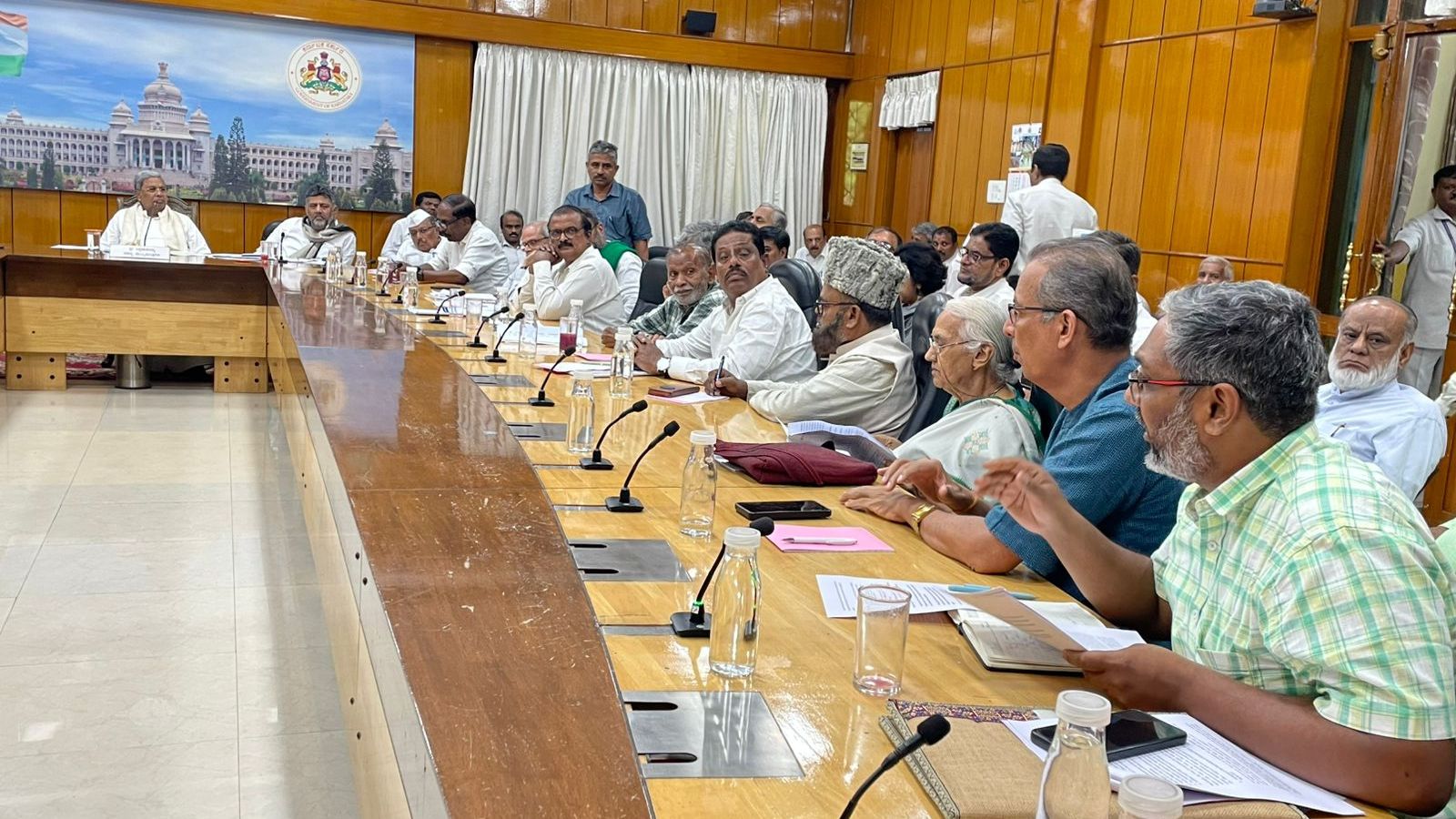
Chief Minister Siddaramaiah’s meeting with civil society groups opposing the Special Intensive Revision (SIR) of electoral rolls is less a policy decision than a signal that the Congress wants to own the voter-roll fight without locking itself in. At Friday’s meeting in Bengaluru, the groups — including the “My Vote, My Right” umbrella — asked the state to pass an Assembly resolution, file objections with the Election Commission, set up legal teams and voter helpdesks, and even consider paper ballots; ministers including Priyank Kharge, Lakshmi Hebbalkar, Santosh Lad, Sharanprakash Patil and H.K. Patil were present, according to The Indian Express and The Hindu ( The Indian Express,
  The Hindu).
The politics here are straightforward: civil society wants an upfront state confrontation with the Election Commission, while Siddaramaiah is buying time. Delegation members said the chief minister would “discuss” the issue and revert later; the campaign later said the meeting mainly foregrounded steps to reduce deletions rather than a commitment to oppose SIR outright (The Indian Express, The Hindu).
Why the state is under pressure
The opposition is not coming from a fringe. More than a dozen representatives attended the Bengaluru meeting, and the broader campaign has already drawn over 300 signatories, including retired judge B. Sudarshan Reddy, actor Prakash Raj and activist Teesta Setalvad, who called SIR “exclusionary, undemocratic, non-transparent, and unscientific” in a joint statement (The Hindu). That matters because the critique is framed around disenfranchisement, not administration. The groups argue that migrants, Dalits, Adivasis, women and daily-wage workers are the most exposed to deletion if the revision is rushed ( ETV Bharat).
That framing gives the Congress an opening. If the party is seen as defending the franchise, it can turn an administrative process into a rights issue. If it overplays the hand — for instance, by formally confronting the EC without a wider legal strategy — it risks looking reactive and setting up a clash it may not win.
Why Siddaramaiah is hedging
The chief minister’s caution is rational. The state is not due for Assembly polls until 2028, which means there is no immediate electoral incentive to escalate unless the issue becomes a broader Karnataka campaign theme (The Hindu). At the same time, Congress leaders are clearly watching West Bengal, where they believe voter deletions during SIR hurt the Trinamool Congress, and that example is shaping the argument in Bengaluru (The Hindu, ETV Bharat).
For Siddaramaiah, the leverage is in delay. He can signal concern, ask officials to study safeguards, and avoid a direct institutional fight with the Election Commission until the legal and political costs are clearer. That also keeps the government from being boxed into a headline-grabbing resolution it may not want to defend later.
What to watch next
The key question is whether Karnataka moves from discussion to action: an Assembly resolution, a cabinet statement, or a formal submission to the EC. The next decision point is inside the state government, not on the street. If Siddaramaiah does nothing after this meeting, civil society will say he blinked; if he escalates, Karnataka becomes a test case for how far a state can push back against the EC on voter-roll revision. Watch the government’s reply in the coming days and any follow-up cabinet discussion first flagged by ministers this week (The Indian Express, The Hindu).