Rubio Calls for European Support on Iran
U.S. seeks European support amid rising tensions with Iran.
Model Diplomat3 min readEurope
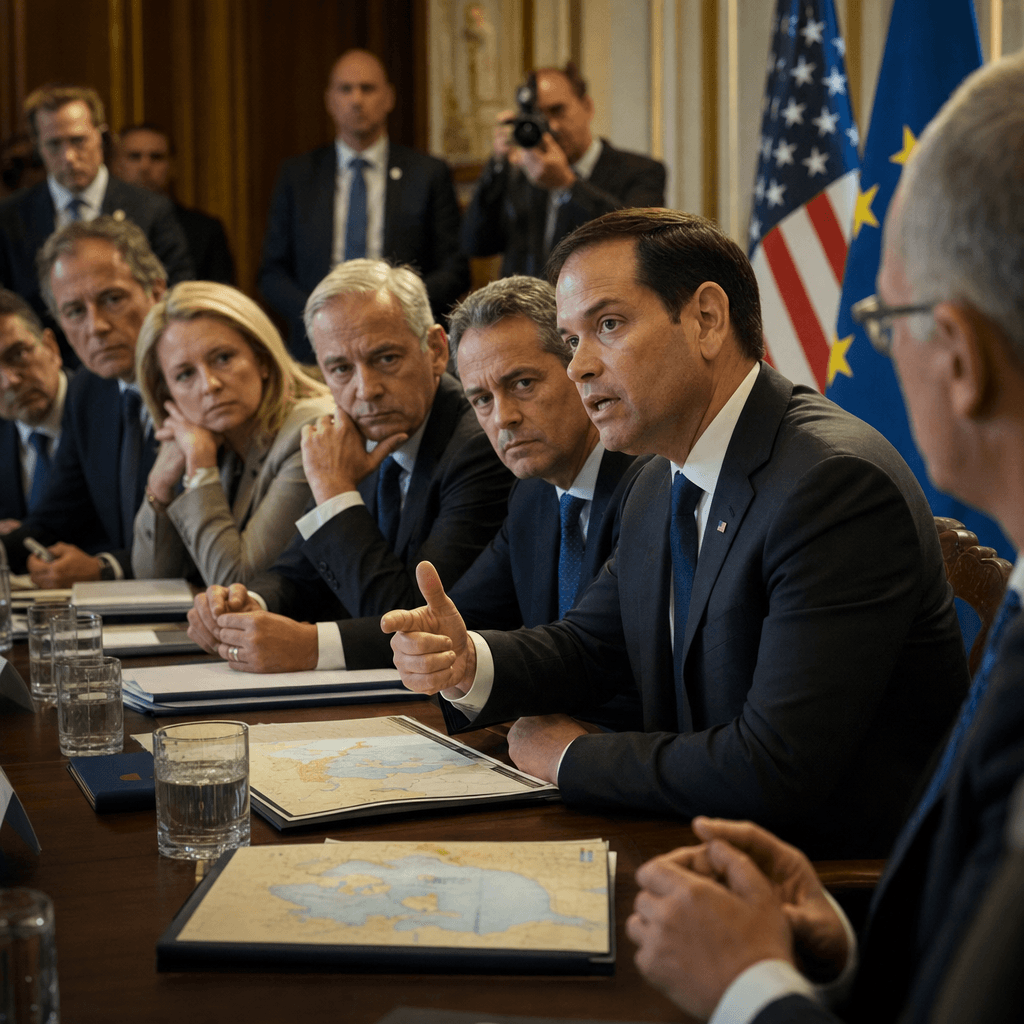
Rubio Presses Europe to Share the Iran War Burden Now
Washington wants ships, basing and political cover from Europe on Iran, but allies are using the same crisis to push back against U.S. pressure.
Rubio is telling Europeans they can no longer treat Iran as a U.S.-only problem. In Rome this week, the secretary of state is trying to keep allies aligned while pushing them to contribute more to the maritime and diplomatic response to Tehran, after transatlantic tensions widened over the war, access to bases and the Strait of Hormuz (France 24,
RFE/RL).
Washington is turning burden-sharing into a loyalty test
Rubio’s message is not just about Iran; it is about who carries the costs of U.S.-led security order. In Munich, he said the United States does not want to end the transatlantic partnership, but it does want allies to “invest more in defence,” while also calling the UN powerless to restrain Iran’s nuclear programme (BBC). That gives Washington a simple line: Europe wants the alliance, so Europe should pay into it.
The harder edge is coming from the Pentagon and Trump’s circle. A Reuters report carried by Al Jazeera said Defense Secretary Pete Hegseth told Europeans that “the time for free-riding is over” and that the Strait of Hormuz is “much more their fight than ours,” after Trump urged NATO navies to help keep the waterway open (Al Jazeera). That matters because it shifts the issue from diplomacy to operational burden: ships, overflight rights and political cover, not just statements.
Europe’s leverage is real, but limited
Europe still has leverage because the crisis hurts it more directly than the United States. The Strait of Hormuz is a trade and energy chokepoint for European economies, and France is already positioning a naval mission there to restore confidence among shipowners and insurers (Al Jazeera). That gives Paris and London a chance to shape the mission rather than simply endorse Washington’s line. For the wider alliance picture, see
Global Politics.
But Europe’s leverage is mostly defensive. Italy has tried to walk a careful line, pushing for negotiations while warning that an Iranian nuclear weapon is a red line, and Washington has already been irritated by Rome’s refusal to let U.S. aircraft use a Sicilian base for the war effort (RFE/RL). Spain, meanwhile, has become a symbol of allied resistance to U.S. demands, with Washington reportedly considering punitive steps over its unwillingness to support operations against Iran (
Al Jazeera).
The result is a familiar but sharper bargain: Europe wants to avoid being dragged into escalation, while Washington wants enough European participation to make the campaign look collective, not unilateral.
What to watch next
The key decision point is whether Rubio leaves Rome with something concrete: ships, basing access, overflight rights or a joint statement that gives the U.S. coalition cover. If he does not, expect more public pressure on European capitals and more talk of troop repositioning in Germany, Italy and Spain, where U.S. leverage is easiest to threaten and hardest to use (RFE/RL,
BBC).
Discover more

Global Politics
US Seizes Iranian Ship, Tensions Surge
The US seizure of the Iranian ship Touska highlights a shift in control over the Strait of Hormuz, favoring Iran's strategic position.
Global Politics
Trump's Conflicting Messages on Iran War
Trump's mixed messages on Iran reflect a strategy of audience management, benefiting Tehran amid a complex geopolitical landscape.

Conflict & Security
Drone Warfare Killing Aid Workers at Unprec
Over 1,000 humanitarian workers killed in three years as cheap armed drones collapse legal protections. Gaza, Sudan, Ukraine, and DRC see deliberate targeting of aid convoys and hospitals with zero prosecutions.

Global
World Normalises Taliban as Afghan Women Eras
UN data shows Afghan women erased from public life as Russia recognises the Taliban, EU hosts officials in Brussels, and ICC warrants for gender persecution go unenforced.