Biden Backs Red States' Anti-Immigration Laws
Biden's DOJ challenges red states on immigration laws.
Model Diplomat8 min readUnited States
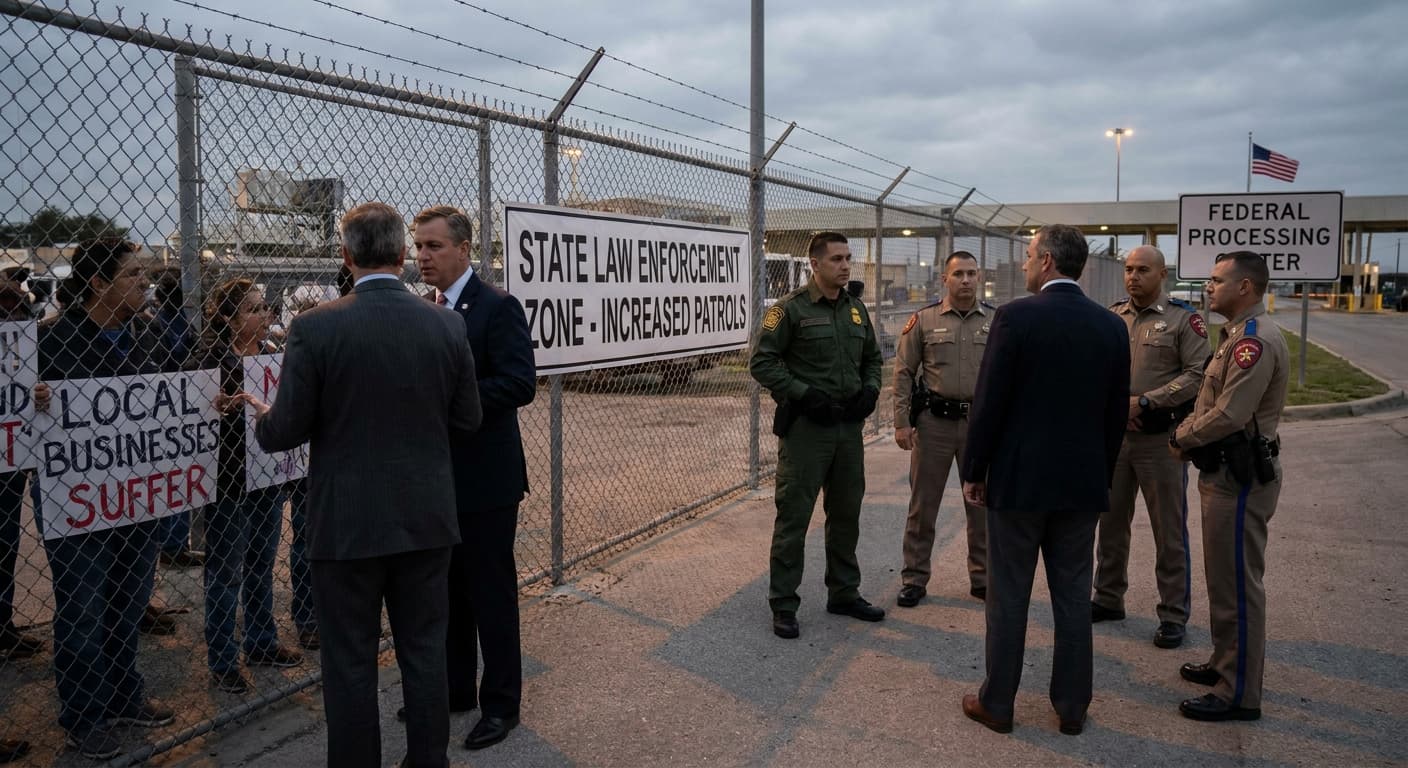
Biden Backs Red States on Immigration — Everywhere But Court
Biden's DOJ sued Texas, Iowa and Oklahoma over their anti-illegal-immigration laws. His own asylum crackdown validated the politics behind them — and Trump inherited both.
On June 3, 2024, President Joe Biden signed Proclamation 10773, "Securing the Border," suspending most asylum claims once daily southwest-border encounters averaged 2,500 for a week — invoking the same Immigration and Nationality Act authorities Donald Trump had used for the 2017 travel ban. Ten days earlier, his Justice Department was in federal court in New Orleans arguing that Texas's SB4 was an unconstitutional intrusion on federal immigration authority. That contradiction — suing Republican states over immigration enforcement while adopting Republican-style enforcement in the White House — is the through-line of Biden's late-term immigration policy. The result was not a political rescue but a durable rightward consensus that Trump inherited intact in January 2025, and that Texas, Florida and other red states are now operationalizing on the ground.
The headline is deliberately provocative. Biden's DOJ never legally backed SB4-style laws — it sued to block them, and won injunctions in every circuit that has ruled. But the policy stance the White House took by the summer of 2024 — deterrence, expedited removal, restricted asylum access — legitimized the enforcement-first frame that Governors Greg Abbott, Ron DeSantis and Kim Reynolds had built their state laws around. That is the "back" that matters politically, and it is the one Trump's DOJ is now cashing in.
The paradox in one paragraph
Biden's Justice Department opened three simultaneous fronts against red-state immigration laws in 2024. It sued Texas over SB4, the law that criminalized illegal entry as a state offense and empowered Texas judges to order removal to Mexico. It sued Iowa over a nearly identical statute signed by Governor Kim Reynolds. And, as Fox News reported, it threatened Oklahoma Governor Kevin Stitt with the same treatment over HB 4156. In each case the legal argument was identical: under Arizona v. United States (2012), Congress occupies the field of entry and removal. In its brief to the Fifth Circuit, the
U.S. government wrote that SB4 would "upset the status quo between the United States and the States in the context of immigration that has existed for almost 150 years."
Yet in the same period Biden moved decisively onto the states' policy ground. He endorsed a Senate border deal that would have automatically shut the border at 5,000 daily encounters, calling it "the toughest and fairest set of reforms" in decades — and, after Trump killed it, issued the June 2024 asylum proclamation unilaterally. Semafor's Ben Smith quoted a former Biden aide saying flatly,
"He's using tools that Donald Trump used." Al Jazeera called it a
"rightward lurch", and Human Rights Watch had already warned in 2023 that Biden's post–Title 42 asylum rule
"recycled one Trump policy after another."
The legal wall — and why it barely mattered
The doctrinal case against the state laws was overwhelming. The Fifth Circuit's stay opinion in United States v. Texas, authored by Chief Judge Priscilla Richman — a George W. Bush appointee — concluded Texas was unlikely to succeed on the merits because SB4 attempted to regulate "the entry, admission, and removal of noncitizens," territory the court described as "exclusively a federal power" for "nearly 150 years." A federal court in Iowa enjoined SF 2340 within weeks of enactment. Oklahoma's HB 4156 was blocked before it took effect. In July 2025,
NPR reported, the Supreme Court left in place a lower-court order blocking the criminal-entry portions of Florida's 2025 statute, without a noted dissent — even as, in the interim, Florida Highway Patrol had arrested a US-born citizen, Juan Carlos Lopez Gomez, for allegedly crossing into the state from Georgia, and held him for 24 hours.
Federal judges have now blocked SB4-style laws in Texas, Iowa, Oklahoma, Idaho and Florida. On paper, that is a total defeat for the red-state strategy. Three things happened in parallel that made the defeat cosmetic.
First, the Biden administration ratified the underlying premise — that irregular crossings were an emergency requiring extraordinary executive action. Brookings scholars Scott Anderson, Rashawn Ray and Kathryn Dunn Tenpas documented that the Circumvention of Lawful Pathways Rule and the Securing the Border Rule "denied asylum eligibility to those who bypassed legal channels" and "effectively increased the threshold for initial asylum screening from credible fear" to a higher "reasonable probability" standard.
Second, encounters collapsed. Congressional Research Service analysts found southwest-border apprehensions fell by roughly half after the June 2024 rule from a December 2023 peak of about 249,000, undercutting the "open border" narrative but also validating the enforcement toolbox that Abbott, DeSantis and Reynolds had spent two years demanding.
Third, Trump won. And the DOJ that spent 2024 attacking SB4 stopped defending its own case.
The most consequential filing nobody read
In an October 13, 2025 en banc brief that has drawn little press attention, Texas informed the Fifth Circuit that "the United States has withdrawn its claims" against SB4. The remaining plaintiffs — Las Americas Immigrant Advocacy Center, American Gateways, and El Paso County — face a standing challenge under the Supreme Court's 2024 decision in FDA v. Alliance for Hippocratic Medicine. Texas's brief argues, essentially, that with the federal government gone, no one left in the case can sue.
That is the operationalization of the "Biden backs red states" claim, in reverse: the Biden DOJ built the preemption case, and the Trump DOJ walked out of the courthouse, leaving the doctrinal argument suspended and the political premise — that states can supplement federal enforcement — increasingly ratified in practice.
The Trump administration is not fighting SB4 because SB4 does what the second Trump administration wants done. NPR's Mose Buchele reported in November 2025 that nearly 50% of ICE arrests in Texas in the first half of 2025 came out of county jails via 287(g) agreements, and that Governor Abbott signed a law this year requiring every Texas sheriff to expand cooperation with ICE. Jacob Kang-Brown of the Prison Policy Initiative told NPR that even Travis County — home of liberal Austin — saw a roughly 40% jump in immigration holds in jails over the same period. What SB4 tried to do explicitly — deputize state officers as immigration enforcers — is happening through federal-state cooperation instead, without any preemption problem to litigate.
The Arizona parallel — and why this time is different
There is a historical rhyme here. In 2010, Arizona passed SB1070, the "show me your papers" law. The Obama Justice Department sued on preemption grounds; the Supreme Court struck down most of it in 2012. The precedent held for a decade. What broke it was not new legal theory but a new political posture from the federal executive. Adam Isacson of the Washington Office on Latin America told the BBC in 2024 that MAGA-aligned state officials were "seeing this as an opportunity to challenge" the Arizona precedent. They were counting on the White House itself to make the challenge easier — and Biden, in effect, did.
The Migration Policy Institute's assessment of the Biden years, published December 10, 2024, is direct: "Republican-led states filed 16 multistate lawsuits challenging almost every major Biden administration action on immigration." Those cases were filed in venues chosen for their bench composition — Amarillo, Victoria, Tyler — and even when the government prevailed, the constant litigation slowed rulemaking and forced retreats on programs like Keeping Families Together,
paused by a federal judge in August 2024 after 16 GOP attorneys general sued. The Real Instituto Elcano
documented that Biden ultimately issued 535 immigration-related executive actions in his first three years — more than Trump's 472 across four — a pace forced in part by legislative paralysis but also by the corrosive drip of red-state litigation.
Who won, who lost
Winners. Greg Abbott. Operation Lone Star, launched in March 2021 and grown into what Al Jazeera reported was a $12 billion state initiative, has been fully absorbed into national policy. Ron DeSantis, who lost in court but won politically — Florida's May 2025 statewide operation, run jointly with DHS, produced
more than 1,000 arrests in under a week. And Stephen Miller, whose 2024 America First Legal campaign to force DHS voter-citizenship data-sharing generated last-minute
lawsuits from Florida, Texas and Ohio that mainstreamed the noncitizen-voting frame months before Trump's return.
Losers. The pre-2022 Democratic asylum consensus. Immigrant-rights litigators, who now find themselves as the sole plaintiffs in cases the federal government has abandoned. And Mexico, whose Foreign Ministry warned that SB4 could "significantly impact cross-border trade" and violate the rights of the more than 10 million people of Mexican origin living in Texas — concerns the Biden DOJ raised in court but the Trump DOJ no longer echoes.
What to watch
- Fifth Circuit en banc ruling on SB4 standing. The court will decide whether, absent the United States as a plaintiff, Las Americas and El Paso County can proceed. A dismissal would let SB4 take effect while an appeal drags. Ruling expected in the coming months.
- Supreme Court and Florida SB 4-C on the merits. The July 2025 order was procedural; a merits decision from a 6-3 court that has repeatedly narrowed Arizona v. United States would reshape the field.
- Copycat legislation in the 2026 sessions. Georgia, Missouri and Tennessee have all floated SB4-style bills. Watch whether any adds a "federal cooperation only" clause designed to survive preemption review post-Arizona.
Diplomat View
The defensible thesis: Biden did not back red-state immigration laws — he made them politically unnecessary. By adopting the deterrence architecture Republican governors had demanded, he collapsed the ideological gap that had sustained the preemption doctrine for a generation. The Fifth Circuit could still strike down SB4 on the merits; SCOTUS could still reaffirm Arizona. But the White House is no longer defending that line, and the operational reality — state-jail-to-ICE pipelines, joint statewide sweeps, 287(g) expansion — already looks like SB4 with a federal fig leaf. The forecast changes if the Supreme Court, in a Florida or Texas merits ruling, decisively reaffirms field preemption, or if a Democratic administration in 2029 reinstates the DOJ's preemption suits. Absent those, the doctrinal defeat of the red-state laws will read, in retrospect, as legally correct and politically irrelevant. The wire's story is that Biden fought the states. The real story is that he lost the argument while winning the cases — and then handed the tools to the successor who would use them.
Discover more
Human Rights
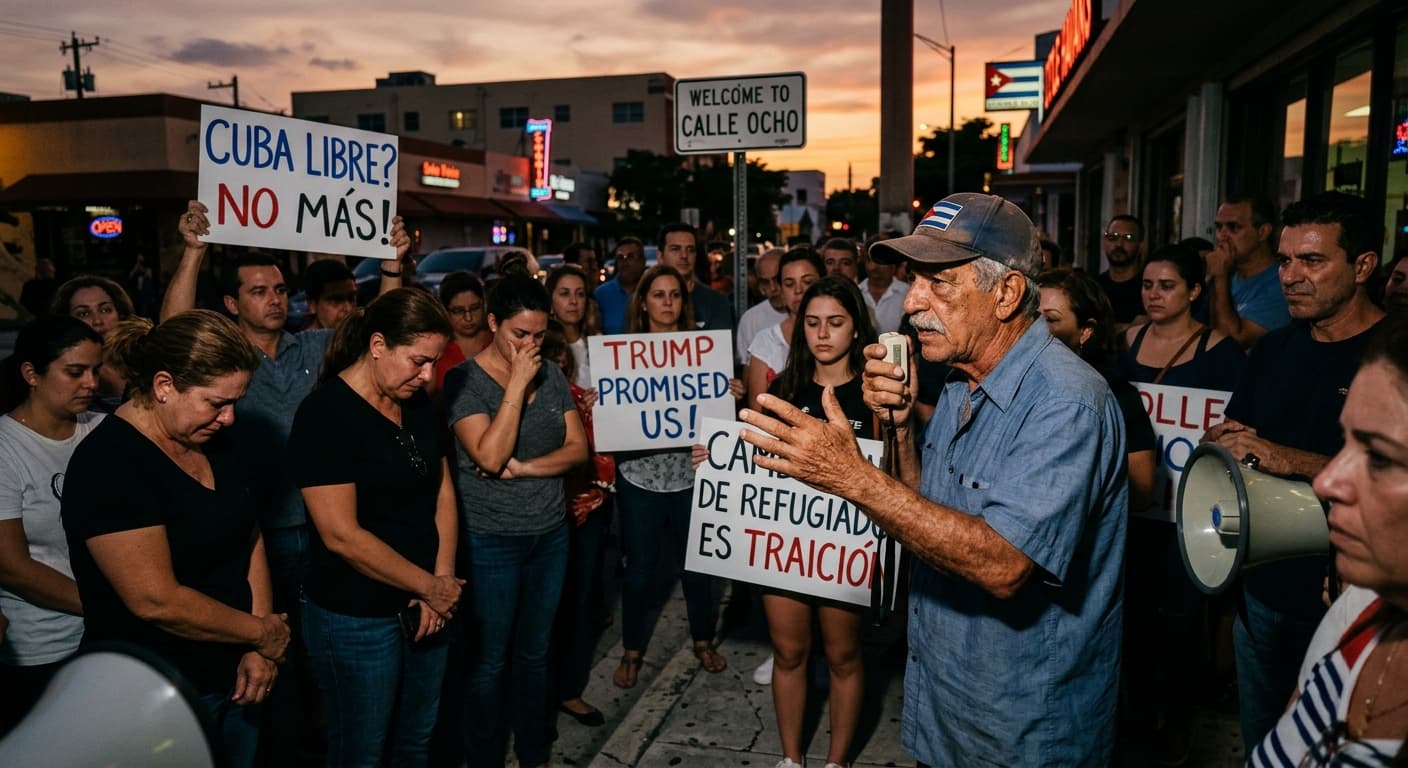
Trump's Cuban Miami Betrayal Explained
The Trump administration has deported more Cubans than ever, undermining decades of refugee policy while invoking Cuban exile symbolism.
Human Rights
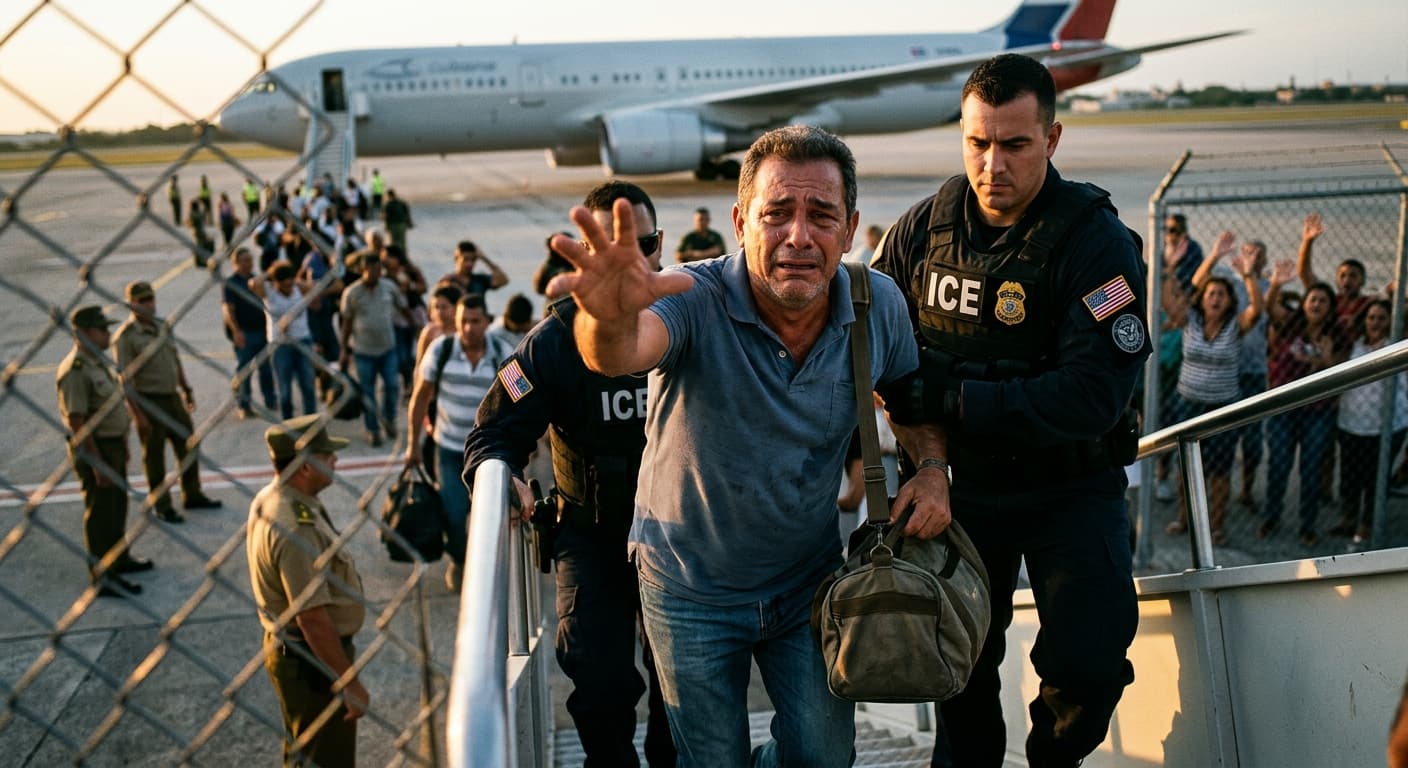
Trump's Cuba Policy: Deportations Surge
The Trump administration revokes legal status for 110,900 Cuban parolees, while the UN warns of a humanitarian crisis in Cuba due to sanctions and deportations.
Global
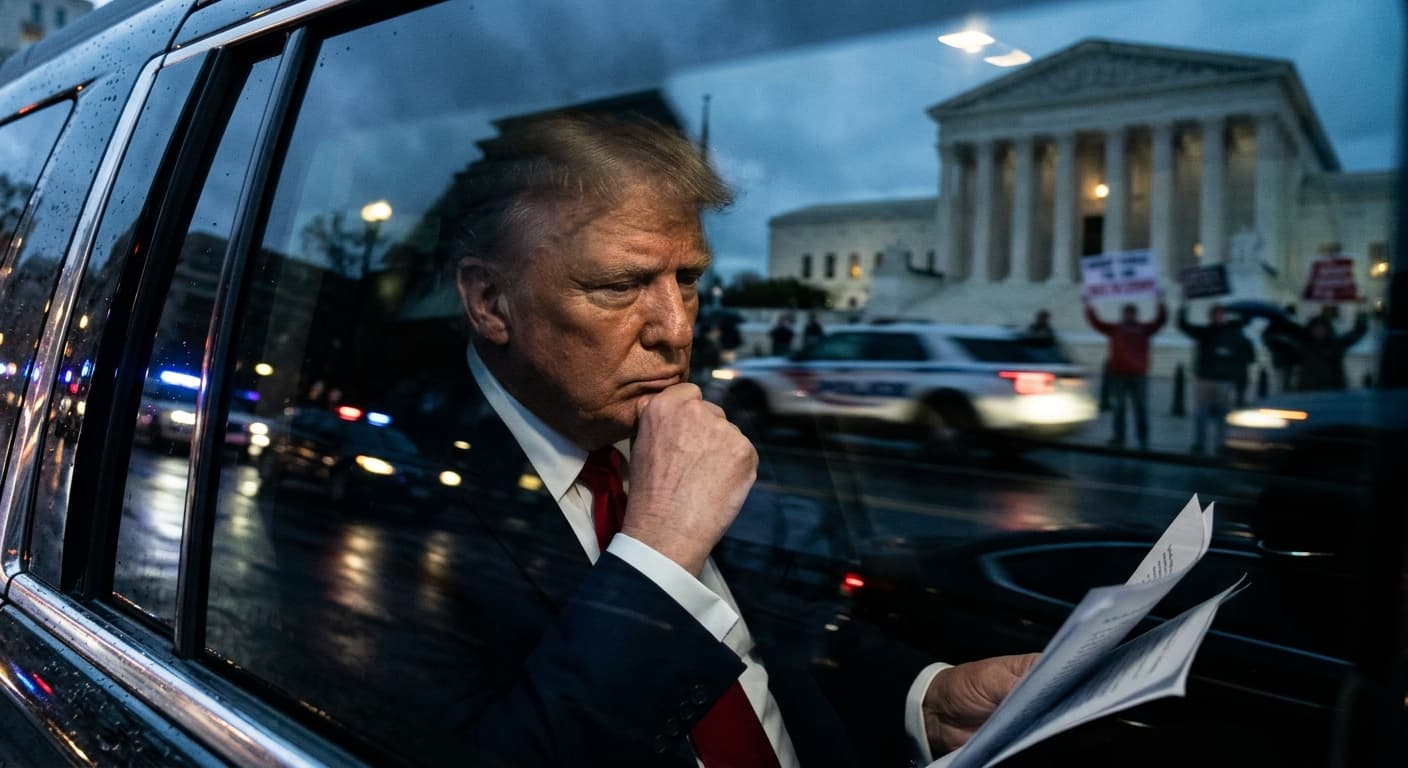
Trump Seeks Supreme Court Rehearing on Birth
President Trump asks the Supreme Court to rehear *Trump v. Barbara*, challenging the ruling on birthright citizenship after a 6-3 loss.
Global
Trump Asks Supreme Court to Rehear Birthright
Trump petitions the Supreme Court to reconsider its ruling on birthright citizenship, aiming to keep the issue politically relevant amid legislative efforts.