Quad's $20B Bet on Critical Minerals Misfires
The Quad's initiative targets mining, not crucial midstream processing.
Model Diplomat8 min readAsia
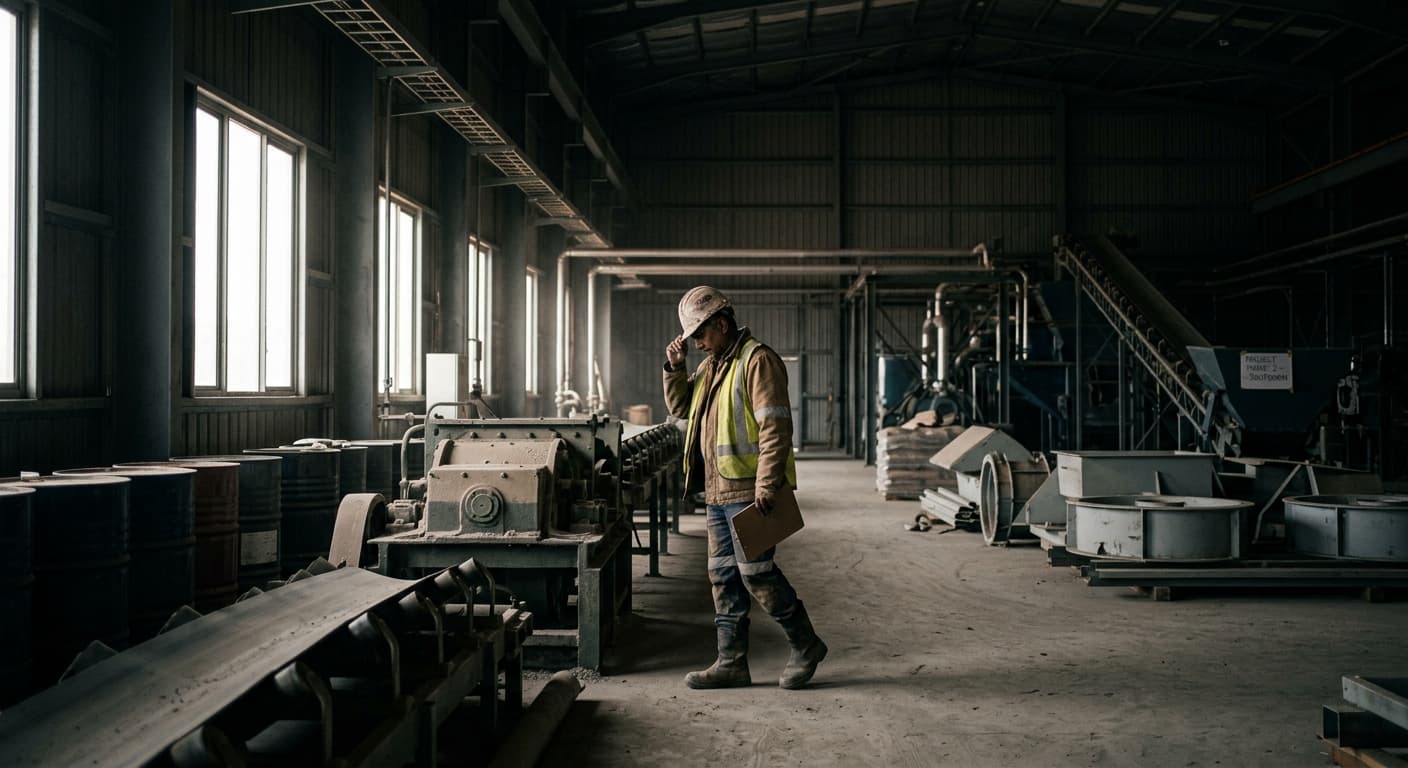
Quad's $20 Billion Critical Minerals Bet Targets the Wrong Chokepoint
The Quad's May 2026 critical minerals framework mobilises $20 billion to break China's grip on clean-energy inputs — but the money is chasing mines, not the midstream where Beijing actually holds the leverage.
The United States Studies Centre's July 8, 2026 report on operationalising the Quad Critical Minerals Initiative lands a blunt verdict on a $20 billion coalition that has, in one year, drawn commitments of roughly $3 billion across four governments: the money is flowing upstream while the chokepoint is downstream. Australia, the United States, Japan and India can mine — Lynas at Mt Weld, MP Materials at Mountain Pass, IREL's beach-sand operations in Andhra Pradesh — but they cannot yet separate, alloy and sinter at commercial scale. China refines 85–90% of rare-earth oxides and manufactures more than 90% of the world's neodymium-iron-boron magnets. Until the Quad framework forces midstream capacity inside Quad borders, it will buy diplomatic cover more than supply-chain resilience — and Beijing knows it.
What the framework actually says
The primary document is short and telling. In a May 26, 2026 media note released after the Quad foreign ministers' meeting in New Delhi, the U.S. Department of State said the four partners "intend to mobilize up to $20 billion in government and private sector support" through export credit agencies, development finance institutions and "guarantees, loans, equity participation, insurance, subsidies, and offtake or other commercial arrangements." Section II hints at the harder battle, committing partners to consider "high standards marketplaces, price mechanisms, or other measures" to counter non-market practices — diplomatic language for coordinated price floors against Chinese dumping.
That is the framework the USSC's Hayley Channer and Robert Monterosso are now trying to convert into a working machine. Their operationalisation report, produced with U.S. State Department support, distils a February 2026 expert workshop; a second workshop is scheduled for October 2026 and final outcomes are due in January 2027. The report is candid that "China dominates crucial chokepoints in many critical minerals supply chains and has used this dominance to further Chinese statecraft by restricting access to key processed materials."
Why the midstream, not the mine, is the leverage point
China does not control critical minerals because it sits on the ore. It controls them because it owns the chemistry between the mine and the magnet. The Congressional Research Service reports that Beijing refines 73% of global cobalt, 68% of nickel, 59% of lithium and 70% of rare earth elements, and controls 98% of gallium — a spread that makes clear the leverage sits in furnaces and separation trains, not deposits. The
International Monetary Fund's April 2026 World Economic Outlook sharpens the point: four rare-earth elements — neodymium, praseodymium, terbium and dysprosium — account for 96% of the $6 billion oxide market's value, and when China imposed licences on seven heavy rare earths and permanent magnets on April 4, 2025, monthly Chinese magnet exports fell roughly 70% year-on-year by May.
That collapse is the historical parallel the Quad needs to keep in mind. The New Delhi–based Centre for Air Power Strategic Studies argues the QCMI is investing in the wrong stage of the chain: the missing midstream, where China holds "approximately 85 to 90 per cent of refining capacity, and over 90 per cent of permanent magnet manufacturing." The one commercial-scale separated-oxide plant outside China — Lynas — supplies Japan through JARE under an offtake extended to 2038, a legacy arrangement built after China's 2010 export shock, not a Quad-era win. Everything else remains on the drawing board.
The CAPSS analysis also flags a structural point the Quad's political language obscures: the midstream loss "was neither accidental nor entirely market-driven." General Motors sold its Magnequench subsidiary — then supplying roughly 85% of global neodymium-iron-boron magnet output — to a consortium including two Chinese state-owned enterprises in 1995. That transaction, more than any single mine, is why the West lost the sinter line. Rebuilding it takes decade-long capital and workforce commitments, not framework language.
The escalation ladder Beijing is climbing
The Quad framework did not appear in a vacuum; it was written under duress. The Center for Strategic and International Studies documents an escalation ladder China climbed through 2025: an April 4 licensing regime on seven heavy rare earths and magnets; an October tightening with a foreign-direct-product rule capturing any magnet containing 0.1% Chinese-origin heavy rare-earth material; and, under
Announcement No. 61 of 2025, automatic denial of licences for exports linked to foreign militaries starting December 1, 2025. A separate CSIS review finds Beijing quietly added the
ion-exchange and resin extraction technologies used to separate gallium to its export-control list on January 2, 2025 — a move that pushes the chokepoint one further step upstream, into the equipment that would let anyone else catch up.
Trump and Xi bought a one-year truce at the APEC meeting in late October 2025. It expires this autumn. Everything the Quad is trying to build has to slot into that window.
The response inside Quad capitals has been fast but uneven. The BBC reported that on October 20, 2025 Prime Minister Anthony Albanese and President Donald Trump signed the U.S.–Australia Critical Minerals Framework, anchoring an $8.5 billion "ready-to-go" project pipeline with $1 billion in matched public financing over six months and joint government equity options. The
CSIS analysis of that compact noted that Washington paired the deal with a $110-per-kilogram price floor for MP Materials rare-earth oxide — the first time the U.S. government has effectively guaranteed a domestic commodity floor for a non-agricultural mineral. In November 2025 India approved a ₹7,300 crore ($800 million)
Rare Earth Permanent Magnet scheme targeting 6,000 tonnes of magnet output within seven years — against a domestic consumption already estimated at 7,000 tonnes, meaning even success leaves India dependent at the margin.
The India problem inside the Quad
The framework's biggest political vulnerability is not China. It is New Delhi. According to Al Jazeera, Secretary of State Marco Rubio arrived in India days before the May 26 Quad meeting to repair a relationship that has "plateaued, if not started declining" in the words of former Indian Foreign Secretary Shyam Saran. Trump's mid-2025 tariff shock doubled duties on Indian goods to 50%; a February 2026 interim trade deal cut them back to 18%, and a subsequent U.S. Supreme Court ruling against sweeping reciprocal duties pulled them to 10%. Indian exports to the U.S. reached
$87.3 billion in FY2025-26, with $8.5 billion in April alone — a recovery, but one built on top of an eroded political base.
The critical-minerals file bears the scars. In June 2025, BBC News reported, New Delhi asked state miner IREL to suspend its long-running rare-earth exports to Japan — the same offtake that has anchored Toyota Tsusho's processing plant in Andhra Pradesh since 2013. India's
Ministry of External Affairs factsheet from the July 1, 2025 Quad launch framed the CMI as "securing and diversifying reliable supply chains" — but suspending a Japan-facing supply line to protect domestic magnet ambitions is the opposite of Quad logic. The
Observer Research Foundation called the CMI "an extension of the broader global effort to reduce dependence on single points of failure," while warning that unresolved trade tensions and mismatched domestic priorities could reduce the initiative to "yet another symbolic or underperforming multilateral effort."
The workshop findings surfaced by the USSC add a second, quieter concern: opacity. Channer's companion analysis argues that rare earths and gallium trade through "a mix of private bilateral contracts, long-term offtake agreements and thin spot markets, rather than transparent, exchange-based systems," and that governments therefore lack a shared picture of where supply is actually most exposed. Her fix — a Quad mineral fusion centre modelled on maritime information-sharing hubs — is technically modest and politically hard, because it forces the four to share commercial intelligence on their own miners and processors.
Who benefits, who loses
The clearest short-term winner from the framework's current shape is Lynas Rare Earths. It already runs the only non-Chinese heavy-rare-earth separation line, with facilities in Malaysia and Western Australia, and now sells into a U.S.-underwritten price floor while sitting inside two overlapping bilateral frameworks (U.S.–Australia and the Quad). MP Materials benefits similarly: Trump's Project Vault — a nearly $12 billion critical-mineral reserve announced during the Critical Minerals Ministerial — and the $110/kg floor together de-risk its ramp into separated oxides and magnets. The Malaysian government's Lynas facility became, in 2025, the
first commercial producer of dysprosium oxide outside China, and Kuala Lumpur has pledged to Washington that it will not impose export bans or quotas — a policy commitment that instantly makes Malaysia more strategically valuable than any single Quad member other than Australia.
The losers are less obvious. Junior miners in Africa and Latin America financed by Chinese offtake now face a Quad marketplace that intends, per the State Department text, to impose "high standards" and price mechanisms that could effectively exclude them. Second, the Quad's own downstream users — European and Japanese carmakers, U.S. defense primes, Indian EV assemblers — face structurally higher input costs during any transition period, because as the IEA warned in the Financial Times, projects in diversified regions carry capital costs "around 50 per cent higher than those in China and other incumbent refiners." The
World Resources Institute noted that the IEA's May 2025 outlook found the top three producers' average market share has climbed to nearly 90% — a level the IEA projects will barely improve over a decade even if every announced project is built.
Diplomat View
The Quad Critical Minerals Initiative is best understood as a hedge, not a break. The $20 billion headline flatters a coalition that has, in twelve months, actually deployed something closer to $3 billion — and almost none of it in the midstream stages where Chinese leverage is decisive. Our forecast: the January 2027 USSC outcomes report will recommend three moves — a Quad price-floor mechanism harmonising the U.S. $110/kg model, a mineral fusion centre for supply-chain intelligence, and coordinated permitting for at least two greenfield separation facilities. Whether governments adopt them will depend on two variables outside the framework's control: whether the Trump–Xi rare-earth truce is renewed after October 2026, and whether the U.S.–India trade text is finalised without a new tariff shock. If either breaks, the Quad will face the same 2025 disruption without the manufacturing capacity to absorb it. We would revise this forecast if (a) any Quad member commits public equity above $2 billion to a single midstream project by end-2026, or (b) India lifts its June 2025 suspension of rare-earth exports to Japan.
What to watch next
- October 2026: USSC second operationalisation workshop; expected renewal deadline for the Trump–Xi rare-earth export truce.
- Late 2026: Quad Leaders' Summit in New Delhi (India-hosted); first test of whether the CMI has political ballast at head-of-state level.
- January 2027: USSC final outcomes report and December 1, 2025 Chinese military end-user licensing rules complete their first full year of enforcement — a natural data point on how much supply the Quad has actually reshored.
The Bottom Line
The Quad's $20 billion critical-minerals framework is a serious answer to the wrong question. Beijing's leverage lives in separation chemistry and magnet sintering, not in ore bodies — and until Washington, Tokyo, Canberra and New Delhi finance midstream plants inside Quad borders at the scale China finances its own, the framework will function as insurance against a shock it cannot yet absorb. The 2027 test is not how many billions are announced. It is how many tonnes of separated oxide and finished magnets leave a Quad factory that year.
Discover more

US Politics
SNAP Food Assistance Faces Legal Challenges
In 2026, SNAP faces stricter eligibility rules and mounting legal challenges, threatening food assistance for the millions of Americans who rely on the program.
US Politics
House Ethics Committee Pushes Sexual Miscond.
The House Ethics Committee has shifted responsibility for sexual harassment settlement records to the Office of Congressional Workplace Rights, complicating disclosure efforts.
International Relations
Economist Impact Sustainability Week 2026
Economist Impact Sustainability Week 2026 spotlights the energy transition, AI in clean technology, and supply chain resilience as themes for global leaders.

Economics
Fed's Amex AML order puts correspondent banking on notice
Federal Reserve's Amex AML order requires board-level controls and a 90-day plan; OCC fined the bank $350 million over enterprise-wide deficiencies.