Pavel Urges NATO to Strengthen Russia Deterrn
Czech President advocates for stronger NATO responses to Russia.
Model Diplomat3 min readEurope
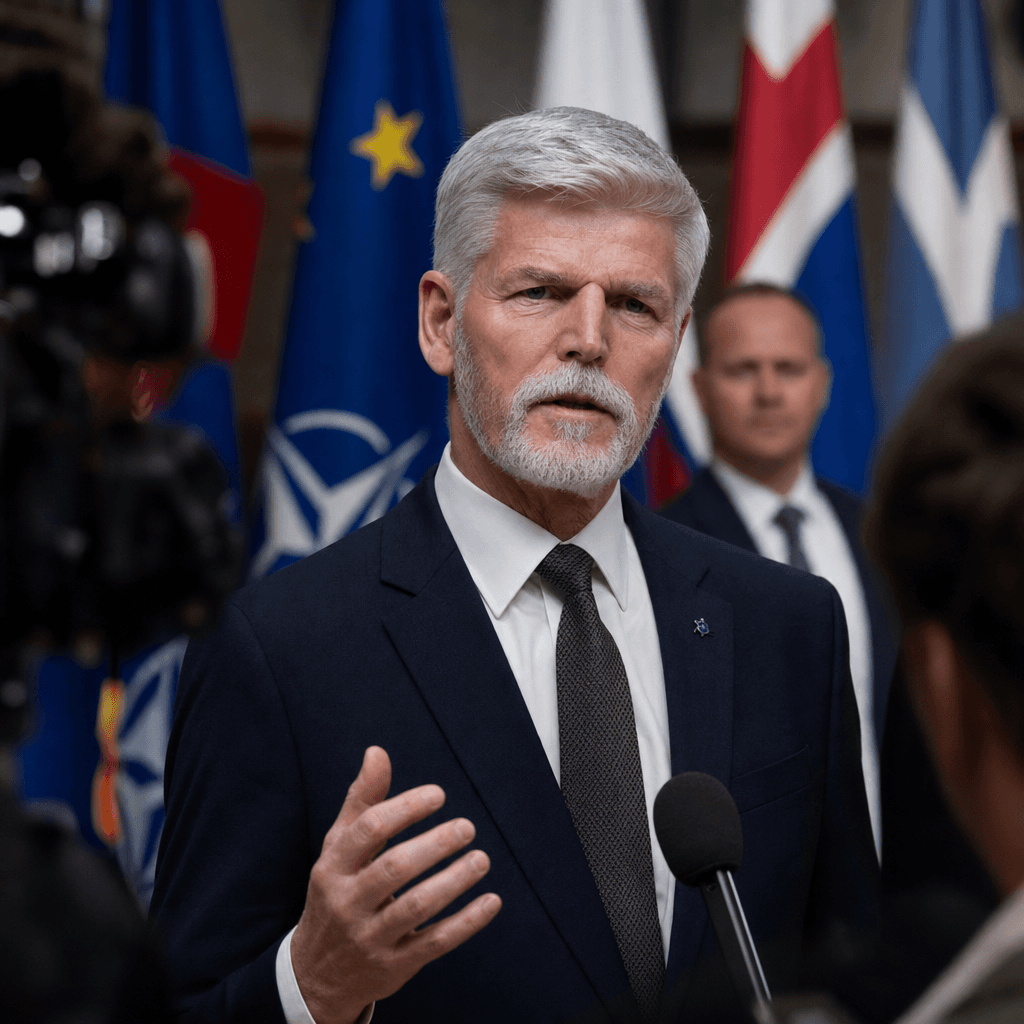
Pavel Pushes NATO Toward Harder Russia Deterrence
Petr Pavel is trying to move NATO from warning to punishment, arguing Russia has learned to operate just below Article 5 and will keep probing until allies answer force with force.
Czech President Petr Pavel told the Guardian that NATO should “show its teeth” against Russia’s repeated provocations, including possible responses ranging from shooting down aircraft that violate allied airspace to disrupting Russian financial and digital systems (The Guardian). His message is blunt: Moscow is exploiting NATO restraint, and the alliance’s current habit of issuing warnings without costs is inviting more testing on the eastern flank.
Deterrence, not symbolism
Pavel’s leverage comes from where he has stood before. He is not speaking as a politician improvising on security; he is a retired general and former chair of NATO’s Military Committee, which gives his warning extra weight inside the alliance (The Guardian). He argues that after Crimea, Russia learned how NATO reacts and has refined a playbook that stays “slightly below” the threshold that would trigger a collective response. That is the real strategic problem: Moscow does not need to beat NATO in a conventional fight if it can keep exposing the alliance’s hesitation.
This is why Pavel is pushing asymmetric options. He is not asking for a symbolic show of anger; he is calling for measures that impose cost without immediate escalation. That includes cyber pressure, financial restrictions, and tighter responses to air and maritime violations. In other words, he is trying to make the alliance’s deterrence more credible by making the penalty visible before the crisis turns kinetic.
Why this matters now
The timing is not accidental. Europe is already in a broader debate over burden-sharing, air defense, and whether the United States can still be assumed as the first responder in every contingency. At the GLOBSEC forum in Prague, Pavel warned that Europe must become strong enough to stand on its own if necessary and that continued support for Ukraine is a direct investment in European security (The Guardian). That framing matters because it connects Russian provocations in the Baltics or over the Black Sea to the larger problem of allied preparedness.
The beneficiaries of Pavel’s line are obvious: Poland, the Baltic states, and other front-line members that want NATO to respond faster and harder. The losers are governments still hoping that restraint will lower the temperature. Pavel’s warning is a direct challenge to the old European reflex that diplomacy can always postpone escalation. His argument is that Russia reads delay as permission.
Politically, this also fits a wider Czech and NATO debate over defense commitments. POLITICO reported that Prague is heading into the July NATO summit in Ankara with internal disputes over defense spending and representation, underscoring how much alliance policy is being shaped by domestic politics as much as by Russia’s pressure (POLITICO). That makes Pavel’s intervention more than rhetoric: he is trying to keep NATO focused on external deterrence while member states quarrel at home.
What to watch next
Watch whether NATO allies move from condemnation to pre-authorized response options for airspace violations, cyber intrusions, and hybrid pressure. The next real test is the NATO summit in Ankara in early July, where allies will have to decide whether Pavel’s hard line becomes alliance practice or remains a warning from one of Europe’s most security-savvy presidents (POLITICO). If NATO still cannot agree on punishments below Article 5, Moscow will read that as an open lane.
Discover more
India
Romanian Coalition Party Demands PM Resign
Romania's Social Democrats withdrew from coalition, joining far-right AUR to topple PM Bolojan, risking €10 billion in EU funds by August 2026.

Conflict & Security
Guatemala: El Niño 2026–27 becomes regional security test
UNICEF: 25.8M children face El Niño risks in Latin America; Guatemala maps 188 municipalities for drought and food insecurity amid regional security test.

Economics
Fed's stress-test overhaul is a capital-smoothing exercise
Federal Reserve finalized stress-test overhaul: two-year averaging for bank capital buffers and public input, expected to halve volatility.

Conflict & Security
Drone Warfare Killing Aid Workers at Unprec
Over 1,000 humanitarian workers killed in three years as cheap armed drones collapse legal protections. Gaza, Sudan, Ukraine, and DRC see deliberate targeting of aid convoys and hospitals with zero prosecutions.