Trump's 5000 Troops to Poland: NATO Impact
A look at Trump's troop deployment and its implications for NATO.
Model Diplomat3 min readEurope
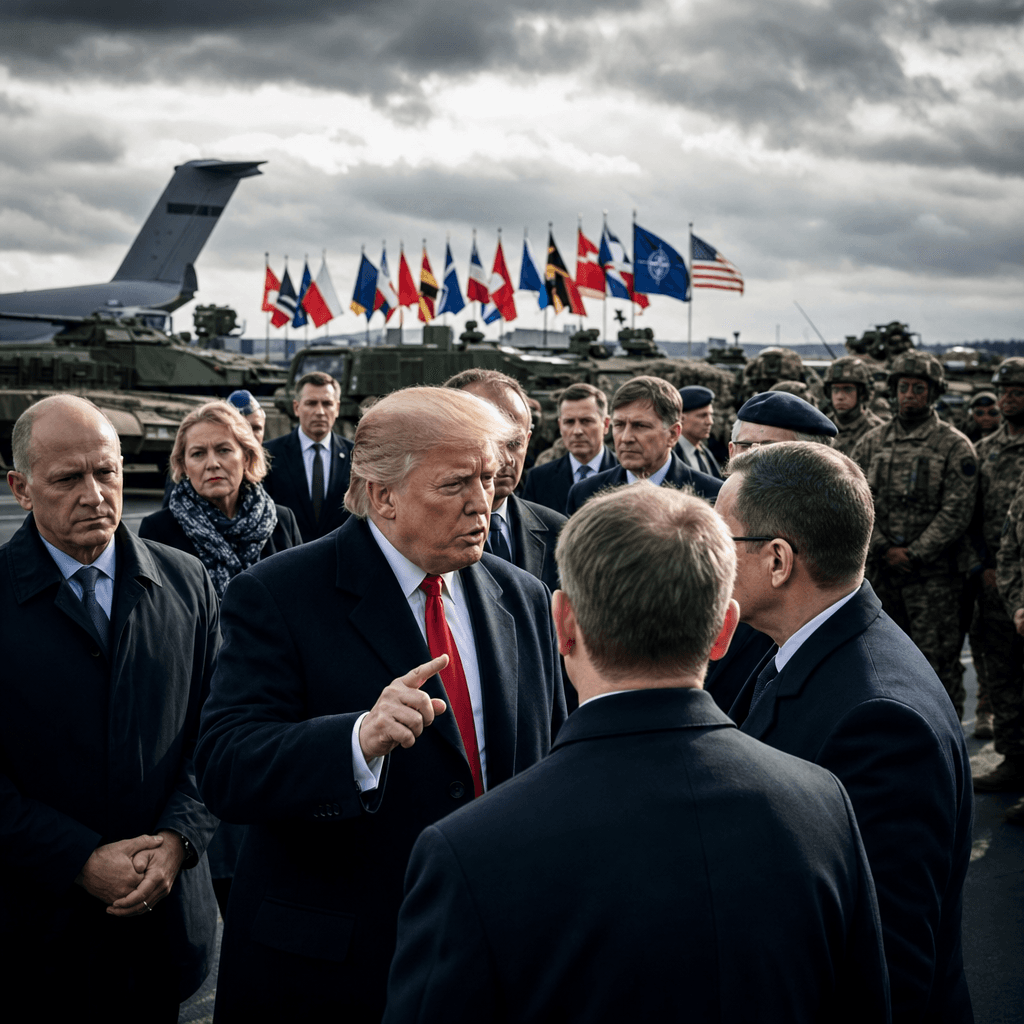
Trump’s Poland Troop Gambit Exposes NATO’s New Fault Line
Trump’s 5,000-troop promise to Poland looks less like a strategy shift than a loyalty reward, and it keeps Europe guessing.
President Donald Trump’s announcement that the United States will send an additional 5,000 troops to Poland is being read in Brussels and Warsaw as both reassurance and warning: reassurance for Poland, warning for everyone else that U.S. force posture in Europe now appears tied to Trump’s personal relationships as much as to NATO planning (Al Jazeera;
BBC News). Trump said the move was based on his support for Polish President Karol Nawrocki and their “relationship,” not on a formal alliance review (
Al Jazeera). That matters because the Pentagon had just cancelled a planned deployment of about 4,000 troops to Poland as part of a broader drawdown in Europe, which left allies trying to work out whether Washington was reversing course or simply improvising (
PBS News;
Washington Post).
Poland gets the leverage; Germany and others get the message
Warsaw is the immediate winner. Poland already hosts roughly 10,000 U.S. troops on a rotational basis, and Polish Foreign Minister Radek Sikorski welcomed Trump’s announcement by saying the American presence would be maintained “more or less at previous levels” (Al Jazeera;
PBS News). Poland has also become one of NATO’s biggest defense spenders, putting about 4.5 percent of GDP into defense and serving as a key logistics hub for aid to Ukraine (
Al Jazeera). That makes it useful to Washington in military terms and politically useful to Trump as an ally aligned with his right-wing preferences.
Germany, by contrast, is the country getting the signal. Trump has already announced plans to withdraw 5,000 troops from Germany after a fight with Chancellor Friedrich Merz over the U.S.-Israeli war on Iran, and earlier U.S. plans to cut forces in Europe triggered concern that NATO’s eastern flank would be left thinner (Al Jazeera;
BBC News). The message to Europe is simple: states that flatter Trump and spend heavily on defense may be rewarded; those he sees as obstructive can be squeezed.
This is about credibility, not just headcount
The tactical question is whether these are genuinely new troops or a relabeling of forces already meant for Poland. U.S. media cited by Al Jazeera and the BBC said the Pentagon has not clarified whether the 5,000 are the same soldiers whose deployment was cancelled, or a redeployment from elsewhere in Europe (Al Jazeera;
BBC News). That ambiguity is the real problem. If Washington can announce a drawdown, reverse it, and leave allies to infer the meaning, NATO planning becomes harder than the troop number suggests.
The strategic backdrop is Russia. Poland sits on NATO’s eastern edge, and since Moscow’s full-scale invasion of Ukraine in 2022, it has become one of Washington’s most important military partners in Europe (Al Jazeera). But the politics are broader than deterrence. NATO Secretary-General Mark Rutte welcomed the move while also emphasizing that Europe must become less dependent on the United States, and Secretary of State Marco Rubio tried to reassure allies that troop levels are being “reevaluated” in line with U.S. global commitments (
Al Jazeera;
BBC News). In other words, the alliance is being told to prepare for less American predictability even when the headlines say otherwise.
What to watch next
The next decision point is whether the Pentagon confirms the 5,000 troops are a real increase or a bookkeeping change. If they are simply redirected forces, the announcement mostly buys Trump political credit with Nawrocki and buys Poland a temporary sense of security. If they are genuinely additional, then Europe gets a clearer answer: Conflict will remain centered on the eastern flank, but Washington will be choosing partners transactionally, not through a stable NATO framework. The key date is the next NATO briefing in Brussels, where allies will press for the actual force posture behind the rhetoric.
Discover more
Global Politics
Trump's Conflicting Messages on Iran War
Trump's mixed messages on Iran reflect a strategy of audience management, benefiting Tehran amid a complex geopolitical landscape.

US Politics
Next Generation Republicans
A leaked survey shows 39% of Republicans under 30 do not identify as MAGA, revealing a split in the GOP's future leadership.

Economics
Fed's Amex AML order puts correspondent banking on notice
Federal Reserve's Amex AML order requires board-level controls and a 90-day plan; OCC fined the bank $350 million over enterprise-wide deficiencies.

Conflict & Security
Guatemala: El Niño 2026–27 becomes regional security test
UNICEF: 25.8M children face El Niño risks in Latin America; Guatemala maps 188 municipalities for drought and food insecurity amid regional security test.