Pakistan's Role in US-Iran Negotiations
Pezeshkian's visit highlights Pakistan's diplomatic leverage.
Model Diplomat2 min readAsia
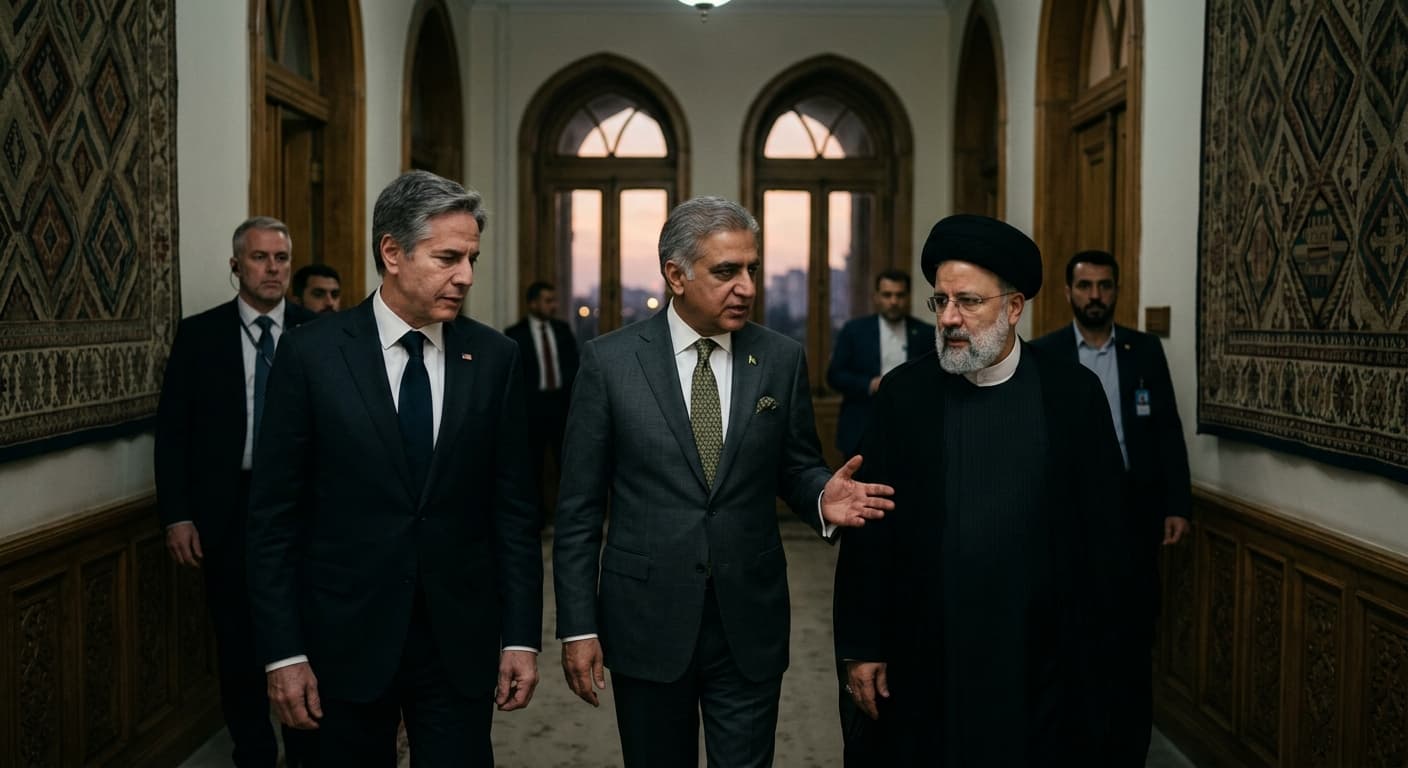
Pakistan Banks Political Capital as Iran Deal Framework Solidifies
Pezeshkian's Islamabad visit rewards mediators and tests 60-day roadmap toward a comprehensive US-Iran settlement.
Pakistan holds the diplomatic levers now. Iranian President Masoud Pezeshkian landed in Islamabad on Tuesday for a state visit days after the first round of US-Iran negotiations concluded in Switzerland — a strategic pivot that positions Islamabad as the indispensable broker in what amounts to a de facto international mediation architecture.
The symbolic weight matters as much as the substance. Pezeshkian's visit is widely viewed as an expression of gratitude for Pakistan's role in brokering the Islamabad Memorandum of Understanding, which Prime Minister Shehbaz Sharif signed on June 18 as a formal mediator between US President Donald Trump and Iran's leadership. That same framework now governs the negotiations underway in Burgenstock — what sources are calling the
Lake Lucerne Summit.
Pakistan's Chief of Defence Forces Field Marshal Asim Munir and PM Sharif both represented Pakistan in the Swiss talks, cementing Islamabad's hand rather than merely its symbolic role.
The deal itself tilts Tehran toward the negotiating table with concrete incentives. Under the 14-point accord, the US will release $12 billion in frozen Iranian funds and has announced a temporary easing of international sanctions, allowing Iran to sell its oil and petrochemicals until August 21. The framework sets a 60-day roadmap toward a comprehensive agreement and establishes
a high-level committee to oversee negotiations and technical talks. Significantly, it also includes confidence-building mechanisms:
a de-confliction cell between the parties and Lebanese authorities to prevent fighting from erupting again, and communication lines to manage the Strait of Hormuz.
But here is what makes this visit strategically important: Pakistan is converting one-time mediation into sustained diplomatic architecture. During Pezeshkian's meetings with President Asif Ali Zardari and senior Pakistani officials, the agenda explicitly includes trade, energy, border security, and regional connectivity. That framing — tucking regional stability into bilateral cooperation — signals that Pakistan intends to remain a fixed node in the US-Iran settlement, not merely a temporary conduit.
The timing tests Iran's commitment. With 60 days to reach a comprehensive deal, technical talks resuming this week, and the sanctions relief window closing August 21, every player now operates under deadline pressure. Pezeshkian's presence in Islamabad demonstrates that Tehran is still engaged and signaling moderation to key interlocutors — a crucial signal for Trump, who faces pressure from Israel and Gulf allies skeptical of the accord. Qatar also played a mediation role and deserves watching as a co-guarantor of the framework.
What to watch next: the outcome of technical talks due this week in Switzerland. If they stall or recede into blame accusations, Pezeshkian's grateful visit becomes hollow theater. Watch whether the Strait of Hormuz remains open without incident — the de-confliction cell's first real test. And watch whether Iran's oil sales begin on schedule after August 21 expires, signaling confidence in a final deal or capitulation if negotiations drag into September.
Discover more

International Relations
Pakistan's Key Role in US-Israel-Iran Meddle
Pakistan is seeking to mediate the US-Israel-Iran conflict, balancing high-stakes diplomacy against severe economic pressures and steep regional challenges.

Global Politics
US Seizes Iranian Ship, Tensions Surge
The US seizure of the Iranian ship Touska highlights a shift in control over the Strait of Hormuz, favoring Iran's strategic position.
Global Politics
Trump's Conflicting Messages on Iran War
Trump's mixed messages on Iran reflect a strategy of audience management, benefiting Tehran amid a complex geopolitical landscape.

Conflict & Security
Drone Warfare Killing Aid Workers at Unprec
Over 1,000 humanitarian workers killed in three years as cheap armed drones collapse legal protections. Gaza, Sudan, Ukraine, and DRC see deliberate targeting of aid convoys and hospitals with zero prosecutions.