Our Public House turns Britain’s division into pub theatre
Barney Norris’s touring play uses a storm-bound pub, live music and real voices to turn abstention, grievance and belonging into one argument.
The Guardian’s review of Barney Norris’s Our Public House calls it a “heartfelt portrait of divided Britain” and places the action behind the bar, where a community that has spoiled its ballots and stopped voting is forced to talk ( The Guardian). That is the power dynamic in the play: people who feel politically ignored are withdrawing consent, and the pub becomes the last place where that refusal can be interrupted in public (
 British Theatre Guide;
  ManchesterTheatres.com).
The pub is the politics
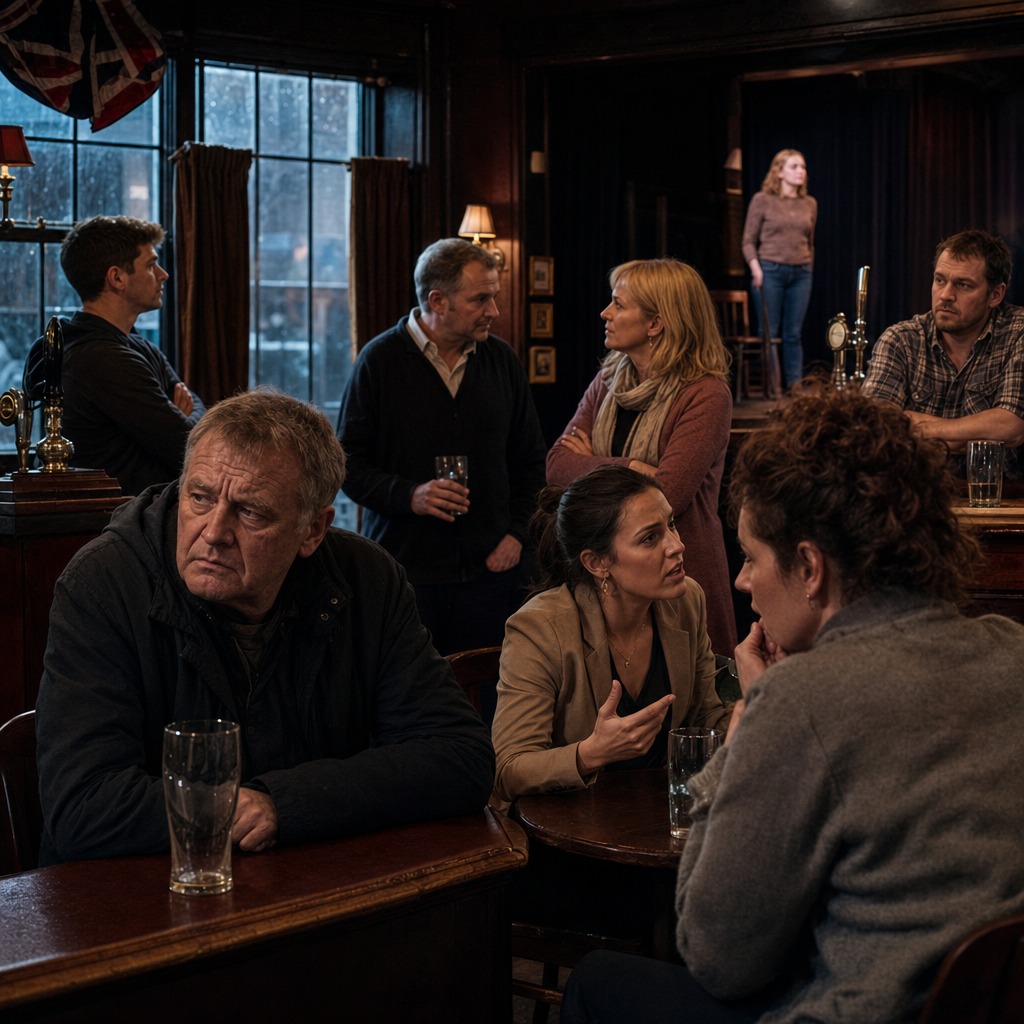
Dash Arts’ production, directed by Josephine Burton, sets landlady Sanjana, a guitar-playing regular called Scott and several unexpected guests inside a local pub while a storm rages outside (British Theatre Guide). The premise is simple, but it does political work. A pub is not Parliament; it is a place where class, age and politics collide without the insulation of a manifesto. That makes it a useful stage for a country still arguing about who gets heard, who gets ignored and whether voting still matters.
The company says the play draws on the real words of more than 600 people across England and mixes live music with spoken English, BSL, Sign Supported English and creative captioning, alongside hearing and deaf performers (ManchesterTheatres.com). That is more than a staging choice. It turns representation into method: the production is trying to model a wider public square at a time when British politics is struggling to do the same. For broader context,  Global Politics and International are useful lenses on why cultural spaces are increasingly absorbing the language of democratic failure.
Why this lands now
The play’s premise — a community that spoils its ballots and refuses to vote — lands because the same frustration is still shaping real politics. EFE reported this month that Labour figures are warning against a renewed internal fight over Britain’s relationship with the EU, arguing it would only help Reform UK and Nigel Farage’s insurgent politics ( EFE; EFE). In other words, the same withdrawal and resentment that the play stages at the ballot box is still shaping the country’s governing choices.
That is why Our Public House matters beyond the review page. It captures a familiar post-Brexit pattern: formal politics keeps asking for patience, while people increasingly test the system by stepping away from it. The choice of a pub is sharp because the pub is both communal and conditional — you are welcome there, but you still have to sit among people you may disagree with. That is a better metaphor for Britain’s current mood than most parliamentary speeches.
What to watch next
The practical test is whether the production’s participatory model travels as well as its message. The show is on tour through late June and early July, with dates listed at Shakespeare North Playhouse in Prescot, then Belgrade Theatre in Coventry, Sterts in Liskeard, the Crucible complex in Sheffield and Marylebone Theatre in London (British Theatre Guide). If it keeps working city by city, the key beneficiary is Dash Arts: it will have shown that political theatre can still draw audiences without flattening the divisions it is trying to stage (ManchesterTheatres.com).
The next decision point is audience response, not critical applause. If the local-ensemble format becomes part of the conversation rather than a novelty, expect more productions to borrow its formula: make the public feel public again, one room at a time.