Morocco's Gaza Troop Deal: Western Sahara Is
Morocco's Gaza troop deal is really about Western Sahara
Model Diplomat7 min readMiddle East and North Africa
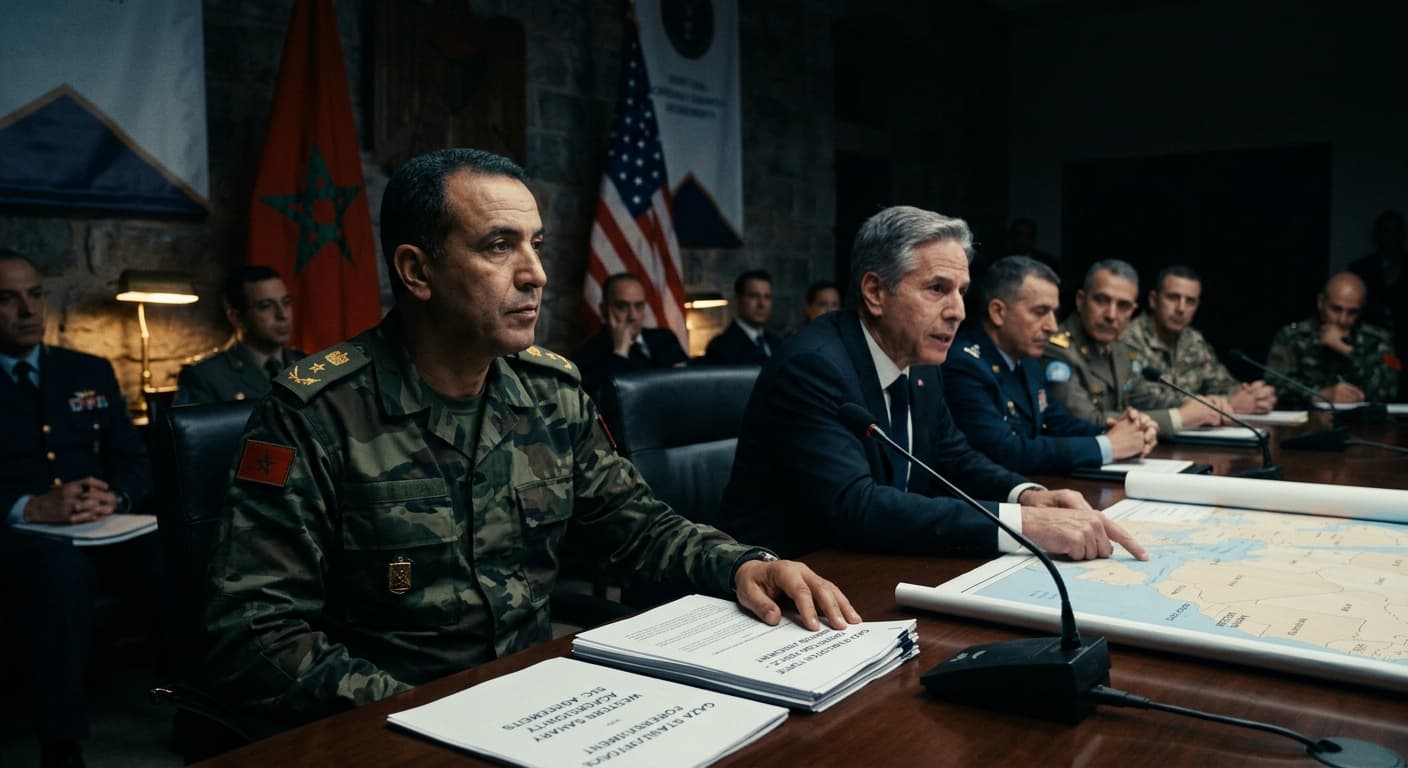
Morocco's 400-Troop Gaza Bet: Western Sahara Is the Real Prize
[Morocco signed a formal ISF participation agreement on July 15, 2026, committing 400 troops to Gaza — but the deployment is really about US backing on Western Sahara sovereignty and deepened Israel security ties.]
Morocco signed a formal agreement in Rabat on July 15, 2026, committing 400 troops, gendarmerie, police personnel, and a military field hospital to the US-led International Stabilization Force for Gaza. The deployment is not about Gaza. It is the latest payment in a transactional bargain with Washington — Rabat puts personnel on the line abroad in exchange for sustained US recognition of Moroccan sovereignty over Western Sahara, deepened Israel security ties, and access to advanced military hardware. If the ISF deploys without Palestinian consent and either collapses or provokes backlash, Morocco absorbs the reputational damage while Washington pockets the concession.
The Deal: What Morocco Actually Signed
Foreign Minister Nasser Bourita, Minister-Delegate for National Defense Abdelltif Loudyi, and Board of Peace Special Envoy Nickolay Mladenov signed the agreement at a ceremony in Rabat, according to The Media Line. Under the accord, Morocco will contribute 400 troops — senior military officers to the ISF's joint military command, Royal Gendarmerie and DGSN police personnel, and a military field hospital. Their mandate covers ceasefire monitoring, securing humanitarian aid corridors, protecting aid distribution sites, and border security assistance.
The New Arab reported that the agreement provides a "legal framework for the technical and operational aspects of any eventual deployment" — language that signals Rabat is locking in the commitment while preserving flexibility on timing and scope.
Morocco was one of five founding troop contributors when the Declaration of Founding Contributors was signed on February 19, 2026, alongside Indonesia, Kazakhstan, Kosovo, and Albania, according to the UN Board of Peace report. But Rabat waited nearly five months after that initial declaration to sign a formal bilateral participation agreement — a delay that suggests it was extracting concessions or clarifying terms before committing. A pre-deployment site survey by troop contributors was completed in late April 2026, the same UN report states.
The ISF operates under the unified command of the United States through Major General Jasper Jeffers, in close consultation with Egypt and Israel, per the UN Security Council resolution adopted November 17, 2025. The resolution passed 13-0, with Russia and China abstaining. It authorizes the force to "use all necessary measures to carry out its mandate" — UN language for military force — covering demilitarization of Gaza and the "permanent decommissioning of weapons from non-state armed groups." The
White House confirmed Jeffers's appointment and Mladenov's role as High Representative for Gaza in a January 2026 statement outlining the 20-point plan's implementation architecture.
The Real Currency: Western Sahara
The strategic logic runs through Western Sahara, not Gaza. In December 2020, the first Trump administration recognized Moroccan sovereignty over the disputed territory as part of the Abraham Accords normalization with Israel, as documented in a Congressional Research Service report. That recognition was explicitly a "carrot" for normalization, in the words of the CRS analysis.
The Biden administration declined to implement the recognition. But on April 8, 2025, Secretary of State Marco Rubio officially reaffirmed US support for Morocco's sovereignty over Western Sahara and called the autonomy plan "the only feasible solution," according to the Policy Center for the New South. The timing was not coincidental — it came as the Trump administration was assembling its Gaza peace plan and needed Arab and Muslim partners to join the Board of Peace and contribute to the ISF.
NPR reported that Arab and Muslim countries had insisted a UN mandate was essential for their participation, and the US included more defined language about Palestinian self-determination to secure their support.
The linkage became even clearer in February 2026. On February 8 and 9, just eleven days before the inaugural Board of Peace meeting in Washington where Morocco pledged troops, the US chaired quadripartite Western Sahara talks in Madrid — the first direct meeting between Morocco, Algeria, and the Polisario Front since 2019. According to the International Crisis Group, Morocco presented a detailed, 40-page revised autonomy plan at the Madrid session. The US assumed a leading role, with UN envoy Staffan de Mistura effectively relegated to a secondary position. Senior Advisor Massad Boulos and Ambassador Mike Waltz chaired the talks.
The Carnegie Endowment frames the dynamic plainly: Trump's transactional approach means Morocco must give something in exchange for renewed support on Western Sahara and the promised opening of a consulate in Dakhla. The 400-troop ISF commitment is that something. The quid pro quo is not written in the agreement — it does not need to be. Both sides understand the ledger.
The Gamble: Troops Without Palestinian Consent
The ISF faces a fundamental legitimacy problem that Morocco's signing ceremony did not resolve. The New Arab reported that the plan still "lacks Palestinian consent" — no Palestinian faction, including Hamas, has endorsed the force or the broader Comprehensive Plan's decommissioning framework.
The UN's own assessment acknowledges this. The Board of Peace report identifies the "principal obstacle to full implementation" as Hamas's refusal to accept verified decommissioning, relinquish coercive control, and permit a civilian transition. Israel, in turn, refuses to withdraw without "visible progress" on disarmament. The result is a stabilization force being assembled for a territory where neither the armed group on the ground nor the occupying power has agreed to the conditions for its deployment.
The Middle East Institute identified the core dilemma months before Morocco's signing: no candidate for contributing forces wants to confront the choice of either killing a Hamas militiaman carrying out an attack on Israelis or being blamed for failing to prevent such an attack. The US reached out to over 70 countries regarding ISF contributions without receiving firm commitments from more than five. The
CFR notes that while 20,000 troops is the eventual target, only a handful have committed, and "several of those commitments have weakened as governments have weighed the political and security costs."
Russia's UN ambassador made the point bluntly during the Security Council debate: the force's peace-enforcement mandate "could actually transform it into a party to the conflict," and "not a single one of the potential troop-contributing countries agreed to this," according to UN Security Council coverage.
Al Jazeera reported that the resolution's language on "all necessary measures" was a point of contention precisely because it blurs the line between peacekeeping and peace enforcement.
The Normalization Dividend: Israel Ties Deepen
Morocco's ISF commitment reinforces a second strategic track: the deepening security relationship with Israel. Despite domestic pro-Palestinian protests, Morocco-Israel military cooperation has accelerated since the Gaza war. According to the Atlantic Council, Rabat acquired Israeli Heron drones for $48 million, SkyLock Dome anti-drone systems for $500 million, and Barak MX missile systems for another $500 million, with a $1 billion IAI spy satellite deal pending.
DW reported that the two countries approved a 2026 joint military work plan covering drones, air defense, and satellite capabilities.
The ISF commitment burnishes the normalization's legitimacy. By framing its Gaza deployment as humanitarian — field hospital, police training, aid corridor protection — Rabat can tell domestic audiences it is supporting Palestinians while telling Washington and Tel Aviv it is reinforcing the security architecture they built together. Foreign Minister Bourita explicitly linked the ISF pact to King Mohammed VI's "commitment to the Palestinian cause," according to Morocco World News. The
Anadolu Agency reported that Mladenov praised the king's "visionary leadership" and described Rabat's decision as translating "its longstanding commitment to the Palestinian people into concrete actions."
The BBC reported that the Board of Peace meeting in February 2026 secured $17 billion in pledges from nine nations — Kazakhstan, Azerbaijan, UAE, Morocco, Bahrain, Qatar, Saudi Arabia, Uzbekistan, and Kuwait — plus a $10 billion US contribution, according to BBC News. Morocco's dual role as financial contributor and troop contributor places it at the intersection of the plan's two pillars: reconstruction funding and security deployment. That dual exposure doubles the leverage — and doubles the risk.
Key Takeaways
- Morocco's 400-troop ISF commitment, signed July 15, 2026, is the latest transaction in a bargain where Rabat exchanges security cooperation for US backing on Western Sahara sovereignty and access to Israeli military hardware.
- The ISF still lacks Palestinian consent; Hamas refuses decommissioning, Israel refuses to withdraw, and only 5 of approximately 70 countries approached have committed troops.
- Morocco waited five months after the initial February pledge to sign a formal agreement, suggesting it was negotiating terms — likely including Western Sahara assurances — before locking in.
- The Madrid Western Sahara talks (February 8-9, 2026) preceded the Board of Peace meeting (February 19) by eleven days, linking the two diplomatic tracks.
- Morocco-Israel military ties have deepened despite the Gaza war, with over $2 billion in Israeli defense contracts signed or pending since 2020.
Diplomat View
Morocco's ISF commitment is a calculated bet that the diplomatic dividends — locked-in US recognition on Western Sahara, deepened Israel security ties, and military modernization — outweigh the risks of deploying troops to a territory where no party has agreed to the conditions for their presence. The bet is rational for Rabat because the upside (consolidated sovereignty over Western Sahara) is existential, while the downside (reputational damage from a failed Gaza mission) is manageable. But the calculation rests on two assumptions: that the US will deliver on Western Sahara in a tangible way — consulate in Dakhla, FTA amendment, congressional appropriation — and that the ISF never actually has to fight Hamas. If either assumption breaks, Morocco has sold a sovereign territorial claim for a failed peacekeeping venture.
This forecast would change if: (a) Hamas agrees to decommissioning and the ISF deploys with genuine Palestinian consent, validating Morocco's bet; (b) the US opens a consulate in Dakhla before the end of 2026, confirming the Western Sahara dividend; or (c) a Moroccan casualty in Gaza triggers domestic protests that threaten regime stability, forcing Rabat to withdraw.
What to watch:
- September 2026: Board of Peace six-month report to the Security Council — the next formal assessment of ISF deployment readiness and Hamas decommissioning progress.
- Q4 2026: US target date for 10,000-troop ISF; if contributions remain at current levels, the force is at roughly 10% of target.
- Ongoing: US consulate announcement in Dakhla — the deliverable that would confirm Morocco's transactional bet has paid off.
Discover more
Global
Egypt Steps In as AU Somalia Mission Collapse
US ends $502M logistics funding for AU Somalia mission (AUSSOM) by Dec 31, 2026. Egypt emerges as key power as mission collapses, with implications for Ethiopia and al-Shabaab.
Global
Morocco's Gaza Troop Bet: Western Sahara
Morocco commits 400 troops to US-led Gaza stabilization force, leveraging the deployment to secure continued American recognition of its sovereignty over Western Sahara.
Global
UN Occupation Resolution Turns Two
Two years after the UN's resolution demanding Israel end its occupation, Indonesia now leads a US-led force, marking a shift in the Palestine issue.
Global
AU's AUSSOM Cash Crunch: Youssouf's Appeal
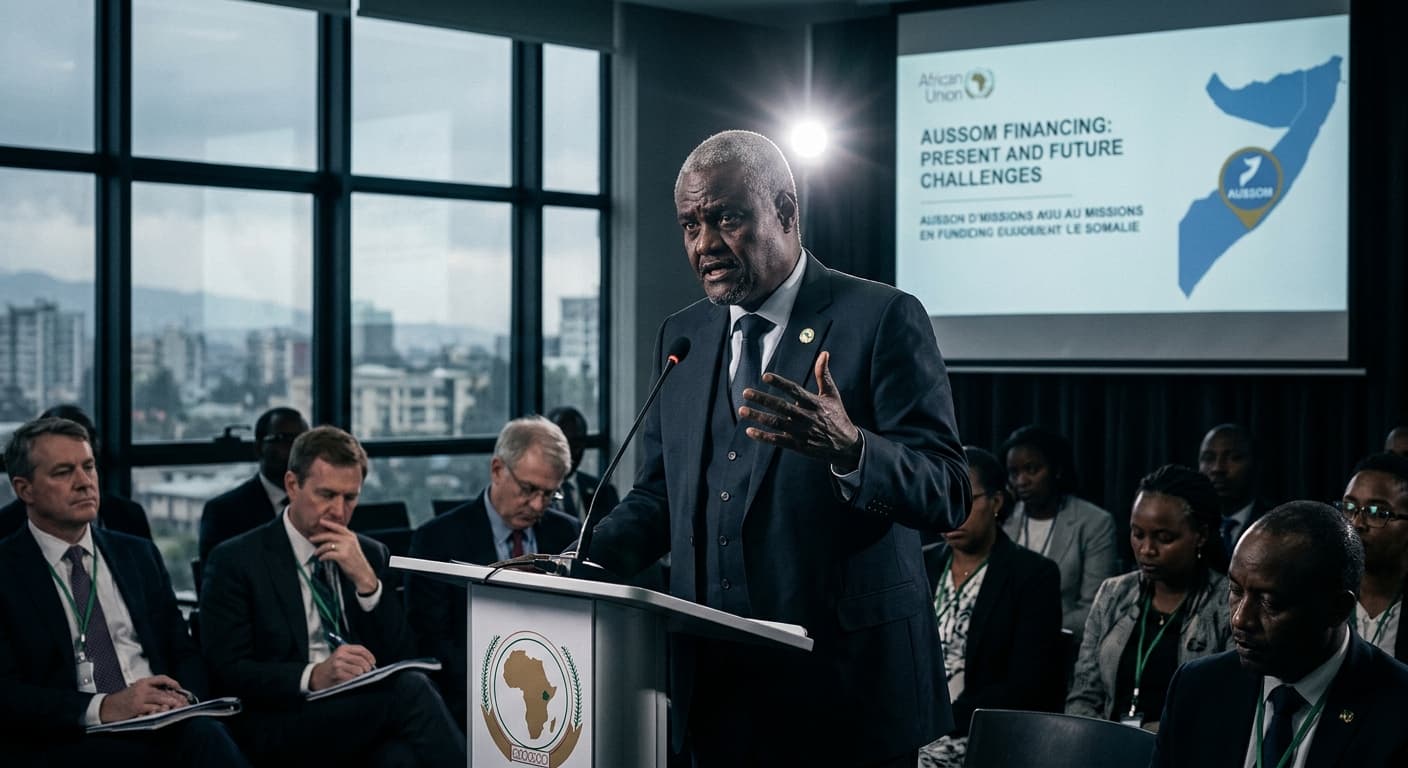
AU's AUSSOM faces a funding crisis as US cuts threaten its operations, prompting calls for sustainable financing from member states.