AU's AUSSOM Cash Crunch: Youssouf's Appeal
Funding crisis threatens Somalia's peace mission amid US cuts.
Model Diplomat9 min readAfrica
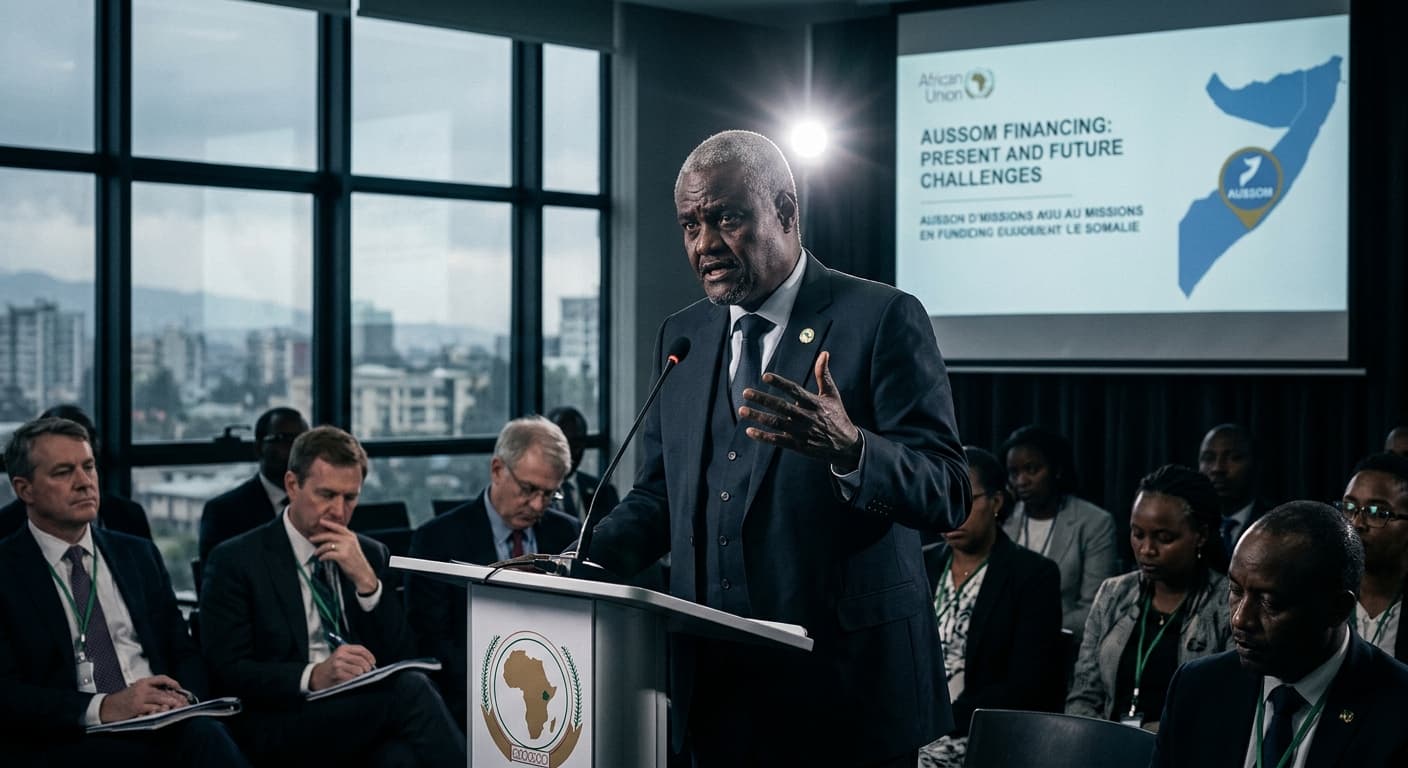
AU's AUSSOM Cash Crunch: Youssouf Bets on Peace Fund Before US Cuts Bite
AU Commission Chair Mahmoud Ali Youssouf demanded sustainable funding for Somalia's peacekeeping mission on July 8, 2026 — days after Washington told the AU it will end UNSOS logistics after December, threatening a 12,000-strong force facing an emboldened al-Shabaab.
Mahmoud Ali Youssouf, the African Union Commission chair, told an informal Peace and Security Council consultation on July 8, 2026 that the African Union Support and Stabilisation Mission in Somalia (AUSSOM) needs "stronger political and financial support" — a request that in ordinary times would be routine, but which lands seven days after Washington notified Addis Ababa it will oppose any UN logistical support for the mission beyond December 31, 2026. The AUSSOM funding architecture is now collapsing in real time: the US veto of Resolution 2719 in May 2025 stripped the mission of its intended 75% UN-assessed backstop; the July 1, 2026 cable withdrawing US backing for the $500 million UN Support Office in Somalia (UNSOS) removes the food, fuel, water and casualty-evacuation floor that has kept African troops in the field since 2007. Youssouf's pitch — accelerate the AU Peace Fund, activate the 0.2% import levy, raise member-state contributions — is a bet that the continent can build a sovereign financing rail before al-Shabaab, or the 2026 Somali election calendar, gets there first.
The July 1 cable that changed the math
The trigger for Youssouf's intervention is a US diplomatic note dated July 1, 2026 and first reported by Reuters. Washington told the AU it would no longer support UNSOS operations beyond the end of this year, with a State Department spokesperson confirming to Reuters — cited by BBC News Somali — that the United States "will not oppose" a mandate renewal but "will oppose any extension" that includes UN logistical or assessed-contribution support. UNSOS carries an annual budget of roughly $500 million and, according to two diplomats briefed on AU planning quoted by the BBC, "cannot continue unless another entity replaces UN support."
The AU Commission convened an emergency Peace and Security Council session on July 3, 2026, warning members in a circulated letter of a "significant impact on sustainment, force posture and financing of the mission." Somalia's state minister for foreign affairs, Ali Mohamed Omar, made a parallel virtual appeal to donors, reported by Hiiraan Online, for "sustained financial support and long-term funding solutions." Youssouf's July 8 intervention, delivered before a Council chaired for the month by Uganda — AUSSOM's largest troop contributor — is the formal continental response, as summarised by
New Post Africa.
What the Council actually mandated in December
The gap between what Resolution 2809 authorised and what donors will now pay for is the operative crisis. Adopted unanimously on December 23, 2025, Resolution 2809 renewed AUSSOM's mandate through December 31, 2026 and set a personnel ceiling of 11,826 uniformed personnel including 680 police, as recorded by the UN General Assembly's UNSOS assessment schedule. The UK's deputy permanent representative Archie Young told the Council the text was "clear-eyed about the challenges of the underfunding of AUSSOM and UNSOS's liquidity shortfall," in
remarks published by GOV.UK. The resolution also confirmed that UNTMIS — the UN political mission in Somalia — will close on October 31, 2026, removing a second layer of international scaffolding just as the mission needs it most.
The mission's operating budget for 2025 was roughly $190 million, with troop stipends alone running at $200 million a year across the five contributing countries: Uganda, Kenya, Ethiopia, Djibouti and Egypt (the last a first-time contributor after being blocked from earlier missions by Ethiopia). The Institute for Security Studies calculated in October 2025 that AUSSOM was carrying a $92 million operational shortfall plus $100 million in inherited liabilities to troop-contributing countries from the ATMIS era, according to ISS Africa.
Why Resolution 2719 died in Somalia
The mechanism that was supposed to solve all of this was UN Security Council Resolution 2719, adopted unanimously in December 2023. It allowed the UN to draw up to 75% of an AU-led mission's budget from assessed contributions, with the AU raising the remainder — a hard-won template that African diplomats fought fifteen years to secure. Somalia was the obvious first test case.
It failed there. Resolution 2767 in December 2024 flagged AUSSOM as a candidate for 2719 financing but gave the Council until May 15, 2025 to confirm the arrangement. The US, under a returning Trump administration and pushed by Senate Foreign Relations chair Jim Risch, refused. Washington argued that combining AUSSOM stipends with the separately funded UNSOS would push US-assessed exposure toward 90% of the total package — well above the 75% cap. The Stimson Center's post-mortem confirmed the Council President's May 23, 2025 letter noting no consensus had been reached, in analysis by the Stimson Center. Senator Risch then introduced
S.1583, the AUSSOM Funding Restriction Act of 2025, which would statutorily prohibit US assessed contributions from flowing to any 2719 application in Somalia.
The Danish Institute for International Studies concluded bluntly in its April 2026 policy brief that diplomatic sources in Addis Ababa and New York now consider the hybrid arrangement "politically unviable, irrespective of challenges in the country." Youssouf, in other words, is asking African capitals to fund a mission because the resolution designed to fund it is dead.
The Peace Fund: what it can and cannot do
Youssouf's three-legged pitch — Peace Fund, import levy, member-state contributions — is not new. It is a stress test of reforms Africa's leaders have promised since the 2016 Kigali summit.
The AU Peace Fund has become the strongest of the three legs. According to the Institute for Security Studies, the fund reached its original $400 million endowment target in July 2024 and, after private sector pledges at the Accra meeting — including $210 million over three years from Afreximbank — stood at roughly $610 million. In September 2025 the AU pledged $20 million to AUSSOM at the New York high-level financing event,
per the UK Foreign Office, and topped that up with a further $20 million from Peace Fund interest and the Crisis Reserve Facility, bringing the AU's 2025 contribution to $40 million.
The arithmetic still does not close. ISS notes that if AUSSOM alone required $375 million a year — the level implied by full 2719 activation — that single mission would consume 61.5% of the Peace Fund's current resources, leaving nothing for the Multinational Joint Task Force in the Lake Chad Basin or any preventive diplomacy elsewhere. The 0.2% import levy, agreed in Kigali in 2016 to raise $400 million annually, has been implemented by only 17 of 55 member states, and even those do not remit in full, according to ISS. Only 34 of 55 states have contributed to the Peace Fund itself.
The strategic stakes: an emboldened al-Shabaab, an election year
The funding cliff arrives at the worst possible tactical moment. The International Institute for Strategic Studies noted in a 2026 Horn of Africa report that "during the first half of 2025, Salafi-jihadist group al-Shabaab regained much ground in central Somalia, reconnecting areas of operation and threatening key roads linking Mogadishu to central regions." Islamic State–Somalia Province has also expanded despite Puntland's counter-offensive.
The ISS assessment is starker still. Al-Shabaab retook the strategic Hiiraan district of Moqokori in July 2025, three years after government forces liberated it. It attempted to assassinate President Hassan Sheikh Mohamud, and its checkpoints now sit within striking distance of Mogadishu, per ISS Africa. Political oxygen in Mogadishu is meanwhile being consumed by a bitterly contested constitutional review and the 2026 election calendar — Somalia's simultaneous seat on both the UN Security Council and the AU Peace and Security Council, described by
Al Jazeera, gives Mogadishu unusual diplomatic reach but does not put stipends in soldiers' pockets.
Two-thirds of Somalia's roughly $1.4 billion federal budget for 2026 — the largest since state collapse, passed by parliament in December 2025 — still depends on external donors. Mogadishu cannot self-fund the security force that would inherit AUSSOM's areas of operation. The US, meanwhile, suspended assistance to the Somali federal government on January 8, 2026 over an alleged seizure of World Food Programme aid, as reported by
Al Jazeera — narrowing the bilateral channel Youssouf's critics might have proposed as a backstop.
Who benefits from the vacuum
Three sets of actors gain from the current fracture, and it is worth naming them.
Al-Shabaab benefits first and most directly. ISS analysts assess that the group has adapted tactically to the transition — winning over civilians in areas under its control, re-establishing local administrations, and projecting an image of governance in territory the federal government cannot administer. A funding gap that thins AUSSOM garrisons in Middle Shabelle and Galmudug hands the group operating space it has been probing for eighteen months.
Bilateral security patrons benefit second. The Trump administration's preference for bilateral counterterrorism cooperation over multilateral peace operations — reflected in continued US airstrikes supporting the Danab special forces even as UN-routed money is cut — reshapes Somalia's security dependency toward Washington, Ankara and, increasingly, Abu Dhabi and Cairo. Turkey operates its largest overseas military training base at Camp TURKSOM in Mogadishu. Egypt's entry into AUSSOM is not incidental: Cairo wants a security foothold in the Horn of Africa to hedge against Ethiopia's Nile diplomacy.
Troop-contributing countries lose most. Uganda, Kenya, Burundi, Djibouti and Ethiopia have absorbed roughly 3,500 fatalities across the AMISOM–ATMIS–AUSSOM continuum since 2007, per Al Jazeera's compilation of AU figures. If stipends stop, those governments will withdraw — RUSI, ISS and Hudson analysts have consistently predicted this. Ugandan President Yoweri Museveni's calculus is particularly exposed: Uganda provides the largest single contingent and Kampala uses the deployment as domestic political ballast.
The forward look — concrete catalysts
- AUSSOM mandate expires December 31, 2026. Any renewal negotiated at the UN Security Council in December will collide with the US position articulated on July 1. Watch for whether the UK — the penholder — attempts a scaled-down mandate that preserves troop authorisation without UN logistics.
- UNTMIS closes October 31, 2026. The AU loses a political-affairs partner in Mogadishu just as election tensions escalate.
- AU Assembly summit, February 2027. Youssouf will need heads of state to commit hard cash to the Peace Fund or activate the 0.2% import levy in the remaining 38 member states. His institutional predecessor Moussa Faki Mahamat spent eight years failing to force that decision.
- Somali federal elections, scheduled 2026. A contested election calendar creates precisely the political vacuum al-Shabaab has learned to exploit.
Diplomat View
Youssouf's call is not a fundraising appeal — it is a hedge against the collapse of the multilateral model African diplomats fought to build. Resolution 2719 was supposed to be the compact: African-led missions, UN-assessed funding, joint accountability. In Somalia, that compact was worth exactly one US vote. The forecast: AUSSOM will not disappear on January 1, 2027, but it will contract. Expect a scaled mission of roughly 6,000–8,000 troops focused on protecting Mogadishu, Kismayo and the main supply routes, funded through bilateral pledges from the UK, EU, Japan and Gulf partners, with the Peace Fund covering stipend arrears. Al-Shabaab holds or contests the rural interior. The forecast changes if either (a) Congress fails to enact S.1583 and a Democratic-controlled Senate reopens 2719 in 2027, or (b) a mass-casualty al-Shabaab strike on a Western target forces Washington to reverse. Absent one of those shocks, the era of large, UN-scaffolded African peacekeeping in Somalia is closing — and the continent's own financing rails are not yet built.
The bottom line: Youssouf is asking African states to pay for a mission the world will no longer subsidise, at the exact moment al-Shabaab is regaining ground and Somalia is heading into a contested election. If the Peace Fund and the 0.2% levy do not move from communiqué to cash within twelve months, AUSSOM's successor will be smaller, more bilateral, and less African-led than anything the AU envisioned when it drafted Resolution 2719.
Discover more
International Relations
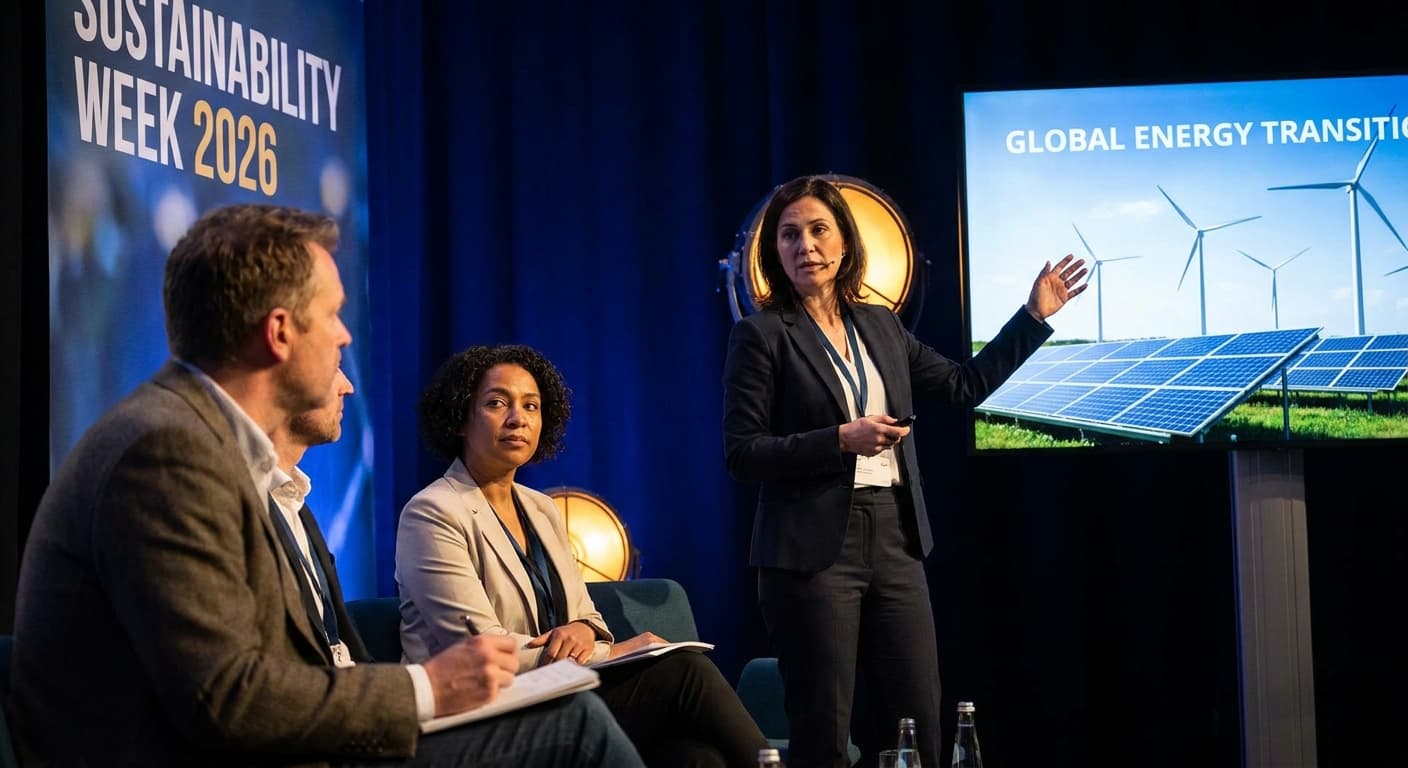
Economist Impact Sustainability Week 2026
Economist Impact Sustainability Week 2026 spotlights the energy transition, AI in clean technology, and supply chain resilience as themes for global leaders.
US Politics
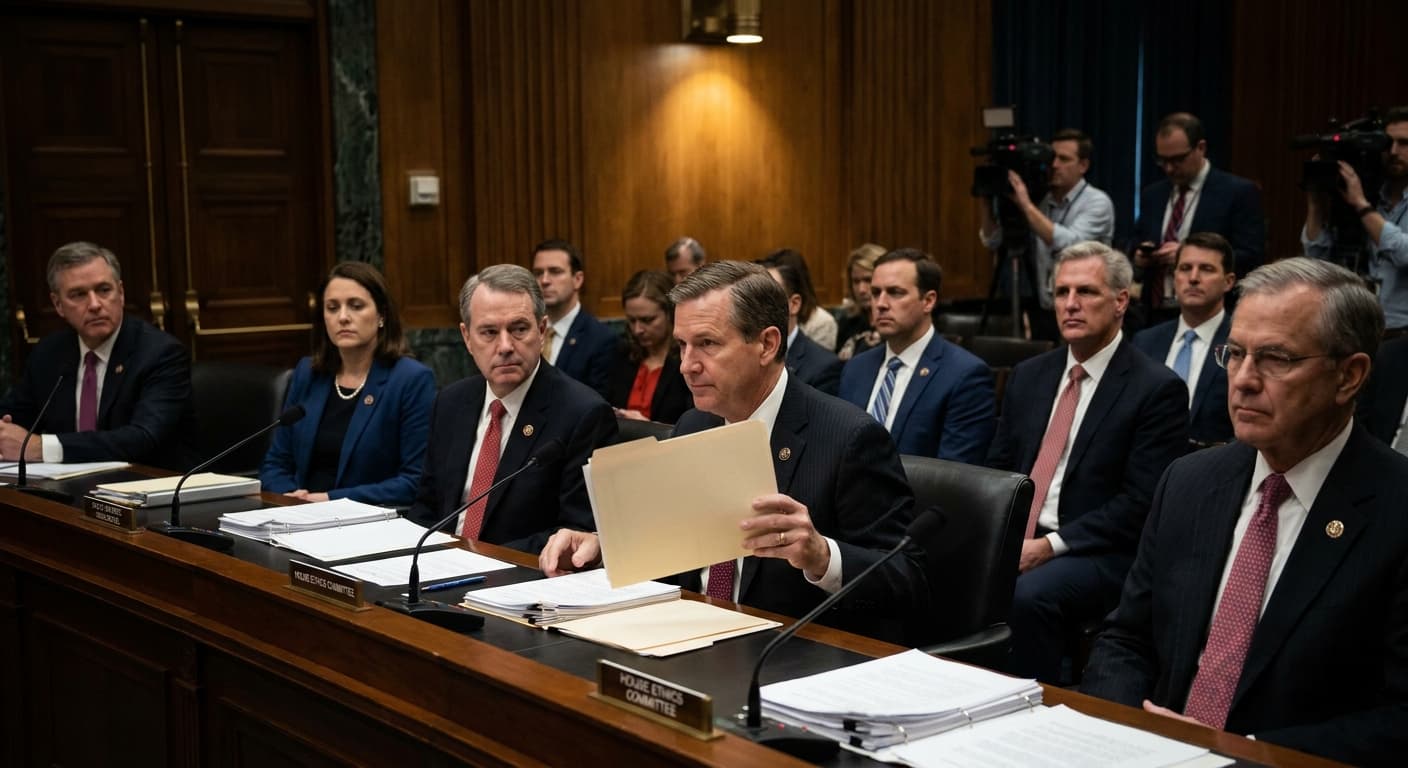
House Ethics Committee Pushes Sexual Miscond.
The House Ethics Committee has shifted responsibility for sexual harassment settlement records to the Office of Congressional Workplace Rights, complicating disclosure efforts.
India
Rajnath Singh's Durga Squad for 2026 Polls
Rajnath Singh's Durga Squad promised women's safety in Bengal but has since disappeared from the agenda, revealing BJP's true priorities.

Economics
Fed's Amex AML order puts correspondent banking on notice
Federal Reserve's Amex AML order requires board-level controls and a 90-day plan; OCC fined the bank $350 million over enterprise-wide deficiencies.