Modi turns an energy shock into a discipline test
Modi’s fuel appeal reframes a global oil shock as a domestic conservation duty, shielding the government while pressuring households and industry.
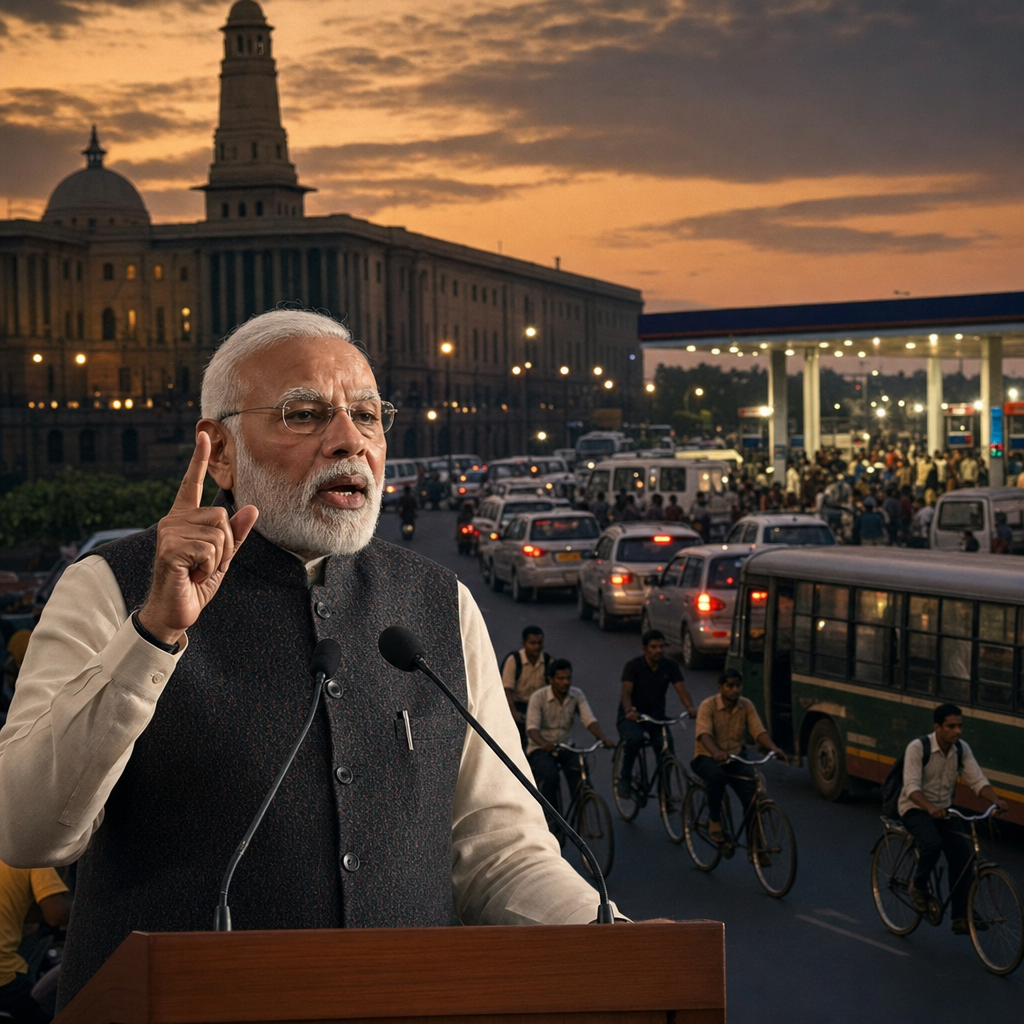
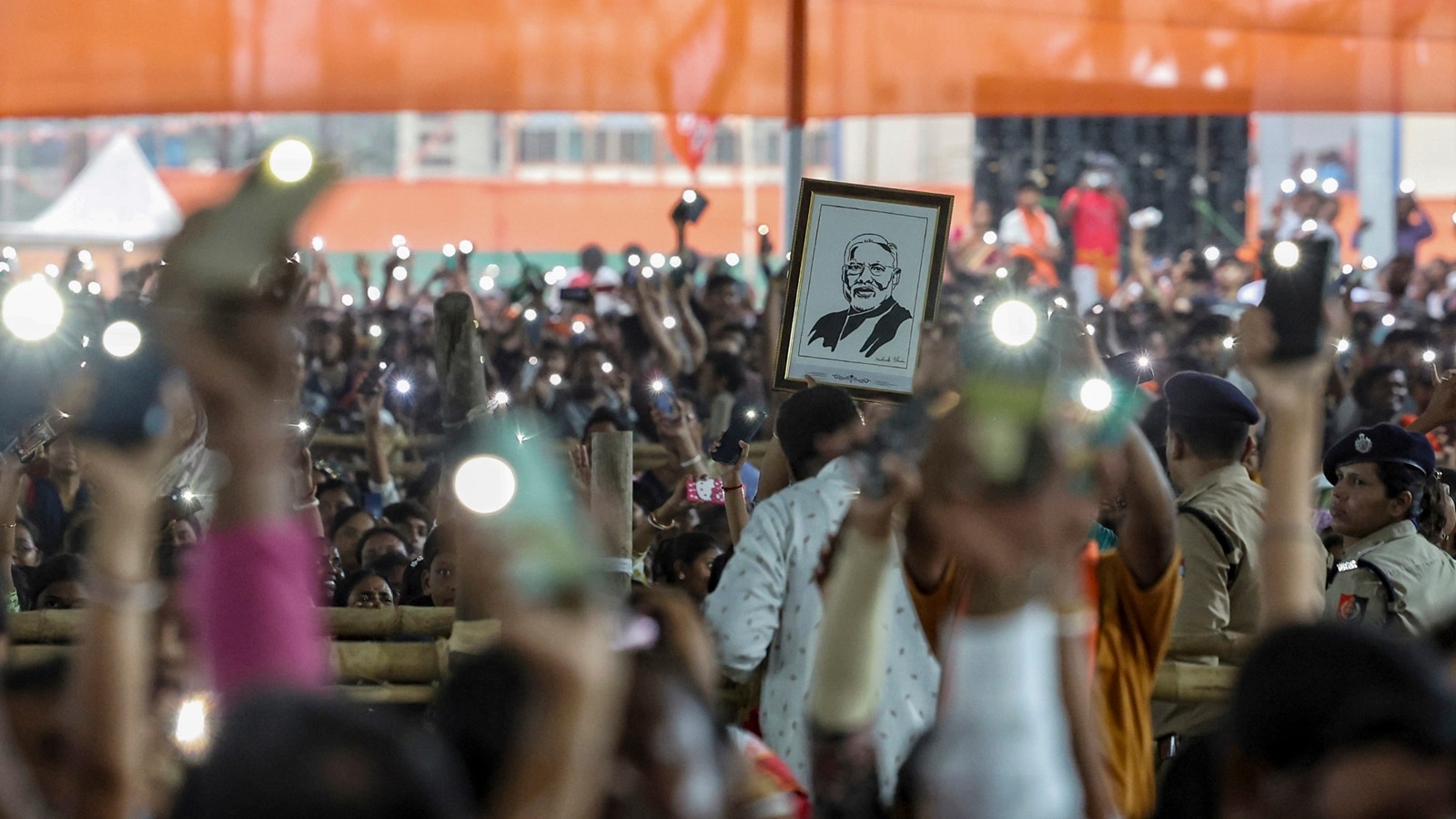
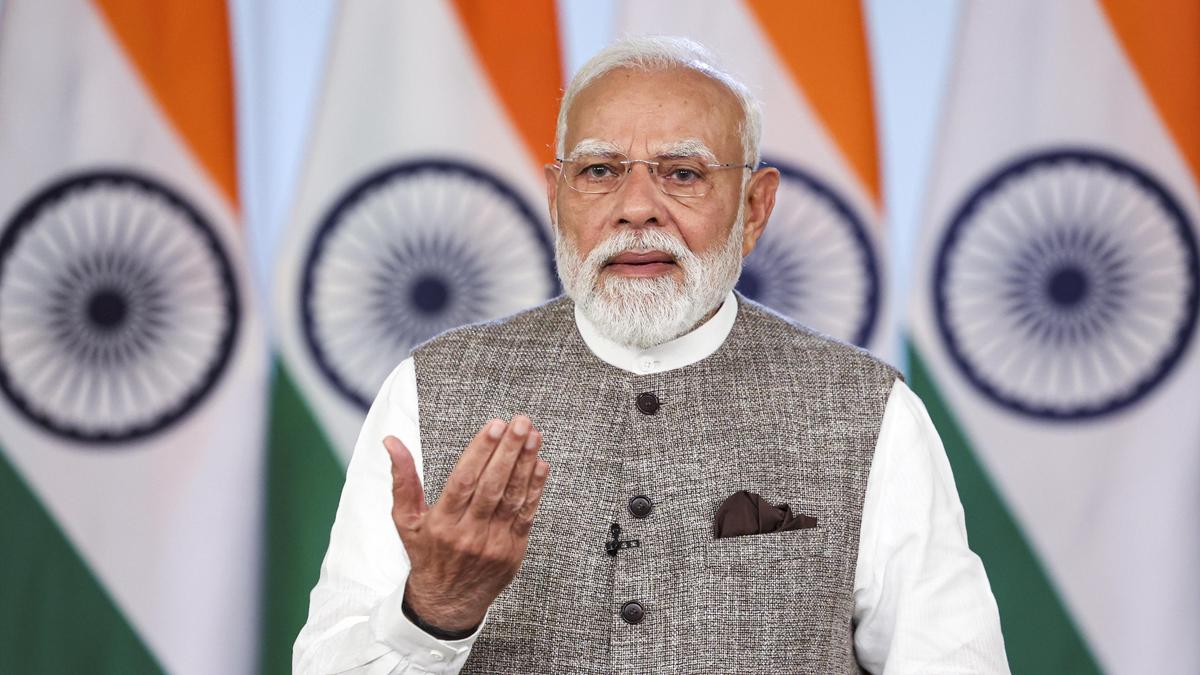
Prime Minister Narendra Modi used a speech in Hyderabad to ask Indians to cut petrol and diesel use, saying imported fuel should be consumed “only as per need” because the West Asia war is feeding a global energy shock, according to  NDTV Marathi and
  The Week. That is the real move: Modi is trying to convert import dependence into a public austerity message before rising fuel costs turn into a political problem.
The leverage point is oil dependence
India does not control the price shock. It imports almost all of its crude, and West Asia carried more than half of those imports just before the war escalated, according to a Reuters report republished by  The Hindu. That matters because the conflict has hit the exact supply lane India depends on most. Reuters said India imported nearly 91% of its crude requirement in February 2026, with West Asia supplying 54.4% of that volume.
Modi’s appeal is therefore less about conservation in the abstract than about managing exposure. He is asking consumers to do what the state cannot: reduce demand, blunt import costs, and slow the foreign-exchange drain. The pitch is politically useful because it presents restraint as national duty rather than government failure.
Why this helps the government
The immediate beneficiary is the Centre. If consumers accept the message, New Delhi gets more room to avoid a blunt retail-price shock. That has already been the governing instinct: fuel prices in India have been held steady even as global costs surged, and state-run oil companies have absorbed heavy losses, with The Hindu reporting estimated under-recoveries of about ₹30,000 crore since mid-March.
That policy protects households from immediate inflation, but it transfers pain down the chain to refiners and marketing companies. It also keeps the political cost off consumers for now. In that sense, the speech is a classic Modi move: frame sacrifice as collective responsibility while the state quietly buys time.
The government is also trying to show that India has more tools than just imports. Modi pointed to solar expansion and ethanol blending, and NDTV Marathi said he urged people to revive pandemic-era habits like work-from-home and video meetings where possible. The subtext is clear: if India can look less energy-wasteful, it can look less vulnerable.
What to watch next
The next test is whether this remains a speech or becomes policy. Watch for any combination of excise changes, conservation advisories, or fresh import and subsidy measures if crude stays elevated. Also watch the oil companies: if losses widen, the government will have to choose between cushioning consumers, protecting company balance sheets, or letting pump prices move.
For policymakers in India, the key date is the next price review cycle. For  India, the larger issue is whether the West Asia shock becomes a one-off disruption or the start of a more durable import problem. For the wider picture, see Global Politics.