Modi Pounces on Karnataka Congress Rift in Bengaluru
The PM is turning a state-level leadership quarrel into a national indictment of Congress competence, just as Siddaramaiah and D.K. Shivakumar remain locked in a power-sharing standoff.
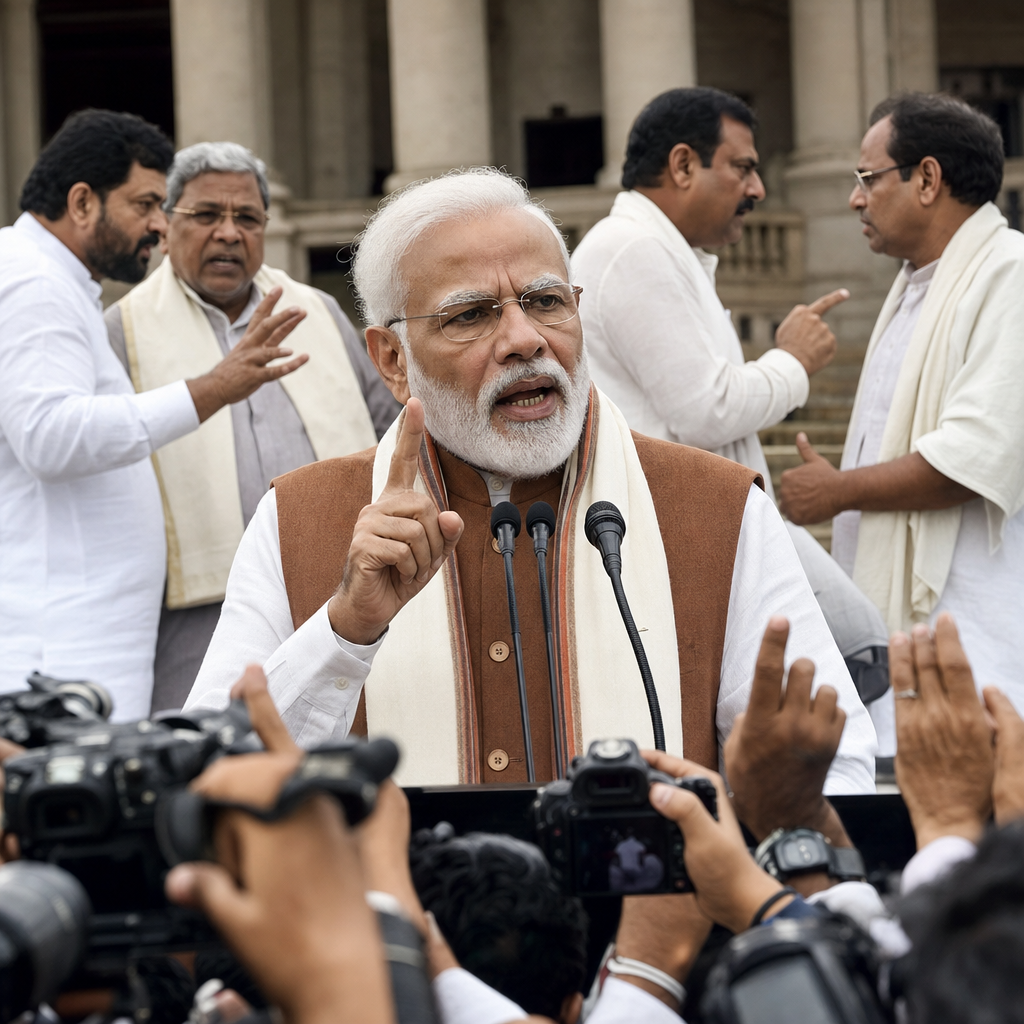
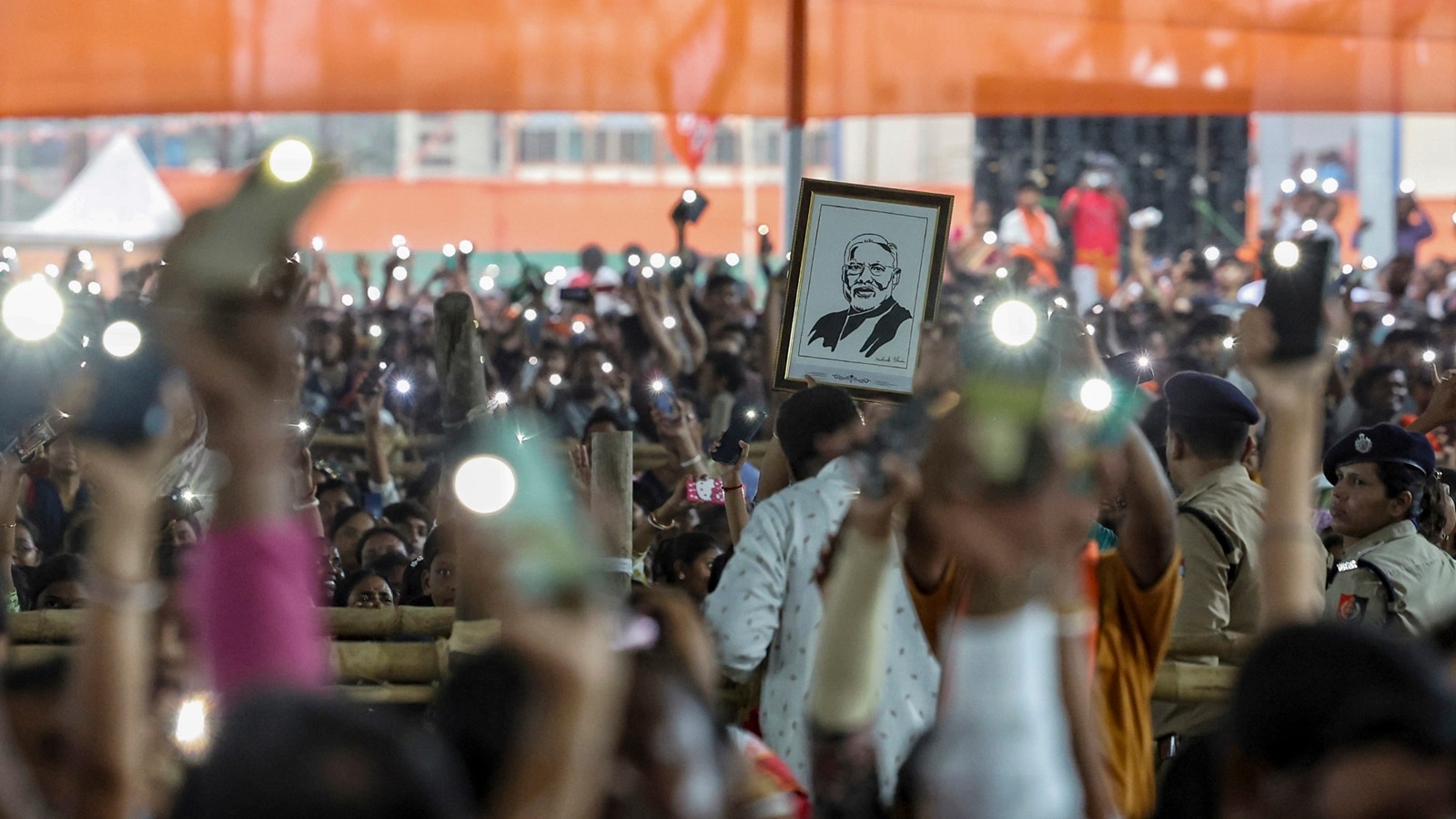
Prime Minister Narendra Modi used a Bengaluru address to BJP workers to argue that the Karnataka Congress is spending more time on its own succession fight than on governance, saying the government has been absorbed by an unresolved leadership dispute instead of public problems, according to  The Hindu and
  Deccan Chronicle. Modi was referring to the long-running tussle between Chief Minister Siddaramaiah and Deputy Chief Minister D.K. Shivakumar, with the rotational-power question still hanging over the government as it nears three years in office. The political point is clear: Modi is trying to convert Congress’s internal ambiguity into proof of administrative weakness.
The leverage is narrative, not institutional
This is not just a routine attack line. The BJP does not control Karnataka’s government, but it does control the framing battle. By linking the state’s leadership uncertainty to larger Congress failures in Himachal Pradesh, Telangana and Kerala, Modi is trying to make Karnataka look like part of a pattern rather than a local dispute, The Hindu reported. That matters because party discipline is now itself the issue: every public remark from the Siddaramaiah and Shivakumar camps reinforces the story that the Congress high command cannot impose closure.
For Congress, the cost is immediate. The longer the dispute stays unresolved, the more cabinet expansion, transfers and policy decisions get read through a factional lens rather than a governing one. That is exactly what a  India watcher should notice: in Karnataka, the fight is not only about who leads; it is about whether the party can demonstrate that it has a durable model for power beyond electoral arithmetic.
Why Karnataka is the test case
Karnataka matters because it is one of the Congress’s biggest prizes and one of the BJP’s most valuable rebuttals. The state has a large urban middle class, a strong business base and a deep symbolic role in the BJP’s southern ambitions. Modi’s speech in Bengaluru, then, was not aimed only at Karnataka voters. It was also meant to tell the broader opposition that Congress governments can win office and still fail to settle authority. The The Hindu report from May 3 is the key context here: leadership talks in Delhi are unlikely to be settled in the next few weeks, and Congress president Mallikarjun Kharge has said there is no timeline for a change.
That delay benefits the BJP because it keeps Karnataka in a state of visible unease. It also benefits the Shivakumar and Siddaramaiah camps in a narrower sense: each side can wait for the high command to move first. But the institution that loses is the state government itself, because policy delivery starts to look secondary to faction management.
What to watch next
The next decision point is whether the Congress high command finally sets a date for ending the suspense. If it does not, the dispute will likely surface again around cabinet expansion and any move on the rotation formula, which The Hindu says could reignite in the coming weeks. Watch for a Delhi visit by either Siddaramaiah or Shivakumar, and for Kharge to intervene publicly. Until then, Modi has the cleaner political line: Congress is busy managing itself while the BJP claims the language of stability.