Mexico Seeks US Charges Over 17 ICE Deaths
Mexico files criminal complaints over 17 ICE deaths, a legal first.
Model Diplomat7 min readNorth America
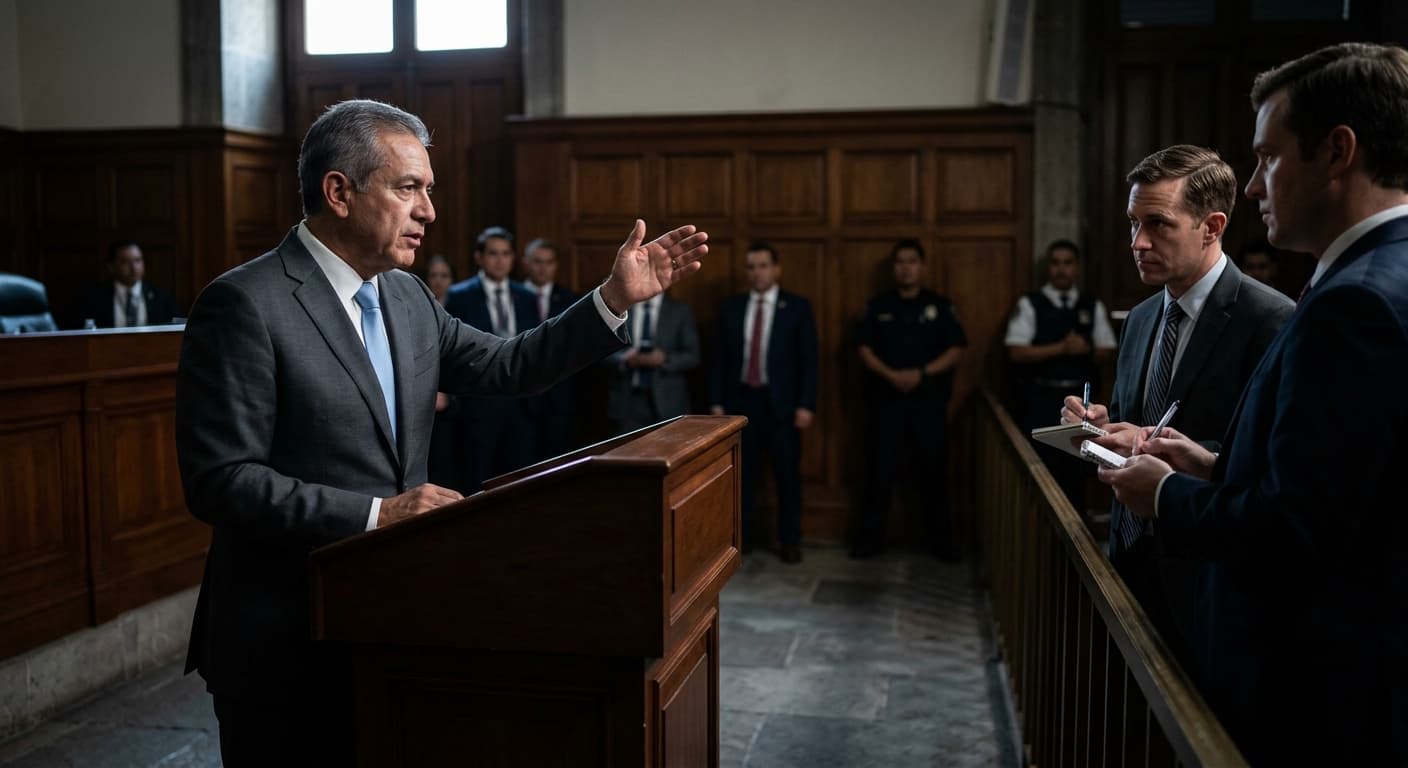
Mexico's Demand for US Charges Over 17 ICE Deaths Is a Sovereignty Play Disguised As a Lawsuit
Mexico's July 14 demand that US prosecutors criminally investigate 17 deaths of its nationals in ICE custody is the first time a foreign government has sought criminal charges in American courts over immigration-enforcement killings — a legal long shot that reshapes the leverage map days before the USMCA review window closes.
On July 14, 2026, President Claudia Sheinbaum ordered Mexico's embassy in Washington and its consular network to file criminal complaints with US state prosecutors and the Department of Justice over the deaths of 17 Mexican nationals in ICE custody or during enforcement operations since Donald Trump returned to office in January 2025, Al Jazeera reported. Fourteen died in detention; three were killed during raids. The move is the first time a sovereign government has asked US criminal courts to hold American immigration authorities accountable for the deaths of its citizens — and it lands six days before the July 20 USMCA review checkpoint that will decide whether North America's trade pact survives in its current form.
The timing is not coincidence. It is the sharpest escalation in a bilateral relationship stretched to its limits by tariffs, cartel indictments, and a body count that Mexico City can no longer absorb diplomatically.
The numbers behind the demand
The 17 deaths are a subset of a broader surge. At least 32 people died in ICE custody in 2025, a 290% increase over the 11 recorded in 2024, according to ICE's own data, confirmed by NPR. By April 2026, 29 deaths had been logged since the fiscal year began in October 2025 — already surpassing the previous all-time high of 28 set in 2004. The detention population roughly doubled under Trump, from under 40,000 in January 2025 to more than 70,000 by January 2026, according to the Transactional Records Access Clearinghouse at Syracuse University,
Al Jazeera reported.
Mexico's 17 break down as 14 deaths in custody and three killed during enforcement operations. The triggering incident was the July 7, 2026, shooting of Lorenzo Salgado Araujo, a 52-year-old Mexican national who had lived in the US for 35 years and had no criminal record, during a vehicle stop in Houston, Al Jazeera reported. DHS said Salgado Araujo rammed an ICE vehicle and tried to run over an officer; family members and witnesses contest that account and have called for release of video footage and an independent probe. He was the 17th Mexican national to die during Trump's second-term enforcement drive.
Four of those deaths occurred at the Adelanto ICE Processing Center in California — the facility Mexico targeted with its first cease-and-desist letter on July 14. Adelanto's record is long-documented. A 2018 DHS Inspector General report, cited in congressional testimony, found "nooses dangling from air vents," detainees denied basic dental care resulting in avoidable tooth loss, and a man in a wheelchair placed in solitary confinement for nine days without being moved to a bed. ICE gave Adelanto a passing inspection rating two months later. The IG concluded that "ICE does not adequately hold detention facility contractors accountable for not meeting performance standards," according to the same congressional record.
A 50-year escalation from diplomatic notes to criminal courts
Mexico's protest of US treatment of its nationals in detention is not new. In June 1973, Mexican Foreign Minister Emilio Óscar Rabasa delivered a formal diplomatic note to the US Embassy demanding improved conditions in INS detention centers, consular access to detainees, and an end to alleged mistreatment — including electric shock — according to a State Department cable declassified in the Foreign Relations of the United States series. The US Embassy in Mexico City noted at the time that these complaints had "been repeated by GOM in many fora over past two years."
The difference between 1973 and 2026 is the mechanism. For half a century, Mexico's tool was the diplomatic note — a formal protest with no enforcement teeth. Sheinbaum's July 14 announcement breaks that pattern. Foreign Minister Roberto Velasco said Mexico will "move beyond the diplomatic sphere and go directly to US prosecutors," Al Jazeera reported. The four-pronged strategy, outlined by
TPR, comprises: a DOJ complaint filed through the Mexican embassy; complaints with state prosecutors in jurisdictions where deaths occurred; civil actions against private detention-center operators, starting with Adelanto; and a referral to UN High Commissioner for Human Rights Volker Türk requesting scrutiny of whether the deaths are consistent with Washington's international obligations.
The UN track has precedent. In March 2023, after 39 migrants died in a fire at a Mexican detention center in Ciudad Juárez, UN experts — the Committee on Migrant Workers and the Special Rapporteur on the human rights of migrants — called for "prompt, thorough and independent" investigations, the UN in Mexico stated. Mexico is now inverting that dynamic: asking the same UN machinery to scrutinize the United States.
The legal mechanics: why charges are unlikely, but the case still matters
Mexico's approach is legally novel. It is not invoking the Mutual Legal Assistance Treaty framework, which would route requests through DOJ's Office of International Affairs under 18 U.S.C. § 3512 and require authorization by "an appropriate official of the Department of Justice." Instead, Mexico is filing complaints directly with state-level prosecutors — district attorneys in Texas, California, and other states where deaths occurred — alongside a parallel DOJ referral through the embassy.
No US statute obligates a state prosecutor to act on a foreign government's criminal complaint. State attorneys general have jurisdiction over homicides and negligent deaths within their borders, but federal immigration officers carry qualified immunity defenses, and federal supremacy doctrines complicate state prosecution of federal agents acting in their official capacity. No immigration officer has been charged in any of the deaths, Al Jazeera and the Associated Press reported.
The more viable track is civil. Mexico plans civil suits against the private companies that operate ICE detention centers — companies like CoreCivic and GEO Group. Tort claims for medical negligence, wrongful death, and failure to meet duty-of-care standards face lower evidentiary thresholds and do not require overcoming sovereign immunity. The Brookings Institution noted that "medical negligence by ICE and its contractors is responsible for about half of all deaths in custody," citing whistleblower findings that the agency's own medical service provider was "severely dysfunctional and that preventable harm and death to detained people has occurred."
But the criminal complaints serve a function beyond conviction odds. They create a formal evidentiary record. They force US prosecutors to either open investigations or publicly decline — a choice with political costs. And they signal to Mexican domestic audiences that Sheinbaum is not merely absorbing Washington's pressure.
The USMCA backdrop: leverage in a one-way relationship
The ICE-death complaints arrive at a moment of maximum bilateral strain. The USMCA's Article 34.7 required the three parties to decide by July 1, 2026, whether to extend the agreement for another 16 years. That deadline passed without renewal, as BBC reported; the US is not expected to renew, entering instead an annual-review cycle with a hard expiry of 2036. Trump has said he sees the deal "expiring immediately," though USMCA-compliant goods remain exempt from the Section 122 tariff surcharge his administration imposed after the Supreme Court struck down IEEPA-based tariffs,
CSIS documented.
The trade relationship is asymmetric in leverage but not in pressure points. Trump threatened 30% tariffs on Mexican goods on July 11, 2025, before Sheinbaum secured a 90-day freeze on July 31, NPR reported. The US has already indicted a sitting Mexican governor — Sinaloa's Rubén Rocha Moya — and nine Morena officials on drug-trafficking conspiracy charges, an unprecedented move
CSIS called "the most consequential application" of the White House's escalating pressure campaign. Mexico has delivered: the killing of CJNG leader Nemesio Oseguera Cervantes ("El Mencho") on February 22, 2026, the transfer of 92 indicted traffickers to US custody, and record fentanyl seizures, according to
Crisis Group. Yet the goalposts keep moving.
The ICE-death complaints are Sheinbaum's first counter-leverage move. She cannot match US tariff power or indictment reach. But she can internationalize the human-rights dimension, force the US into a defensive posture at the UN, and create a record that complicates Washington's moral standing during the USMCA review — all while maintaining the security cooperation that keeps Trump from escalating further.
Who wins, who loses
Sheinbaum is the immediate political beneficiary. She faces pressure from Morena hardliners who want a tougher stance against Washington and from domestic critics who argue she has been too accommodating, the Stimson Center noted. The criminal-complaints move lets her demonstrate sovereignty defense without breaking the security cooperation pipeline — a dual track consistent with her "cooperation without subordination" doctrine.
Private detention operators — CoreCivic, GEO Group, and others — face the most concrete legal exposure. Civil suits over medical negligence and inadequate care at facilities like Adelanto carry financial risk and reputational costs, even if criminal charges against individual agents remain unlikely. The GAO has documented over 100 complaints about ICE and CBP care of pregnant women alone between 2015 and 2019, with most cases unable to determine whether proper care was provided.
ICE and DHS are the institutional losers. The complaints add to a mounting oversight record that includes an April 2026 letter from Democratic Senators Jon Ossoff and Raphael Warnock noting that of 49 custody deaths since January 2025, "ICE has issued an interim death notice within 48 hours in only 15 cases," NPR reported. Acting ICE Director Todd Lyons attributed the death toll to record detention numbers; DHS maintained death rates are 0.009% of the detained population.
The Trump administration loses narrative control. For 18 months, Washington has framed the bilateral relationship as a story of Mexican inadequacy — insufficient fentanyl control, cartel collusion, migration failures. The ICE-death complaints invert that frame: Mexico is now the party demanding accountability, and the US is the party explaining a rising body count.
Discover more

US Politics
House Ethics Committee Pushes Sexual Miscond.
The House Ethics Committee has shifted responsibility for sexual harassment settlement records to the Office of Congressional Workplace Rights, complicating disclosure efforts.
Global Politics
Trump's Conflicting Messages on Iran War
Trump's mixed messages on Iran reflect a strategy of audience management, benefiting Tehran amid a complex geopolitical landscape.

International Relations
Pakistan's Key Role in US-Israel-Iran Meddle
Pakistan is seeking to mediate the US-Israel-Iran conflict, balancing high-stakes diplomacy against severe economic pressures and steep regional challenges.

Conflict & Security
Drone Warfare Killing Aid Workers at Unprec
Over 1,000 humanitarian workers killed in three years as cheap armed drones collapse legal protections. Gaza, Sudan, Ukraine, and DRC see deliberate targeting of aid convoys and hospitals with zero prosecutions.