Merkel Rumour Exposes Europe’s Ukraine Power
Europe seeks a role in Ukraine negotiations amid US stalling.
Model Diplomat3 min readEurope
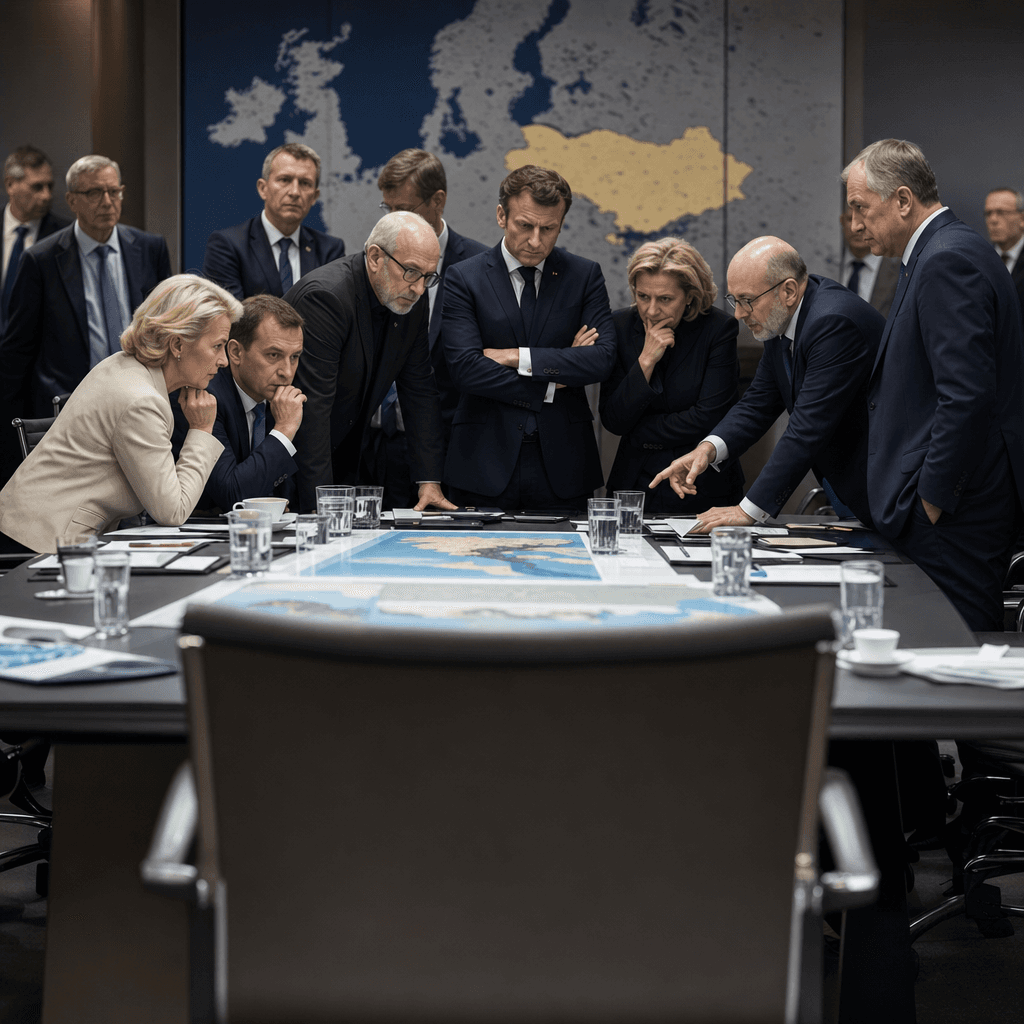
Merkel Rumour Exposes Europe’s Ukraine Bargaining Power
Talk of Angela Merkel as a Putin envoy is premature, but it reveals a bigger shift: Europe is trying to stop Washington from owning the Ukraine endgame.
The immediate story is not that Angela Merkel is heading to Moscow. It is that European governments are discussing former heavyweights — including Merkel, Mario Draghi and Sauli Niinistö — as possible interlocutors for any future talks with Vladimir Putin, even as the war keeps grinding on, according to The Guardian and the
Financial Times. The substance is thin because no negotiation is actually underway. The signal is not: “Merkel will negotiate.” The signal is: Europe wants a seat at the table before the table is set without it.
Context: who is moving, and why
This is happening because the US-led peace track has stalled. The FT reported that EU governments are debating whether former leaders could serve as a “Putin whisperer” as Washington’s diplomacy runs into a battlefield stalemate and Russia shows no sign of softening its terms (Financial Times). The Guardian’s framing is sharper: the rumor is “meaningless in substance” because there is no imminent negotiation, but it still reflects the reality that Europe is under pressure to define its own role in the war (
The Guardian).
That matters because leverage in this war is no longer just military. It is diplomatic, financial and political. The Guardian notes that EU leaders have backed a €90bn package for Ukraine over the next two years through the EU budget, while Washington has stepped back and Europeans have stepped up (The Guardian). That does not end the war, but it changes the bargaining environment: Kyiv is less isolated, and Brussels has more skin in the game.
Why it matters: Europe is trying to avoid being sidelined
The real power struggle is between Moscow and the transatlantic coalition over who gets to define any settlement. Russia benefits from any arrangement that splits Europe from the United States or turns Europe into a junior observer. A Merkel-style envoy would help Moscow only if it could be used to legitimize Russian terms without Russia changing them. That is why names matter less than process.
Europe’s motive is more defensive. Officials worry that a US-mediated deal could freeze the war on terms they would be expected to bankroll and enforce without having shaped the outcome. That is why the discussion around a former German chancellor or an ex-Italian prime minister is not nostalgia; it is an attempt to build a parallel channel that cannot be ignored. The war is also already broader than Ukraine: the Guardian points to Russia’s bombardment of Kyiv and a wider hybrid confrontation with Europe, including drone alerts that send Lithuanians to shelters (The Guardian).
For Kyiv, the upside is limited but real. More European engagement means more money, more air defense and less chance of a rushed deal dictated elsewhere. For Moscow, the risk is that Europe’s growing role hardens the Western line rather than softens it.
What to watch next
The key date is the next EU foreign ministers’ discussion of Ukraine policy and any formal movement on envoy selection. Watch whether Brussels settles on a name, whether Kyiv publicly endorses a European channel, and whether Washington treats that as complementary or competitive. If the US peace track stalls further, the pressure to name a European emissary will grow — not because Merkel is the answer, but because Europe no longer wants to be the afterthought. For broader context, see Conflict and
International.
Discover more
India
Romanian Coalition Party Demands PM Resign
Romania's Social Democrats withdrew from coalition, joining far-right AUR to topple PM Bolojan, risking €10 billion in EU funds by August 2026.
Global Politics
Trump's Conflicting Messages on Iran War
Trump's mixed messages on Iran reflect a strategy of audience management, benefiting Tehran amid a complex geopolitical landscape.

International Relations
Pakistan's Key Role in US-Israel-Iran Meddle
Pakistan is seeking to mediate the US-Israel-Iran conflict, balancing high-stakes diplomacy against severe economic pressures and steep regional challenges.

Conflict & Security
Drone Warfare Killing Aid Workers at Unprec
Over 1,000 humanitarian workers killed in three years as cheap armed drones collapse legal protections. Gaza, Sudan, Ukraine, and DRC see deliberate targeting of aid convoys and hospitals with zero prosecutions.