Magyar's Victory: Hungary's Shift to EU
New PM Magyar aims to reset Hungary's EU relations and unlock funds.
Model Diplomat3 min readEurope
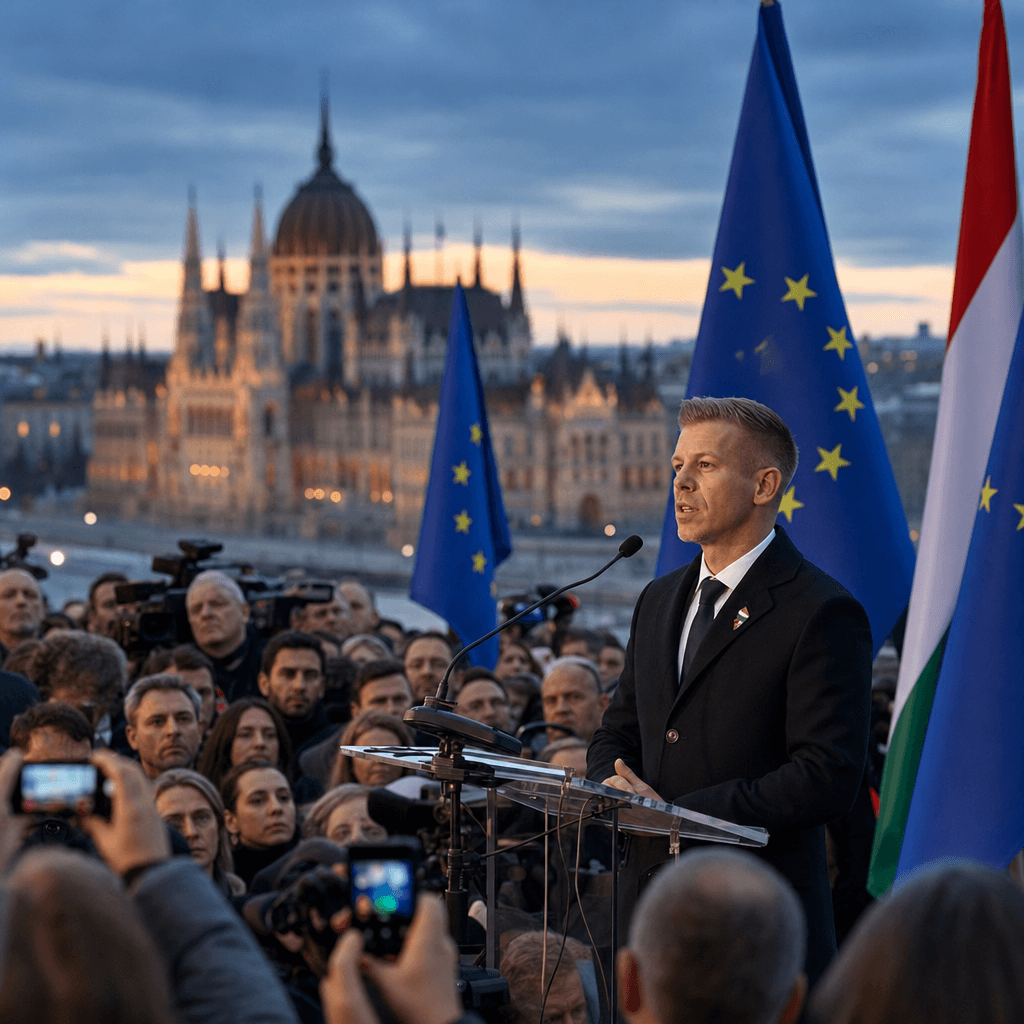
Magyar Takes Power as Orbán’s Hungary Turns Toward EU
Magyar’s landslide gives him leverage to reset Hungary’s ties with Brussels, but his first test is unlocking frozen EU cash.
Péter Magyar is set to be sworn in as Hungary’s new prime minister, ending Viktor Orbán’s 16-year grip on power after the opposition Tisza party’s landslide victory, The Guardian and
BBC News report. The immediate power shift is clear: Magyar enters office with a parliamentary mandate strong enough to dismantle Orbán-era structures, while Orbán is reduced to a caretaker role and a party leader trying to regroup,
BBC News and
POLITICO report.
The real prize is Brussels money
Magyar’s first political objective is not domestic symbolism but cash. He has already moved to persuade European Commission President Ursula von der Leyen that Hungary can unlock billions of euros in suspended EU funds if Budapest reverses the rule-of-law damage associated with Orbán’s rule, BBC News,
POLITICO, and
Le Monde report. That gives Brussels leverage over Magyar, even as he uses the promise of a clean break to claim fast wins at home.
The numbers matter. Reuters-style coverage is not available in the seed set, but the reporting from BBC, POLITICO, and Le Monde is consistent: roughly €10 billion in recovery funds and up to €17-18 billion in broader EU money have been frozen over corruption and rule-of-law concerns, BBC News,
POLITICO, and
Le Monde report. That means Magyar inherits a useful foreign-policy asset: if he moves quickly, he can present EU cash as the first dividend of Orbán’s defeat.
Orbán loses office, not influence
Orbán is out of government, but not out of Hungarian politics. He has given up his parliamentary seat while keeping control of Fidesz, and the party is already reorganizing around the post-defeat question of whether he can remain its long-term leader, BBC News and
POLITICO report. That means Magyar faces a hostile opposition with deep patronage networks, a loyal media ecosystem, and a leader who still knows how to mobilize nationalist grievance.
Magyar is signaling a sharp reset. The Guardian says he plans to suspend state media broadcasts, remove Orbán-era appointees, restore the European flag to parliament’s facade, and elevate Krisztián Kőszegi as the first Roma vice-president of the National Assembly, while women will hold more than a quarter of seats in the new legislature, The Guardian reports. Those gestures matter because they are designed to show that this is not just a смена of personnel but a break with the governing style that consolidated Orbán’s system.
What to watch next
The next decision point is Brussels. Magyar has signaled he wants a political agreement with EU leaders in late May, and he may return to Brussels on May 24-25 to close it, BBC News and
POLITICO report. If he can deliver even a partial unfreezing of funds, he will strengthen his hand before Orbán’s network can regroup. If he cannot, the economic pain that helped bring Orbán down will quickly become Magyar’s problem. For broader context, see
Global Politics and
Hungary.
Discover more
India
Romanian Coalition Party Demands PM Resign
Romania's Social Democrats withdrew from coalition, joining far-right AUR to topple PM Bolojan, risking €10 billion in EU funds by August 2026.

Conflict & Security
Drone Warfare Killing Aid Workers at Unprec
Over 1,000 humanitarian workers killed in three years as cheap armed drones collapse legal protections. Gaza, Sudan, Ukraine, and DRC see deliberate targeting of aid convoys and hospitals with zero prosecutions.

Global
World Normalises Taliban as Afghan Women Eras
UN data shows Afghan women erased from public life as Russia recognises the Taliban, EU hosts officials in Brussels, and ICC warrants for gender persecution go unenforced.
Conflict & Security
West Africa Food Crisis: Three Shocks in 2026
Conflict, climate extremes, and the Strait of Hormuz closure drive a severe food crisis in West and Central Africa, with fertilizer prices surging 80% and millions displaced.