North Korea-Russia Bridge Boosts Supply Lines
New bridge strengthens ties between Moscow and Pyongyang.
Model Diplomat2 min readAsia
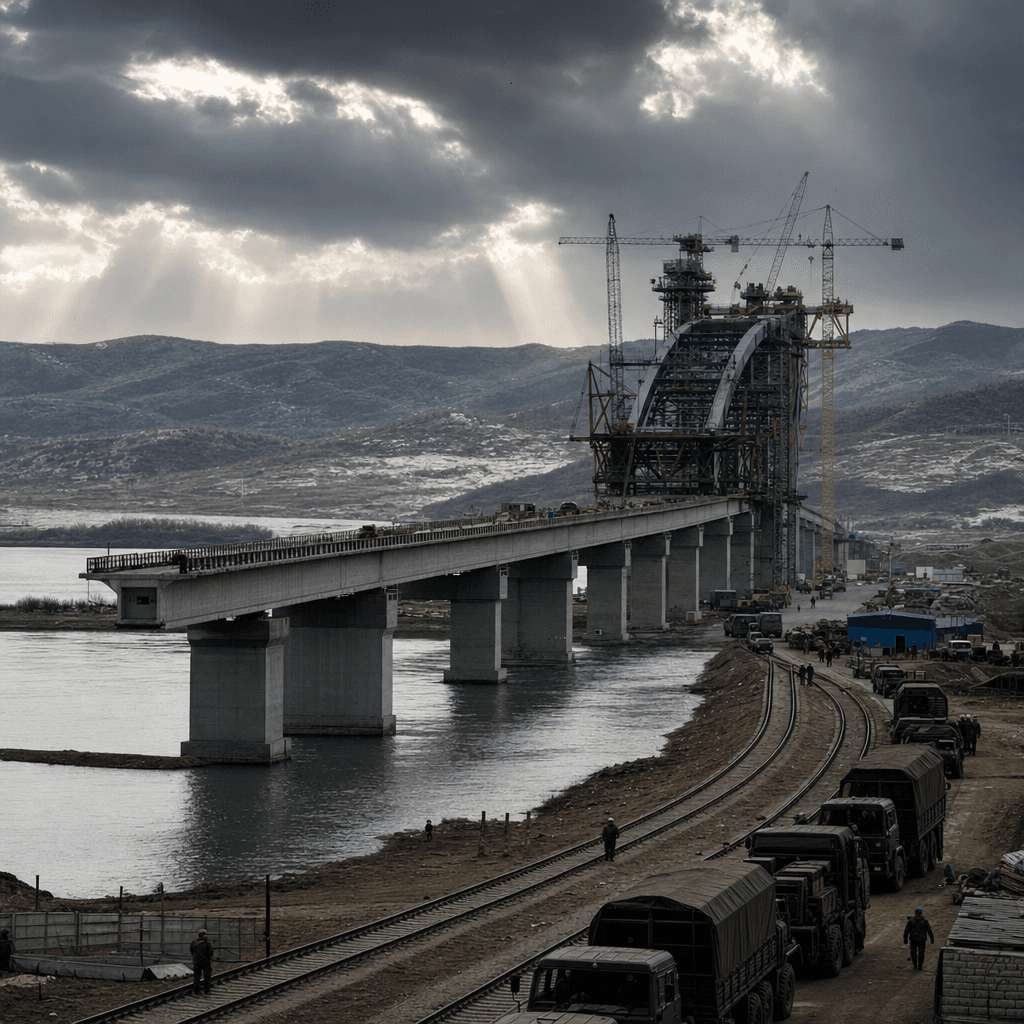
North Korea-Russia Bridge Nears Finish, and So Does a Supply Line
The Tumen River bridge will move trucks, troops and sanctioned goods faster. Moscow and Pyongyang are turning wartime aid into infrastructure.
The first road bridge between North Korea and Russia is nearly complete, with BBC Verify satellite imagery showing the Khasan–Tumangang crossing, access roads, a checkpoint and parking areas taking shape beside the existing rail link over the Tumen River (BBC). Russia’s embassy in Pyongyang has said construction should be finished on 19 June, after the two sides ceremonially joined the bridge in late April (
BBC).
A bridge built for controlled logistics, not open trade
The key point is leverage: Moscow and Pyongyang want a more resilient land corridor that can move goods without relying on the narrow, old “Friendship Bridge” rail connection alone (BBC). Russia says the new road bridge will handle up to 300 vehicles and 2,850 people a day, while analysts cited by BBC note that drivers will probably have to transfer cargo at the border rather than roam freely inside each other’s territory (
BBC;
CSIS).
That design tells you what this really is: a managed supply route. CSIS says the bridge project has already shown the kind of border infrastructure that usually accompanies customs controls and transshipment, not seamless civilian commerce (CSIS). For
Global Politics, the significance is not the concrete; it is the logistics.
Sanctions pressure is pushing the two sides closer
The bridge is the latest physical expression of a relationship that has already gone military. BBC says the project was agreed during Vladimir Putin’s visit to Pyongyang in June 2024, when Russia and North Korea pledged to help each other in the event of “aggression,” and that North Korea has since sent troops, missiles and long-range weapons to support Russia’s war in Ukraine (BBC). South Korea estimates Pyongyang has sent about 15,000 troops and that roughly 2,000 North Koreans have died in the conflict, according to the BBC report (
BBC). North Korea publicly confirmed troop deployment in late April, after initially staying silent, according to AP reporting carried by NPR (
NPR/AP).
The payoff is obvious. Russia gets labor, munitions and another sanctioned partner willing to keep goods moving as it faces Western restrictions. North Korea gets food, fuel and military technology in return, according to BBC’s reporting and South Korean assessments (BBC;
NPR/AP). The bridge turns that bargain into an operating system.
What to watch next
Watch the 19 June completion date first: whether Russia and North Korea open the crossing on schedule, and whether they frame it as a trade project or a defense asset (BBC). Then watch traffic patterns after opening: if cargo volume rises while vehicle movement remains tightly controlled, that will confirm the bridge is meant to deepen sanctions evasion and military logistics, not ordinary commerce (
CSIS). For
Conflict, that is the real story: the war in Ukraine is hardening into a durable Russia–North Korea security corridor.
Discover more

India
India-South Korea $50B Trade Expansion Plan
India and South Korea target $50 billion in bilateral trade by 2030, focusing on industrial cooperation and strategic alignment amid US pressures.

Global Politics
US Seizes Iranian Ship, Tensions Surge
The US seizure of the Iranian ship Touska highlights a shift in control over the Strait of Hormuz, favoring Iran's strategic position.

Conflict & Security
Drone Warfare Killing Aid Workers at Unprec
Over 1,000 humanitarian workers killed in three years as cheap armed drones collapse legal protections. Gaza, Sudan, Ukraine, and DRC see deliberate targeting of aid convoys and hospitals with zero prosecutions.

Global
World Normalises Taliban as Afghan Women Eras
UN data shows Afghan women erased from public life as Russia recognises the Taliban, EU hosts officials in Brussels, and ICC warrants for gender persecution go unenforced.