Macron's Kenya Summit to Rebrand France in Af
France seeks to redefine its influence in Africa at summit.
Model Diplomat3 min readAfrica
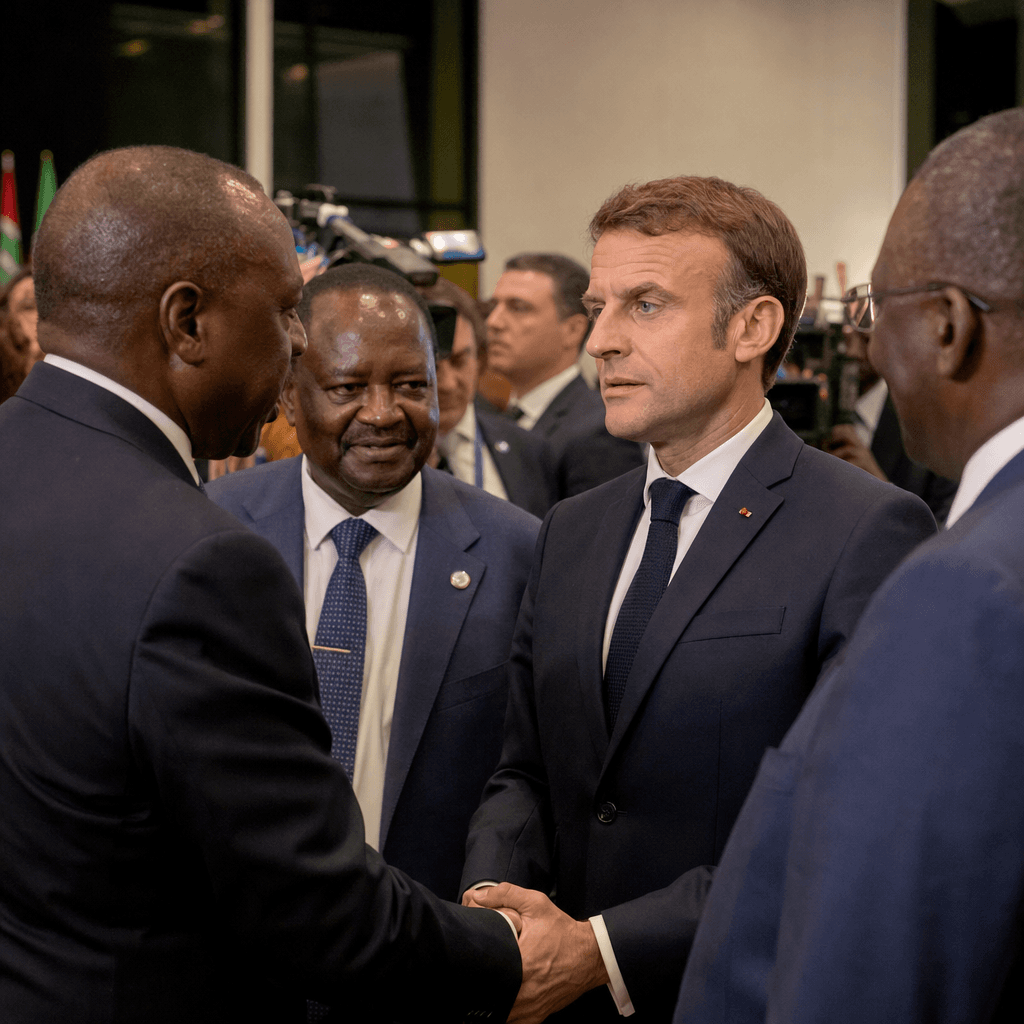
Macron’s Kenya Summit Is a Bid to Save France’s Africa Role
France is trying to bury Francafrique in Kenya, but the real story is leverage: African capitals now have more options, and Paris is trying to buy relevance back.
French President Emmanuel Macron is using this week’s “Africa Forward” summit in Kenya to rebrand France’s Africa policy after years of visible decline, according to Al Jazeera’s video report and a companion dispatch on his East Africa tour (Al Jazeera,
Al Jazeera). The message is straightforward: France wants to move away from the old Francafrique model — political patronage, privileged business access and security dominance — and present itself as a partner for investment, youth, climate and entrepreneurship.
France is reacting to a loss of control
That shift is not voluntary. Al Jazeera notes that France has lost much of its relevance in West Africa, especially after coups and the expulsion of French forces from Mali, Burkina Faso and Niger. Africanews says the broader push is Paris’s attempt to abandon the “Francafrique” strategy altogether, after decades in which France was accused of keeping francophone states under its thumb through opaque deals and military leverage (Africanews).
This matters because leverage has moved. In the Sahel, military juntas have turned toward Russia for security ties, while across the continent African governments are shopping for better terms from multiple outside powers. France is still important, but it is no longer the default external power. That is why Macron is doing something symbolic as much as diplomatic: hosting a major summit in Nairobi, in an English-speaking country, instead of the old Francophone heartland. It is the first such forum Macron has attended outside the francophone sphere, according to Al Jazeera (Al Jazeera).
Macron’s pitch is economic, not imperial
The French line, reported by the Washington Post’s AP dispatch, is that Paris now wants a “partnership of equals” rather than a dominant postcolonial role (The Washington Post / AP). Macron is also leaning into a harder-edged message: in interviews highlighted by Arab News and AfricaNews, he argued that Europe is not “the predator of this century,” while casting China’s critical-minerals strategy as predatory and urging African leaders to improve governance (
Arab News,
AfricaNews).
That framing tells you what France is trying to do. It is not just apologizing for the past; it is trying to compete for future contracts, supply chains and political influence. Kenya benefits from being the new venue and from any investment deals signed at the summit. French companies benefit if the summit opens doors in East Africa. The losers are obvious: the old network of French influence, and the Sahel juntas that have made anti-French politics part of their legitimacy.
What to watch next
The key test is not Macron’s language. It is whether the summit produces actual agreements, and whether France can turn symbolism into market access and security cooperation. Watch the Nairobi summit’s communiqués, then Macron’s stop at the African Union in Addis Ababa later in the week, where France will try to show it still has a role in continental diplomacy (Al Jazeera). If there are no substantive deals, this will read less like a reset than a managed retreat.
Discover more

India
Modi's Women’s Convention in Varanasi
Modi's Varanasi rally frames women's reservation as a national mission, targeting the 2027 Uttar Pradesh elections with a strategic narrative.

International Relations
Pakistan's Key Role in US-Israel-Iran Meddle
Pakistan is seeking to mediate the US-Israel-Iran conflict, balancing high-stakes diplomacy against severe economic pressures and steep regional challenges.

Economics
Fed's Amex AML order puts correspondent banking on notice
Federal Reserve's Amex AML order requires board-level controls and a 90-day plan; OCC fined the bank $350 million over enterprise-wide deficiencies.
Conflict & Security
Guatemala: El Niño 2026–27 becomes regional security test
UNICEF: 25.8M children face El Niño risks in Latin America; Guatemala maps 188 municipalities for drought and food insecurity amid regional security test.