Macron’s Kenya Pivot
Exploring France's new partnerships in East Africa under Macron.
Model Diplomat3 min readAfrica
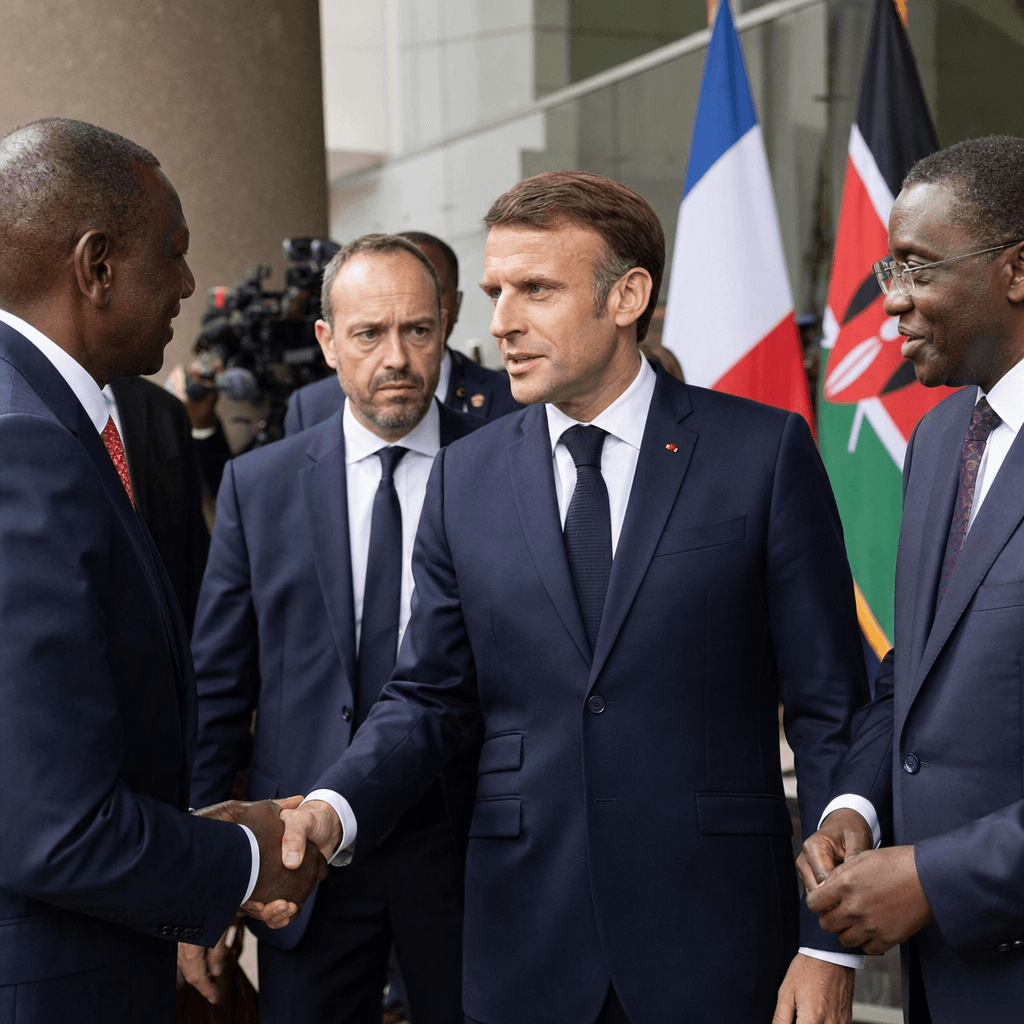
Macron’s Kenya Pivot Is a Bid to Reset France’s Africa Role
[France is trying to trade postcolonial leverage for new partnerships as Sahel losses push Macron toward Kenya, Egypt and Ethiopia.]
Emmanuel Macron is touring East Africa to show that France still has options in Africa even after losing ground in the Sahel and across much of its former francophone sphere, according to Al Jazeera and
France 24. The centerpiece is the “Africa Forward” summit in Nairobi — the first such forum Macron has attended in an English-speaking African country — where he will try to sell a “renewed partnership” built around investment, security cooperation and youth-focused ties rather than the old Francafrique model, both outlets report.
Kenya is the signal
The choice of Kenya is the point. France is not looking to recover the West African positions it has already lost; it is trying to bypass them. Al Jazeera says Macron will co-host the summit with President William Ruto, then move on to Ethiopia and meetings at the African Union headquarters.
France 24 adds that the meeting will bring together heads of state, business executives and development-bank chiefs — a sign that Paris wants commercial entry points where its political influence has weakened.
That is a pragmatic pivot. Kenya gives France a platform in a region where it is not burdened by the same colonial baggage as in the Sahel. It also gives Nairobi leverage: Ruto can extract investment promises and support for his push to make the global financial system more favorable to heavily indebted African states, a campaign France has already pledged to back, according to France 24. For more on how these shifting alignments affect broader diplomacy, see
Global Politics.
France wants trade and security, not just symbolism
Macron’s team is packaging the trip around “partnership,” but the underlying agenda is concrete. France 24 says investment deals in clean energy, AI and education are expected to feature prominently, while France is also leaning on a defense pact it signed with Kenya in October 2025 to deepen intelligence-sharing, maritime security and peacekeeping cooperation.
That matters because France is trying to prove it can still deliver value in Africa without troops on the ground. The problem is that its biggest losses are recent and visible: Al Jazeera reports that French forces were expelled from Mali, Burkina Faso and Niger after coups, with Russia filling some of the security vacuum.
France 24 also notes France’s handover of its last major Senegal base last July, underscoring how much leverage has drained away.
The credibility test is Wednesday, not Monday
This tour is less a breakthrough than a damage-control exercise before Macron leaves office. Agence France-Presse reports that critics in Africa see too much baggage for a real reset, while one analyst said “nothing particularly new can happen” before the end of Macron’s term. That is the core problem for Paris: it is asking African capitals to believe in a new model while its old model is still collapsing.
What to watch next is not the rhetoric in Nairobi, but the paper. If Macron leaves with named investment deals, any progress on debt-relief coordination, and a tangible security arrangement with Kenya, he can claim momentum. If not, this will read as a tour of the continent’s future by a power still trapped by its past.
Discover more

International Relations
Pakistan's Key Role in US-Israel-Iran Meddle
Pakistan is seeking to mediate the US-Israel-Iran conflict, balancing high-stakes diplomacy against severe economic pressures and steep regional challenges.

India
India-South Korea $50B Trade Expansion Plan
India and South Korea target $50 billion in bilateral trade by 2030, focusing on industrial cooperation and strategic alignment amid US pressures.

India
Modi's Women’s Convention in Varanasi
Modi's Varanasi rally frames women's reservation as a national mission, targeting the 2027 Uttar Pradesh elections with a strategic narrative.

Conflict & Security
Drone Warfare Killing Aid Workers at Unprec
Over 1,000 humanitarian workers killed in three years as cheap armed drones collapse legal protections. Gaza, Sudan, Ukraine, and DRC see deliberate targeting of aid convoys and hospitals with zero prosecutions.