Left Parties Claim Delay in Women's Bill
India's Left claims the women's reservation bill delay is intentional.
Model Diplomat7 min readIndia
Left Says Women's Quota Delay Is Deliberate — Here's Why It Sticks
India's Left parties call the stalled women's reservation bill a manufactured delay. The vote math and the census timetable show why they have a point.
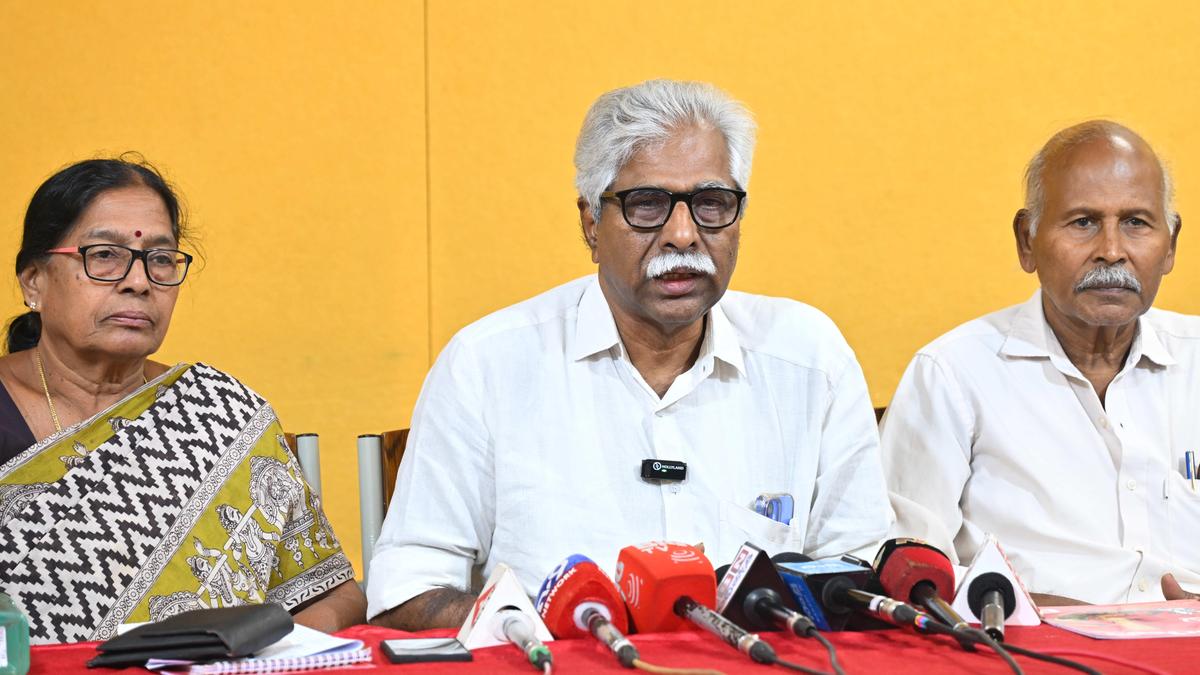
The Modi government's 131st Constitutional Amendment Bill — the vehicle meant to operationalise India's women's reservation law — fell in the Lok Sabha on April 17, 2026, by 298 votes to 230, more than 60 short of the two-thirds majority needed. Four days later in Vijayawada, CPI(M) Andhra Pradesh secretary V. Srinivasa Rao and a bloc of Left leaders alleged the outcome was engineered: the ruling NDA, they argued, had no intention of implementing the 2023 law and deliberately yoked it to a delimitation exercise it knew the opposition would refuse. The thesis worth taking seriously is narrower and harder to dismiss: the delay is not a bug of the 2023 Act, it is a feature the BJP wrote in — and the party that gains most from the stalemate is the one that authored it.
The women's reservation law — the Constitution (106th Amendment) Act, 2023, marketed as the Nari Shakti Vandan Adhiniyam — was passed by 454-2 in the Lok Sabha and unanimously in the Rajya Sabha in September 2023, according to the BBC. But its own text, archived on the parliament's
Sansad portal, says the reservation "shall come into force on such date as the Central Government may … appoint" and only "after the census … has been published." A briefing by the legislative research group
PRS India confirms the two triggers baked in: a fresh census, and a delimitation exercise on that census.
Both triggers are still ahead. The Home Ministry's own notification, reported by the BBC on April 2, 2026, fixed March 1, 2027 as the reference date for the population count, with fieldwork extending through 2027. That means, on the government's stated path, no delimitation report before 2028 at the earliest — and no women's quota before the 2029 general election. The Left's charge — that a bill passed with fanfare in 2023 is nowhere near delivery in mid-2026 — is not rhetorical. It is the schedule.
The 131st Amendment: solution or trap?
The government's answer was the three-bill package tabled in a special session on April 14–18, 2026: a Union Territories Laws (Amendment) Bill, the Constitution (131st Amendment) Bill, and a separate Delimitation Bill. Together they would raise the Lok Sabha cap from 550 to 850 seats — 815 from states and 35 from Union Territories — and rebase the exercise on the 2011 census rather than the ongoing 2027 count, Al Jazeera reported on April 16, 2026. Home Minister Amit Shah told the House that no state would lose seats and that a 50% pro-rata expansion would protect the south, according to BBC Hindi's account of the
debate.
The pitch collapsed on the floor. Modi's National Democratic Alliance holds 293 seats in the Lok Sabha; a two-thirds majority requires 360. The government needed roughly 70 opposition votes it did not have and, by tying the quota to delimitation, had structurally no chance of winning. The failed vote was tracked by PRS India and covered by
BBC Hindi, which called it the first constitutional amendment defeat under the Modi government in 12 years.
This is where the Left's argument sharpens. CPI(M) Rajya Sabha MP John Brittas told the BBC that the party would back "reserving 33% seats for women based on the current strength of parliament" — 543 seats, no census wait — but not an expansion "in the middle of an election season." CPI general secretary D. Raja, speaking in Vellore on April 16, 2026, told the Indian Economic Observer that "no opposition party has opposed the Women's Reservation Bill" but that the BJP was "trying to take political advantage" by bundling it with a redistricting the south will not accept. CPI(M) general secretary M.A. Baby, quoted by
The News Mill, called the linkage "devious" and invoked the 1996 Geeta Mukherjee Committee report to argue that the quota was always meant to work without a census condition.
The delay's real beneficiary
Look at the incentives, and the story reframes.
The BJP wins twice from a stalled quota it can still claim credit for authoring. Modi's April 16 parliament speech — "we are set to take historic steps to empower women," per Al Jazeera — reads as a campaign line that survives the vote's failure. Senior journalist Sharad Gupta, quoted by
BBC Marathi, argued the government knew it lacked the numbers but proceeded because it wanted a "political weapon" for elections in West Bengal and beyond: the opposition can now be painted as having killed the women's bill, even though the opposition backs the quota itself.
The south loses either way. Tamil Nadu, Kerala, Karnataka and Telangana have all sought a further freeze on seat redistribution, the BBC reported on April 16, 2026. Vidhi Centre for Legal Policy's Arghya Sengupta told the BBC that the government's 850-seat figure "does not appear to be proportionate to population growth" between 1971 and 2011 — meaning the "no state loses seats" claim rests on absolute numbers, not shares of power. Chief Minister M.K. Stalin burned a copy of the bill in Chennai. The DMK's calculation is simple: a delimitation on 2011 data hands seats to Uttar Pradesh, Bihar and Madhya Pradesh — states where the BJP dominates — and dilutes southern influence in New Delhi.
Women are the collateral. Women hold roughly 14% of Lok Sabha seats today. If the 33% reservation applied to the existing 543 seats, women would take around 180 — a number Left leaders cited to The Hindu on April 21, 2026, to argue that immediate implementation is technically trivial and politically blocked only by design.
The precedent everyone forgets
The Women's Reservation Bill has failed to become operative six times since Deve Gowda's government first tabled it in 1996. Each failure had a plausible reason on paper — coalition math, OBC sub-quota demands, upper-house arithmetic. The Brookings Institution argued in a 2016 analysis that the bill's serial opponents shared a pattern: parties whose base sits in states with the worst female sex ratios — SP and BSP in Uttar Pradesh, RJD and JD(U) in Bihar — resisted because reservation would rewire their patronage networks.
The 2023 Act was supposed to end that cycle. Instead, it built a new one. By tying the quota to a census-and-delimitation sequence that no government has completed in over 50 years — India last redrew Lok Sabha boundaries after the 1971 census — the law made "supporting women's reservation" and "delivering women's reservation" separable political products. The Modi government has now sold the first; the second is stuck behind the delimitation fight the south will not lose quietly.
That is the structural reading of the Left's charge. It is not that a single minister sabotaged a bill. It is that the 2023 Act was designed so that the ruling party could campaign on it in 2024 without having to answer for its absence in 2029.

What the numbers actually allow
The government's own PRS India analysis notes that the 2023 Act permits reservation "as nearly as may be" one-third, applied to reserved SC/ST seats as well. Nothing in the constitutional text requires the quota to wait for an expanded Lok Sabha; the census-and-delimitation trigger could, in principle, be satisfied by a delimitation on the existing 543-seat house. That is the Left's technical position. It is also the Congress position, per
ABP Live's account of KC Venugopal's April statement calling the timing of the notification a "deliberate" attempt to "hijack democracy." Jharkhand minister Deepika Pandey Singh, quoted by
The Times of India, called it a "strategic ploy."
The government's counter — that waiting for the 2027 census "would push delimitation … well beyond 2029," per the BBC — is the honest part of its case. Delimitation on 2011 data is a compromise designed to hit the 2029 election calendar. But it is also a compromise the opposition can rationally reject, because 2011 data captures 15 years of differential fertility that penalises exactly the states now blocking the bill.
That is the deadlock's engineering: both sides can be sincere and still produce zero seats for women in 2029.
Diplomat View
The Left's "deliberate delay" charge is the correct verdict — but for a subtler reason than the CPI(M) states. The BJP did not sabotage the women's quota — it wrote a law whose implementation clause required a fight it could win only by conceding the delimitation formula the south will not accept. That is not sabotage; that is a policy trap that discloses whom it was built for. The likeliest next move: a narrower amendment in the winter session uncoupling the quota from the 850-seat expansion — precisely the CPI(M) demand — and daring the opposition to vote against a "clean" women's bill. If that happens, the Left's April complaint will look prescient and the BJP's delimitation ambition will move to a separate track, likely deferred past 2029. The forecast changes if two conditions hold: (a) the DMK, Congress and Left agree in advance on a 543-seat rollout, and (b) the BJP whips its own MPs in southern states to accept a delimitation freeze in exchange for the quota. Absent both, women's representation in the 18th Lok Sabha stays at 14%.
What to watch:
- Monsoon session, July–August 2026: whether the government tables a standalone women's reservation amendment stripped of delimitation.
- March 1, 2027: the census reference date; any slippage effectively rules out delimitation-linked implementation for 2029.
- State elections in West Bengal and Tamil Nadu (both 2026): BJP messaging on "opposition killed women's bill" will be the test of whether the delay is politically profitable.
The Bottom Line
India's Left parties are right that the women's reservation delay is deliberate — not because any single actor blocked the bill, but because the 2023 Act was written so its implementation required a delimitation fight the south would refuse. The party that gains from that stalemate is the same one that authored the law. Unless the government tables a delimitation-free amendment in the monsoon session, the Nari Shakti Vandan Adhiniyam will remain what it has been since September 2023: a promise the ruling coalition can campaign on precisely because it has not been kept.
Discover more
India
Congress Accuses Modi of Stalling Women's Law
Congress accuses Modi of stalling women's reservation law by linking it to delimitation, revealing a deeper electoral strategy.
India
CPI(M) Calls to Decouple Quota from Delimita
CPI(M) advocates for a 33% women's quota in Lok Sabha by 2029, removing the need for delimitation and census linkage.

Conflict & Security
Drone Warfare Killing Aid Workers at Unprec
Over 1,000 humanitarian workers killed in three years as cheap armed drones collapse legal protections. Gaza, Sudan, Ukraine, and DRC see deliberate targeting of aid convoys and hospitals with zero prosecutions.
Global
World Normalises Taliban as Afghan Women Eras
UN data shows Afghan women erased from public life as Russia recognises the Taliban, EU hosts officials in Brussels, and ICC warrants for gender persecution go unenforced.