Trump’s Wisconsin Gamble: Farm Belt Costs Threaten GOP Coalition
Donald Trump’s Wisconsin roundtable highlights key political risks as fuel shocks and trade wars squeeze vital rural swing districts.
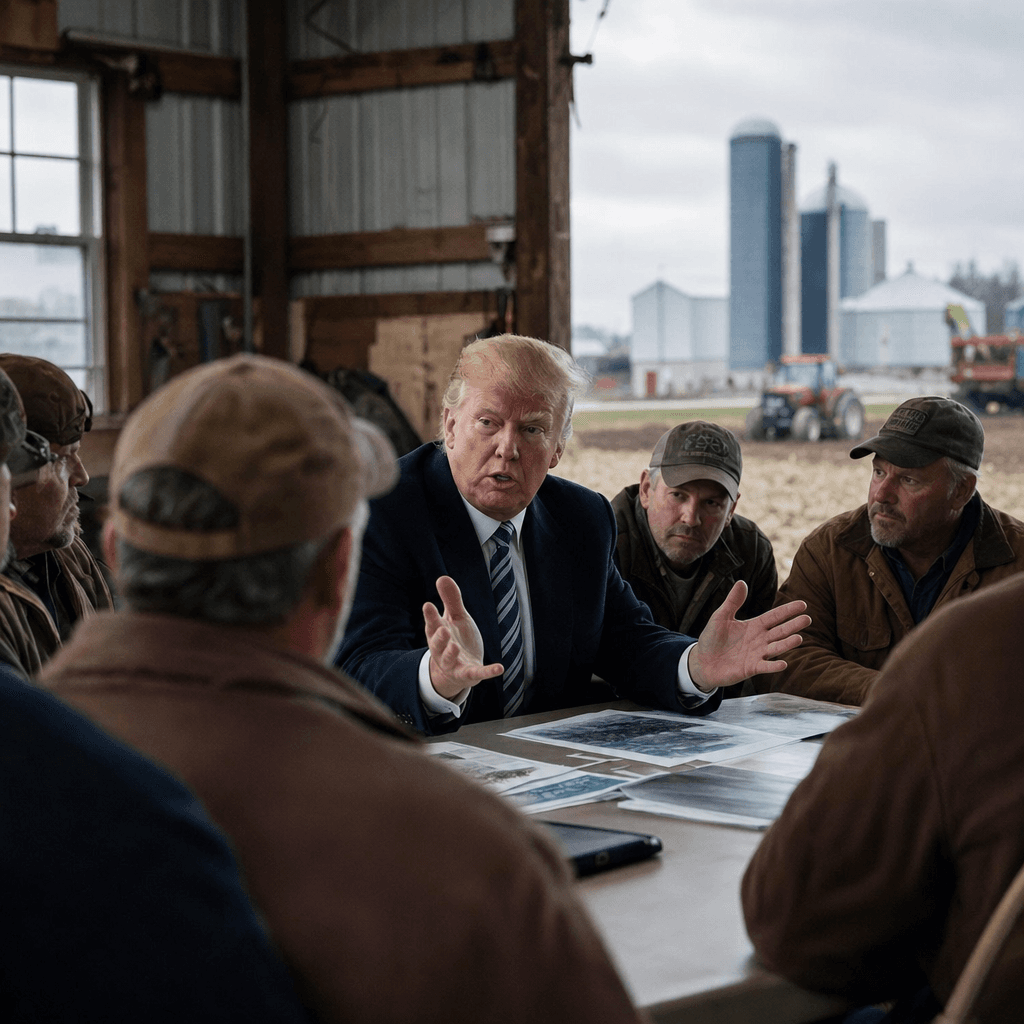
President Donald Trump’s agricultural roundtable in Chippewa Falls on June 5, 2026, was a direct damage-control mission aimed at securing the agricultural vote before the November midterm elections, according to  Al Jazeera. Rural voters hold the leverage in Wisconsin’s hotly contested 3rd Congressional District, represented by Republican Rep. Derrick Van Orden, but mounting economic pressures are fracturing their historical support. While Trump campaigned heavily on protectionism, his administration’s military posture in
  global politics has triggered runaway inflation in essential agricultural inputs, placing him in an economic bind with the very producers his party needs to retain congressional power.
Geopolitics vs. the Farm Gate
The core of the issue is that U.S. foreign policy has directly driven up the costs of farming. The breakout of the military conflict with Iran has disrupted energy markets and shipping routes. According to  NPR, the closure of the Strait of Hormuz has choked off nearly half of global exports of urea, causing nitrogen-based fertilizer prices to spike by up to 30% just as planting season got underway. Compounding this, rural off-road diesel costs have jumped more than 25%, according to NPR. Farmers, faced with retaliatory tariffs from overseas export buyers and skyrocketing costs to run machinery, are looking at a fourth consecutive year of losses. The critical danger for Trump is not that these voters will defect en masse, but that financial exhaustion will cause a depressed turnout among the Republican base in critical swing counties. While the administration’s $12 billion Farmer Bridge Assistance Program was designed to offset the trade war, local operators note the payments cover only a fraction of their losses, making federal aid a patchy band-aid rather than a structural solution.
The Congressional Battleground
Democrats are positioning themselves to exploit this rural dissatisfaction to reclaim the House of Representatives. Representing western Wisconsin, Derrick Van Orden is a primary target for national Democrats, who argue that his support for the administration represents a betrayal of his rural constituents. According to  FOX 11 News, Democratic Senator Tammy Baldwin argued that the high-profile visit shows Republicans know they are in deep electoral trouble. While Trump’s roundtable focused on long-term wins like tax exemptions and deregulation, the immediate cash-flow crunch remains unaddressed. If rural mobilization falters in November, the Democratic Party stands to gain the most, as a drop of even 2% to 3% in rural margins can easily flip Wisconsin’s swing districts and reshape the balance of US politics.
What to Watch Next
The immediate test of rural voter sentiment will be the August 11 partisan primary election in Wisconsin. This primary will set the final matchup for the 3rd District and reveal how successfully both parties are mobilizing their bases. Beyond electoral politics, the key policy indicator to follow is whether the USDA announces a secondary multi-billion dollar direct aid package before the fall harvest. With global oil and fertilizer chains fractured by the ongoing war in the Middle East, the administration's survival in the Rust Belt will depend on direct federal intervention rather than the promise of unregulated free markets.