Lebanon Ceasefire: Occupation Persists
Framework deal shifts burden to Lebanon amid ongoing tensions.
Model Diplomat7 min readMiddle East
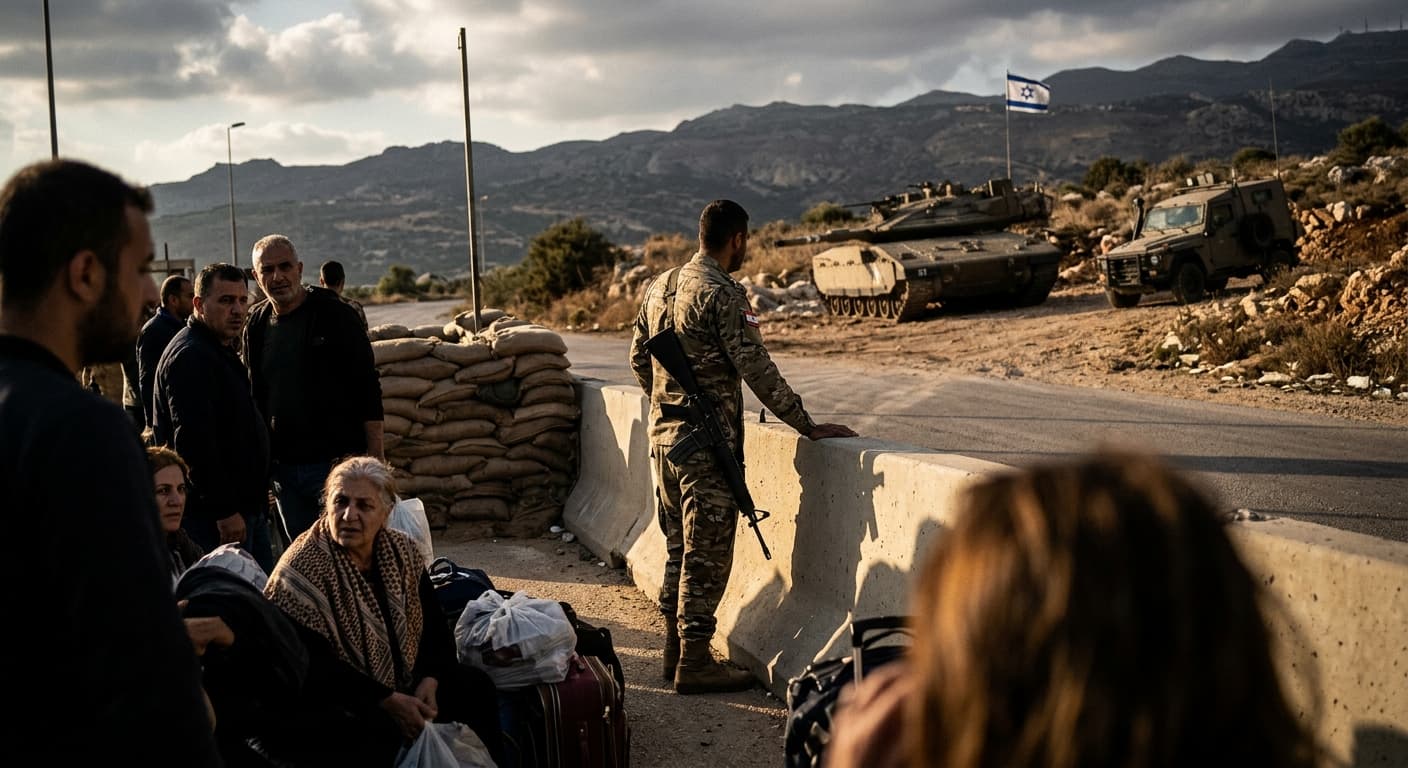
Lebanon Flash Update #41: Ceasefire on Paper, Occupation on the Ground
OCHA's 6 July 2026 count — 4,319 dead, 500,000 still displaced — reveals a framework deal that entrenches Israeli occupation while shifting the diplomatic burden onto Beirut.
The 26 June framework agreement signed in Washington by Israel and Lebanon has produced the paradox captured in UN OCHA's Flash Update #41: hostilities are down, returns are up — 646,107 displaced Lebanese have gone home since 22 June — yet Israeli forces remain lodged across roughly 5% of Lebanese territory with no timetable to leave. The deal has quietly transferred the political cost of the war from Israel to the Lebanese state, which must now disarm Hezbollah before Israeli redeployment even begins. That inversion — occupier as arbiter of withdrawal — is what makes this "de-escalation" strategically distinct from the 2024 ceasefire it replaced, and why the humanitarian gains logged this week rest on foundations analysts on both sides describe as structurally unstable.
What the numbers say — and what they hide
The primary document is unambiguous. According to the UN Office for the Coordination of Humanitarian Affairs, the Lebanese Ministry of Public Health has recorded 4,319 deaths and 12,203 injuries since fighting intensified on 2 March 2026, including 253 children and 392 women. Collective-shelter populations dropped 21.5% in five days, from 47,143 people to 37,000, as families tested whether the newest ceasefire would hold.
But the aggregate figures compress two different wars. The first, from 2 March to mid-June, was a full-spectrum campaign: near-daily Israeli airstrikes on Beirut's southern suburbs, ground operations across roughly 2,000 square kilometres, and the destruction of dozens of border villages. Al Jazeera reported that Israeli forces penetrated deeper into Lebanese territory than at any point since the 2000 withdrawal. The second war, since 21 June, is a low-intensity occupation: leaflets over al-Mansouri, drone strikes on Nabatieh al-Fawqa, and — as
Middle East Eye documented on 6 July — a "pilot" handover of two zones to the Lebanese Armed Forces (LAF). OCHA's caveat is precise: population movements remain "fluid, cautious, and often reversible" as families weigh damage, unexploded ordnance and access to services.
Three hospitals remain non-operational inside the Israeli-declared military zone, including Bint Jbeil Public Hospital and Salah Ghandour Hospital in Marjaayoun. The Ministry of Public Health counts 35 primary health-care centres closed nationwide, 11 of them behind Israeli lines.
The framework agreement, read closely
The Washington text is where the power dynamic lives. As the BBC reported, the 26 June agreement commits the LAF to restoring "sovereign authority over all Lebanese territory, pending the verified disarmament of non-state armed groups and dismantlement of associated infrastructure." That sequencing — disarmament first, redeployment second — is the entire diplomatic story.
There is no clause that obliges Israel to withdraw. The word "withdrawal" does not appear in the operative text, only a commitment to "progressively redeploy" contingent on Hezbollah's disarmament. Prime Minister Benjamin Netanyahu, visiting troops on 30 June, told Al Jazeera the army "will not leave" as long as Hezbollah remains a threat; Defence Minister Israel Katz added that Israeli forces would not withdraw "a millimetre" until Hezbollah is disarmed. Netanyahu also authorised preparations for an "extended stay."
Six human-rights organisations — Amnesty International, Human Rights Watch, the Lebanese Center for Human Rights, Legal Agenda, Reporters Without Borders and the Union of Journalists in Lebanon — issued a joint statement on 3 July warning that the deal's Clauses 3 and 13 would "prevent Lebanon and Israel from having recourse to international courts, including the International Criminal Court and the International Court of Justice." Their reading, carried by Al Jazeera, is that the framework conditions civilian return on disarmament and closes the legal off-ramp to international accountability at the same time.
Who benefits, who pays
The direct beneficiary is the Trump administration. The Islamabad Memorandum of Understanding between Washington and Tehran, signed on 15 June, required a ceasefire on "all fronts." As long as Lebanon burns, that MoU is a fiction — and the framework agreement is the mechanism by which Washington quarantines Lebanon from its Iran track. Aoun's statement on 3 July that Lebanon's "sovereign decision to separate our track from the Iranian-US track" was itself a concession to that architecture, delivering the diplomatic decoupling the White House needed.
Israel's gain is territorial and temporal. It keeps its "security zone," retains a veto over its own redeployment via the disarmament trigger, and — as former Israeli ambassador Alon Pinkas told Al Jazeera — postpones the political cost of an occupation until after Israeli elections expected around October. Finance Minister Bezalel Smotrich has already called for annexing Lebanese territory up to the Litani River.
Hezbollah pays first, and pays visibly. Secretary General Naim Qassem called the deal "humiliating, shameful and a surrender of sovereignty" and rejected any linkage between disarmament and Israeli withdrawal. Hezbollah MP Hassan Fadlallah warned that LAF enforcement of the framework would risk "civil war." The group's supply route through Syria collapsed with the fall of Bashar al-Assad in December 2024; its patron in Tehran is negotiating from a weaker position after Khamenei's death; and as Al Jazeera reported, Damascus is now actively arresting alleged Hezbollah cells on its own soil.
Lebanon's civilian population absorbs the residual cost. The World Bank's Rapid Damage and Needs Assessment — covering only the 2023–2024 war — already estimated reconstruction needs at $11 billion, with housing damage alone at $4.6 billion. The 2026 war has layered a second wave of destruction on top of that unfinanced bill. OCHA reports the 2026 Lebanon Flash Appeal has received $269 million against a $639.9 million requirement — 42.2% coverage — even as needs have expanded.
The historical parallel Beirut fears
The Lebanese analyst Ronnie Chatah, speaking to Al Jazeera, pointed to the closest precedent: the 1983 May 17 Agreement between Israel and Lebanon, brokered by Washington, which conditioned Israeli withdrawal on Lebanese security guarantees. It collapsed within a year and was followed by the US embassy bombing, the Marine barracks attack, and Hezbollah's emergence as the dominant armed actor south of the Litani. The 2026 framework replicates the same structural error: it is a bilateral instrument between Beirut and Tel Aviv that treats the actual belligerent — Hezbollah — as an object to be dismantled rather than a party to negotiate with. Political analyst Joe Macaron told Al Jazeera the deal, "without Hezbollah's buy-in," will be "difficult to implement" and could "trigger further conflict."
The UN mechanism designed to prevent exactly this scenario is being wound down. Security Council Resolution 2790 (2025) extended UNIFIL's mandate "for a final time" until 31 December 2026, at which point the peacekeeping force begins drawdown and withdrawal. Three UNIFIL peacekeepers were killed in south Lebanon on 31 March 2026 — a moment the
Emergency Relief Coordinator marked in his Security Council briefing from Beirut. When UNIFIL leaves, the LAF will be the sole international interlocutor on the Blue Line, tasked with disarming Hezbollah and receiving Israeli redeployment simultaneously — under a framework that gives Israel the final word on both.
The northern flank
The escalation is not only southern. As Middle East Confidential reported on 30 June, artillery from Syria has crossed into Lebanon's north, with Damascus claiming pursuit of "armed terrorists." Israel simultaneously launched incursions into southern Syria on 29 June. Lebanon now faces military pressure on two borders while its own army is being asked to substitute for foreign forces in the south. The government of Prime Minister Nawaf Salam has pursued rapprochement with Damascus under Ahmed al-Sharaa, but as long as the northern border remains porous and the southern one occupied, the LAF's projected role as sovereign guarantor is aspirational.
What to watch
- Pilot-zone handover, mid-July 2026. Israeli media reported preparations to transfer two southern sectors to the LAF. Whether the LAF actually assumes control — and whether it moves against Hezbollah infrastructure north of the Litani — is the near-term test of the framework.
- UN Security Council reporting cycle, before 1 June 2027. The Secretary-General must present options for post-UNIFIL implementation of Resolution 1701. The choice of successor mechanism will determine whether the Blue Line has any international presence after 31 December 2026.
- Israeli elections, expected October 2026. Netanyahu's calculation on Lebanon is domestic. A coalition shift could either accelerate withdrawal or lock in annexationist positions advanced by Smotrich.
- Flash Appeal funding gap. With winter approaching and $370 million still unfunded, humanitarian conditions for 500,000 displaced Lebanese will deteriorate unless Gulf and European donors close the gap by autumn.
The Bottom Line
The Israel–Lebanon framework agreement has not ended the war — it has re-labelled the occupation as a "sequenced process" and made Hezbollah's disarmament the precondition for Lebanese sovereignty. The humanitarian improvements OCHA logged this week are real but derivative: they exist because Israel chose to lower the tempo after securing a deal that requires nothing of it. The next confrontation will not be triggered by a Hezbollah rocket. It will be triggered by the first moment the Lebanese Armed Forces are ordered to enforce a Washington-brokered disarmament clause inside their own territory — and refuse, or comply, or fracture trying.
Discover more
India
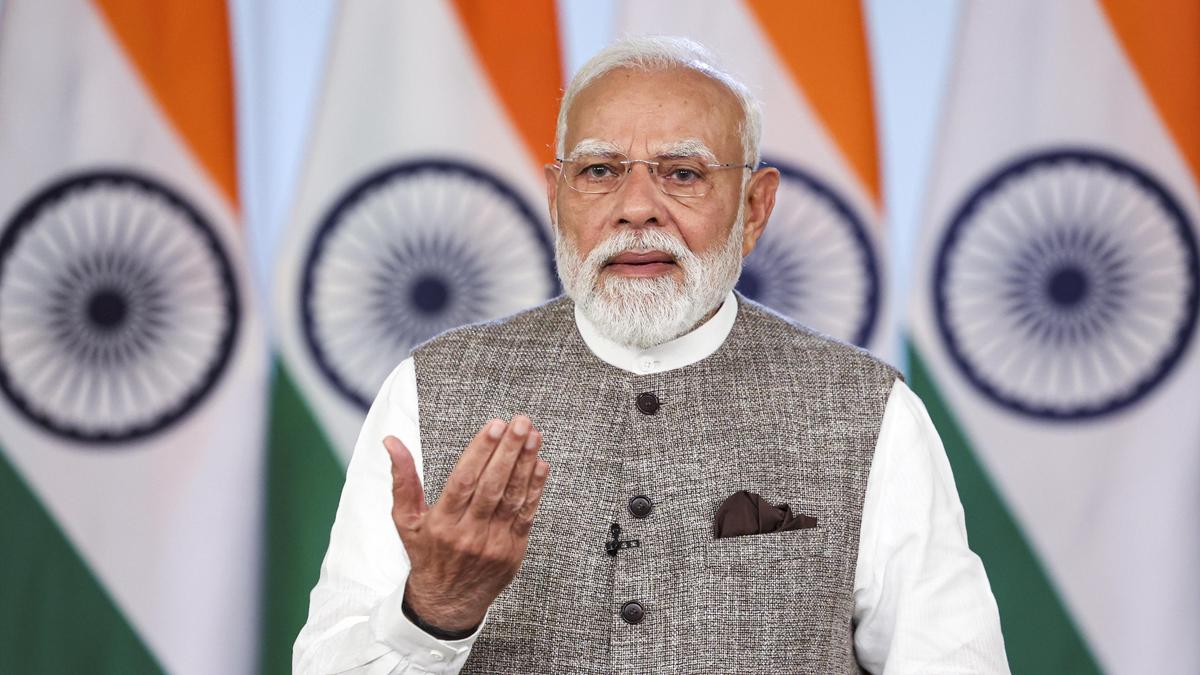
700 Activists Accuse PM Modi of MCC Breach
Over 700 activists allege PM Modi breached election code with a televised address attacking opposition parties just before state elections.

India
Delhi CM Rekha Gupta Blasts Opposition's Delm
Delhi CM Rekha Gupta's remarks on women's quota defeat reveal BJP's strategy for the 2029 Lok Sabha elections, focusing on delimitation.
India
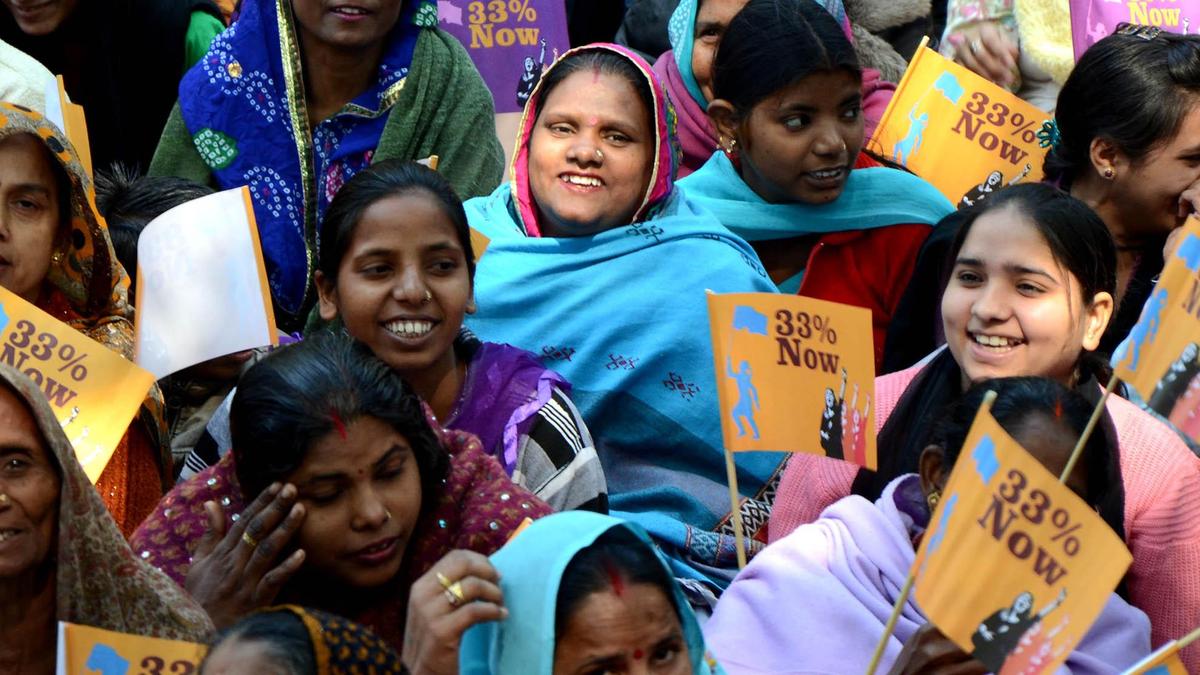
Women's Reservation Bill 2026: A Political Sh
India's Lok Sabha rejected the Women's Reservation Bill, exposing a political maneuver to redraw electoral maps favoring the north over the south.

Economics
Fed's Amex AML order puts correspondent banking on notice
Federal Reserve's Amex AML order requires board-level controls and a 90-day plan; OCC fined the bank $350 million over enterprise-wide deficiencies.