Kharge Critiques Women's Reservation Bill
Opposition unites against government's political strategy
Model Diplomat3 min readIndia
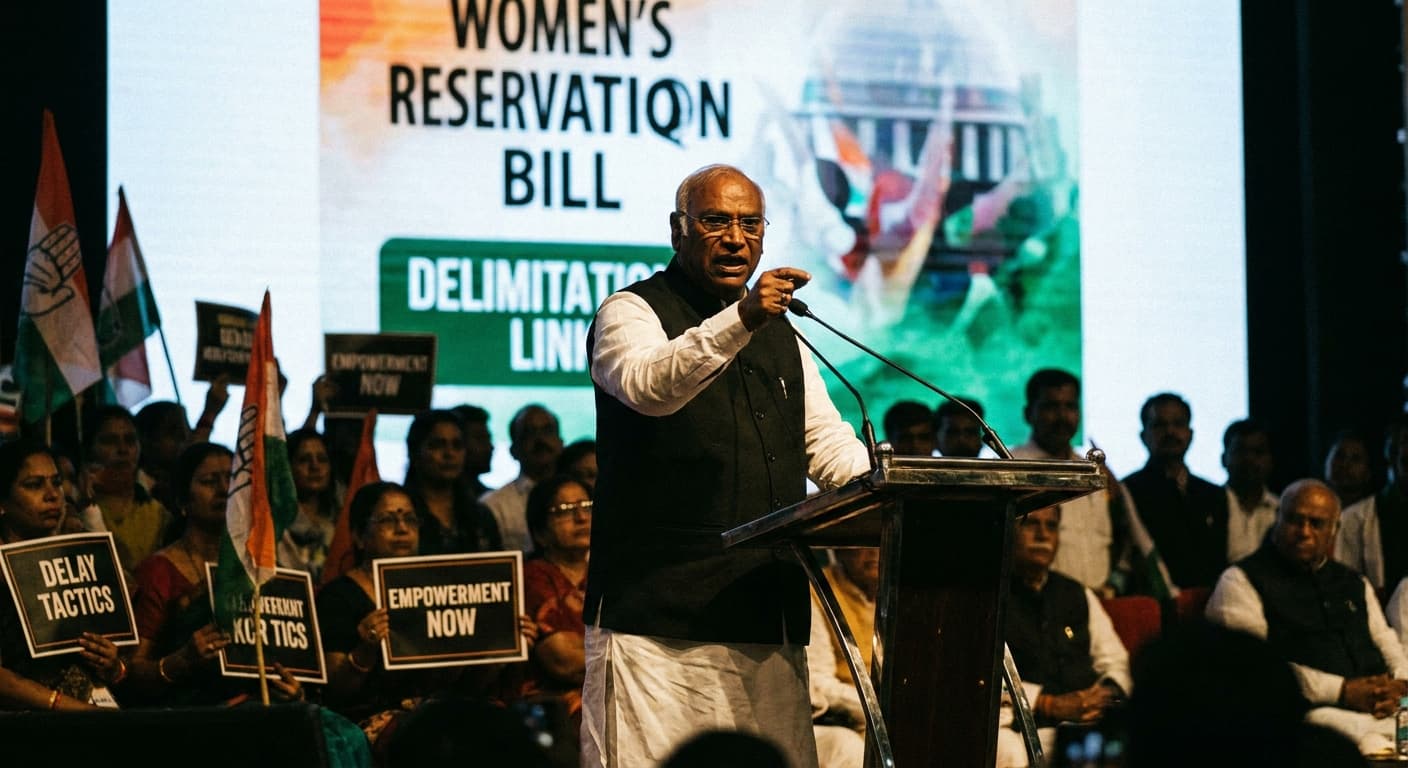
Politically Motivated, Will Fight Women’s Quota Bill: M Kharge After Opposition Meet
Congress leader Mallikarjun Kharge supports women’s reservation in principle but criticizes the government's delimitation strategy as a political tool to silence dissent.
At a crucial opposition meeting this week, Mallikarjun Kharge, a senior Congress figure and the party president, voiced strong objections to the government’s approach to implementing the Women’s Reservation Bill. While affirming support for the bill in principle, Kharge said the government’s move to link it with delimitation was "politically motivated" and aimed at gagging the opposition ahead of elections. Following the meeting, opposition parties collectively pledged to fight this delimitation-based implementation strategy.
Women’s Reservation Bill: The Promise and the Pitfall
The Women’s Reservation Bill has long been a landmark piece of legislation debated across India's political spectrum. It seeks to reserve 33% of seats in Parliament and state legislative assemblies for women—a much-needed boost to political representation in a country where female lawmakers remain significantly underrepresented.
However, the bill's passage has repeatedly stalled, largely due to political wrangling over how and when to implement it. Crucially, delimitation — the redrawing of electoral boundaries — plays a key role here. Delimitation sets the stage for future elections by defining constituency borders that sometimes advantage or disadvantage particular political parties.
By tying the Women’s Reservation Bill to delimitation, the government effectively conditions women's political representation on the contentious process of redistricting. This linkage worries opposition parties like Congress because delimitation could reshape constituencies in ways that weaken their vote banks, dampening their political influence in upcoming state and national elections.
Opposition’s Take: A Tactical Warning
Kharge’s opposition to the government’s hybrid strategy is significant. Congress, India’s oldest and largest opposition party, sees this delimitation-driven implementation as a political gambit rather than genuine reform. To them, it's a way for the ruling party to advance gender representation on paper, while manipulating electoral maps to stifle opposition candidates and consolidate power.
Opposition leaders are now cohesively pushing back, framing the delimitation link as a “trap” to sideline them ahead of electoral contests. This coordinated resistance underscores deep distrust toward the ruling party’s motives and raises the stakes for parliamentary negotiations in the coming months.
What to Watch Next
The key question is whether the government will decouple the Women’s Reservation Bill from delimitation or press ahead with its current approach. If the latter, expect intense parliamentary battles and possible delays in the bill’s passage.
Watch also for potential electoral repercussions. Delimitation often triggers shifts in political alliances and candidate selection—variables that could reshape regional and national power balances ahead of the 2029 general elections.
For now, the opposition’s united front signals that the political struggle over women’s reservation has become about much more than gender equity. It’s a proxy fight over electoral strategy, party survival, and the shape of India’s democratic future.
For more on India’s evolving political landscape, see India Profile and broader
Global Politics.
Politically Motivated, Will Fight Women’s Quota Bill: M Kharge
Discover more
India
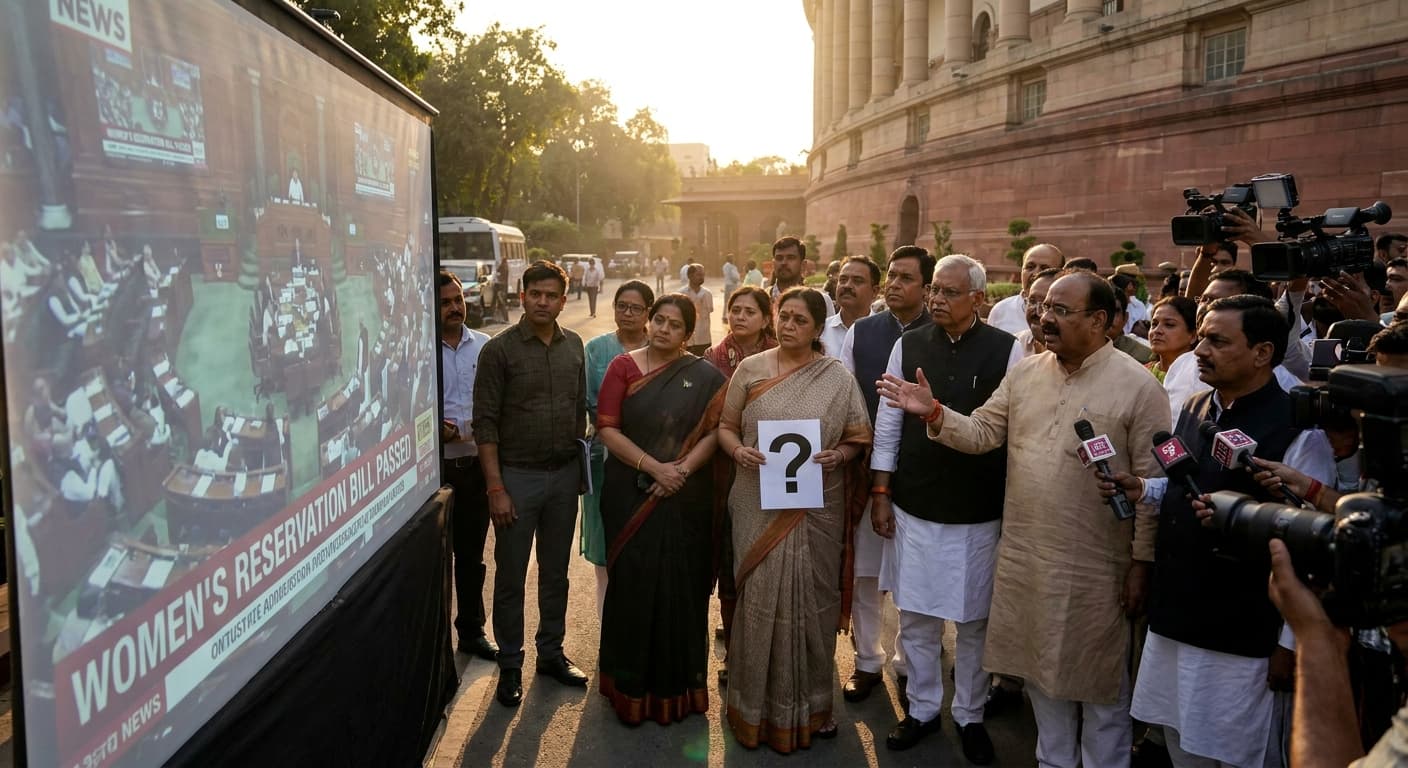
India's Women's Reservation Bill
India's Parliament passed the women's reservation and delimitation bills, fueling opposition fears of political manipulation ahead of the next elections.
India
Congress Accuses Modi of Delimitation Deceit
Congress accuses Modi's government of deceit over delimitation, charging it skips a caste census and reshapes political dynamics to its favor before elections.
India
Congress: Modi's Delimitation Manipulation
Congress accused the Modi government of using delimitation to consolidate power in Jammu and Kashmir, urging it be separated from the women's reservation bill.

Conflict & Security
Drone Warfare Killing Aid Workers at Unprec
Over 1,000 humanitarian workers killed in three years as cheap armed drones collapse legal protections. Gaza, Sudan, Ukraine, and DRC see deliberate targeting of aid convoys and hospitals with zero prosecutions.