Kenya Summons South Sudan Envoy Over Detained
Nairobi's diplomatic protest tests South Sudan's compliance with treaties.
Model Diplomat8 min readEast Africa
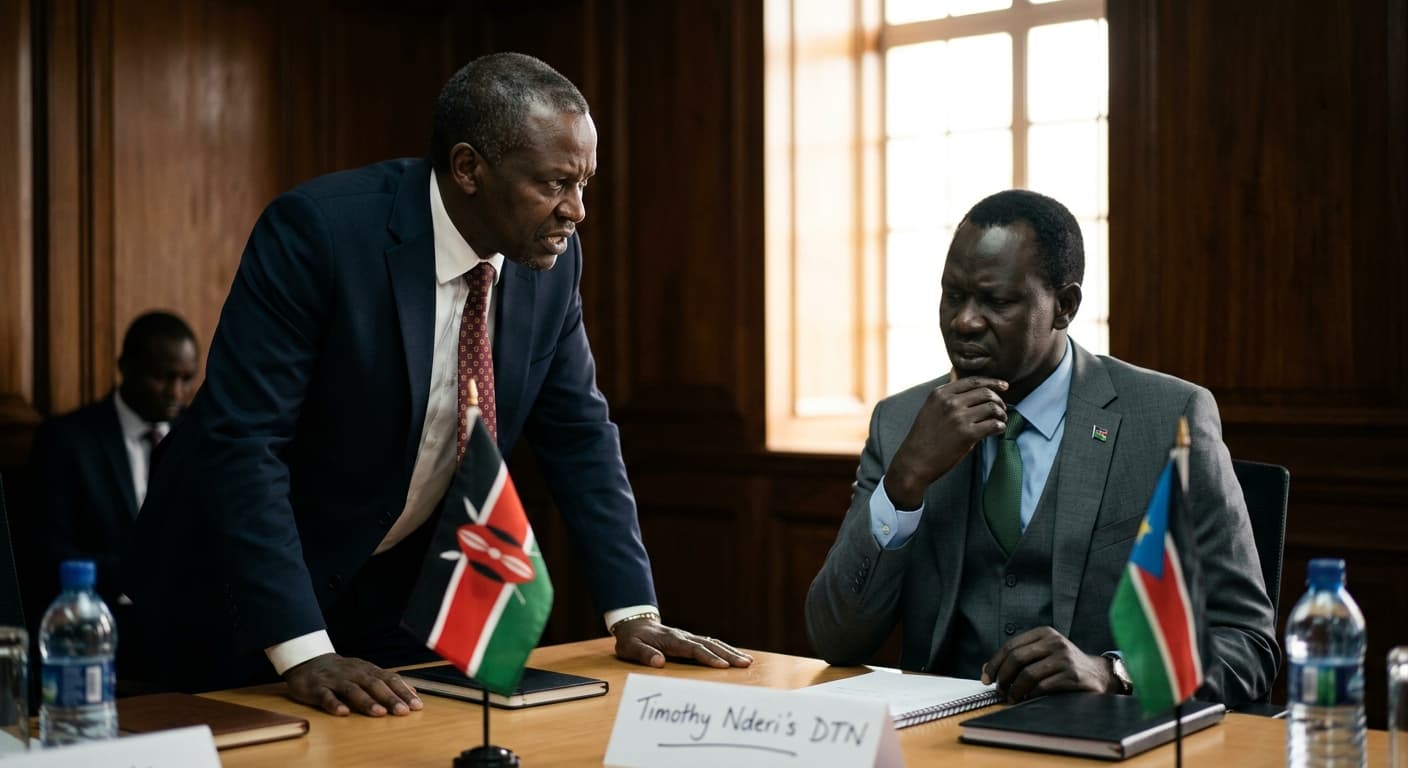
Kenya summons South Sudan envoy over jailed citizen, trucker attacks
Nairobi's July 7 démarche over the eight-month detention of Timothy Maina Nderi tests whether South Sudan will honor Article 36 of the Vienna Convention — and its EAC obligations.
Kenya's decision on July 7, 2026 to summon South Sudan's mission over the eight-month house arrest of one of its citizens is not a routine consular complaint — it is the moment Nairobi began pricing in the political cost of protecting a regime it helped build. Principal Secretary Korir Sing'Oei's protest, delivered to Juba's Deputy Head of Mission Barnaba Bol Nyuol, bundled the case of Timothy Maina Nderi with armed attacks on Kenyan truckers along the Juba–Nesitu corridor. It arrived on the same day Kenyan and South Sudanese officials, in a separate room in Nairobi, were signing off on deeper East African Community integration. That contradiction — protest by morning, integration by afternoon — is the story.
Sing'Oei's statement was unusually specific for a Kenyan diplomatic protest. He named Nderi, cited "the continued denial of consular access to officials from the Embassy of Kenya in Juba, despite repeated formal requests," and singled out an attack on veteran driver Mzee Malalo by South Sudanese security personnel, according to the account carried by Capital FM Kenya and
HCN Times. The specificity matters: Kenya normally handles Juba through quiet channels. Naming individuals in a public démarche is a signal that quiet channels have failed.
The legal claim Nairobi is making
The consular access dispute is not diplomatic etiquette. It is a treaty claim. Article 36 of the Vienna Convention on Consular Relations, to which both Kenya and South Sudan are party, requires the receiving state to inform the sending state's consular post "without delay" when a foreign national is detained, and to permit consular officers "to visit a national of the sending State who is in prison, custody or detention, to converse and correspond with him and to arrange for his legal representation."
Kenya's July 7 language — "continued denial … despite repeated formal requests" — mirrors the phrasing the International Court of Justice used to find Pakistan in breach of Article 36 in the Jadhav case, cited in an IOM legal note as a benchmark ruling on consular assistance. Sing'Oei is a former legal adviser to the presidency; the wording is not accidental. Nairobi is building a paper trail.
That paper trail matters because South Sudan's National Security Service (NSS) is the likely custodian. Since 2016, Amnesty International and Human Rights Watch have documented at least four cases of South Sudanese critics — James Gatdet Dak, Marko Lokidor Lochapio, Dong Samuel Luak and Aggrey Idri, and Morris Mabior Awikjok Bak — abducted from or through Kenyan territory and held incommunicado at the NSS's "Blue House" facility in Juba. Luak and Idri were, per the UN Panel of Experts cited by Human Rights Watch, flown out of Nairobi on a commercial plane chartered with the help of South Sudan's embassy in Kenya, and "highly possibly killed" three days later.
The Nderi case runs in the opposite direction — a Kenyan held in Juba, not a South Sudanese seized in Nairobi. That reversal is what has forced Sing'Oei's hand. For years Nairobi tolerated NSS activity on Kenyan soil, with Sing'Oei himself telling the BBC that Kenya faced a "crucial balancing of interests for the bigger good." Juba appears to have read that tolerance as permission to extend the same practice to Kenyan citizens. It miscalculated.
Who holds the leverage
South Sudan is landlocked, oil-dependent, and — since December 2025 — at war with itself again. The government's counteroffensive in Jonglei, launched January 28, 2026 under the banner of "Operation Enduring Peace," has displaced more than 280,000 people, according to Al Jazeera reporting on a UN assessment that warned the country risks a "return to full-scale war." First Vice-President Riek Machar has been under house arrest in Juba since March 2025 on treason charges his allies call politically motivated, as detailed by the
BBC. Fuel imports, food, and virtually all consumer goods flow into Juba by road — and the shortest, most-used route is Mombasa–Eldoret–Nadapal.
That is Kenya's leverage. The World Bank–financed East Africa Transport corridor links Mombasa port to Juba over roughly 1,700 kilometres of road, and Kenya remains one of South Sudan's top three sources of non-oil imports, valued at US$155 million in the most recent figures cited by the
WTO. Kenyan banks — KCB, Equity, Co-operative — dominate what functioning financial system Juba possesses. If Nairobi wanted to strangle Juba, it could do so without firing a shot. Sing'Oei's July 7 language stops well short of that; it invokes "the spirit of the longstanding friendship, mutual respect, and brotherly relations." But the leverage is on the table for the first time in years.
The contradiction inside Kenya's Nairobi
Here is where the story turns non-obvious. On the same Tuesday Sing'Oei was summoning Nyuol, a separate South Sudanese delegation led by Transport Undersecretary Paul Dhel Gum was meeting Kenya's EAC Affairs Permanent Secretary Caroline Karugu. According to Eye Radio, the two sides agreed to accelerate the Nadapal Road project, ease banking access for South Sudanese businesses in Kenya, and implement Article 104 of the EAC Treaty — free movement of persons, labour, services, and rights of establishment.
Article 104 is exactly the treaty provision South Sudan's NSS is trampling on when it detains a Kenyan without notifying Nairobi's embassy. The two Kenyan ministries are pulling opposite directions on the same day — Foreign Affairs signalling the relationship is under stress, EAC Affairs deepening it as if nothing were wrong. That is not incoherence; it is a hedged bet. Kenya's calculation is that South Sudan is too fragile to be pushed hard, and too economically captured to walk away. Nairobi is trying to extract compliance without owning the collapse.
What Kenyan truckers are actually facing
The Long Distance Drivers and Conductors Association (LoDDCA) says the attack on Mzee Malalo along the Juba–Nesitu Road was carried out by South Sudanese security personnel, not bandits. That distinction matters for insurance, for cargo pricing, and for the political calculus. Bandits are a policing failure; uniformed attackers are a state act. Kenya's truckers ferry the fuel, food and construction goods that keep Juba functioning. If they strike — and LoDDCA has done so before, most notably in 2020 — South Sudan runs dry within weeks.
Regional analysts have long warned this was the pressure point. A Brookings analysis noted that "since most of the Kenyan exports to the country are through the road network, increased security concerns will also negatively impact the flow of goods." What has changed is that the security concerns are no longer just about opposition militias in Jonglei or bandits in Equatoria; they are, per Sing'Oei's own protest, about Juba's own security services.
The historical parallel Nairobi wants to avoid
Kenya's diplomatic pressure on Juba echoes India's 2017–19 démarches on Pakistan over Kulbhushan Jadhav, and Mexico's on the United States in the LaGrand and Avena cases. In each, denial of consular access under Article 36 became the pretext for wider political pressure. India took Pakistan to the ICJ; Mexico won a judgment against the US. Kenya is unlikely to litigate — the East African Court of Justice would be the more probable venue, and it is already seized of a related petition by the Pan-African Lawyers Union over Morris Mabior Awikjok Bak.
But the litigation option now exists as a credible threat. It did not before. Kenyan civil society, still angry over the government's role in the Kizza Besigye and Martha Karua episodes reported by the BBC, will press for it if Nderi is not released. The Ruto administration, already politically bruised, cannot afford to be seen abandoning a Kenyan citizen to Juba's Blue House.
The wider regional context
South Sudan's diplomatic posture has been deteriorating on multiple fronts. The UK told the UN Human Rights Council on July 3 that the country's human-rights situation "continues to deteriorate" and that "continued delays to the Hybrid Court risk entrenching impunity." The EU on June 22 renewed sanctions against Justice Minister Michael Makuei Lueth, whose listing was updated in
Council Implementing Regulation (EU) 2026/1402 for "obstructing the political process" and "serious violations of human rights." The Troika (US, UK, Norway) told Eye Radio that any national dialogue without Machar is not genuine.
Against that backdrop, a Kenyan protest is not one grievance — it is a piling-on. Juba's international isolation is deepening at the exact moment its army is stretched thin. That is why Nairobi felt safe going public.

Diplomat View
The Nderi case is Kenya's opening bid, not its final position. Nairobi wants three things: Nderi released, consular access institutionalized, and truck-driver protection made a condition of the Nadapal corridor investment. It does not want to break with Juba, because Kenyan capital — banking, aviation, construction — has too much sunk cost there. Expect a partial win within four to eight weeks: Nderi's release or transfer to court, framed as a goodwill gesture, alongside continued EAC theatre on integration. What would change this forecast: a second high-profile Kenyan detention, or a fatal attack on a Kenyan trucker attributable to SSPDF or NSS personnel. Either would force Kenya to escalate beyond démarches — most likely a temporary suspension of new cross-border permits, or a public EACJ filing. If Juba reads Nairobi's simultaneous EAC handshake as license to stall, it will misread the room a second time.
Forward look:
- July 16, 2026 — Stimson Center's Partnership for Effective Peacekeeping convenes on UNMISS and the UN funding crisis; expect fresh signals on Council appetite for pressure on Juba.
- Late July 2026 — Kenya's Ministry of Foreign and Diaspora Affairs is expected to issue a follow-up statement; watch for whether it names a deadline.
- Q4 2026 — South Sudan's contested 2026 election cycle, with President Salva Kiir endorsed as SPLM sole candidate on July 7, will determine whether Juba has any bandwidth for consular reform.
The Bottom Line
The bottom line: Kenya's July 7 protest is the moment Nairobi stopped pretending South Sudan's security services would respect Kenyan citizens without being made to. The leverage is Nairobi's — the Mombasa road, the banking rails, the EAC ratchet — but the political will to use it is still hedged. If Juba releases Timothy Maina Nderi within weeks, the hedge holds. If not, Kenya will discover that being South Sudan's indispensable neighbor is only useful when you are willing to say no.
Discover more

US Politics
SNAP Food Assistance Faces Legal Challenges
In 2026, SNAP faces stricter eligibility rules and mounting legal challenges, threatening food assistance for the millions of Americans who rely on the program.
US Politics
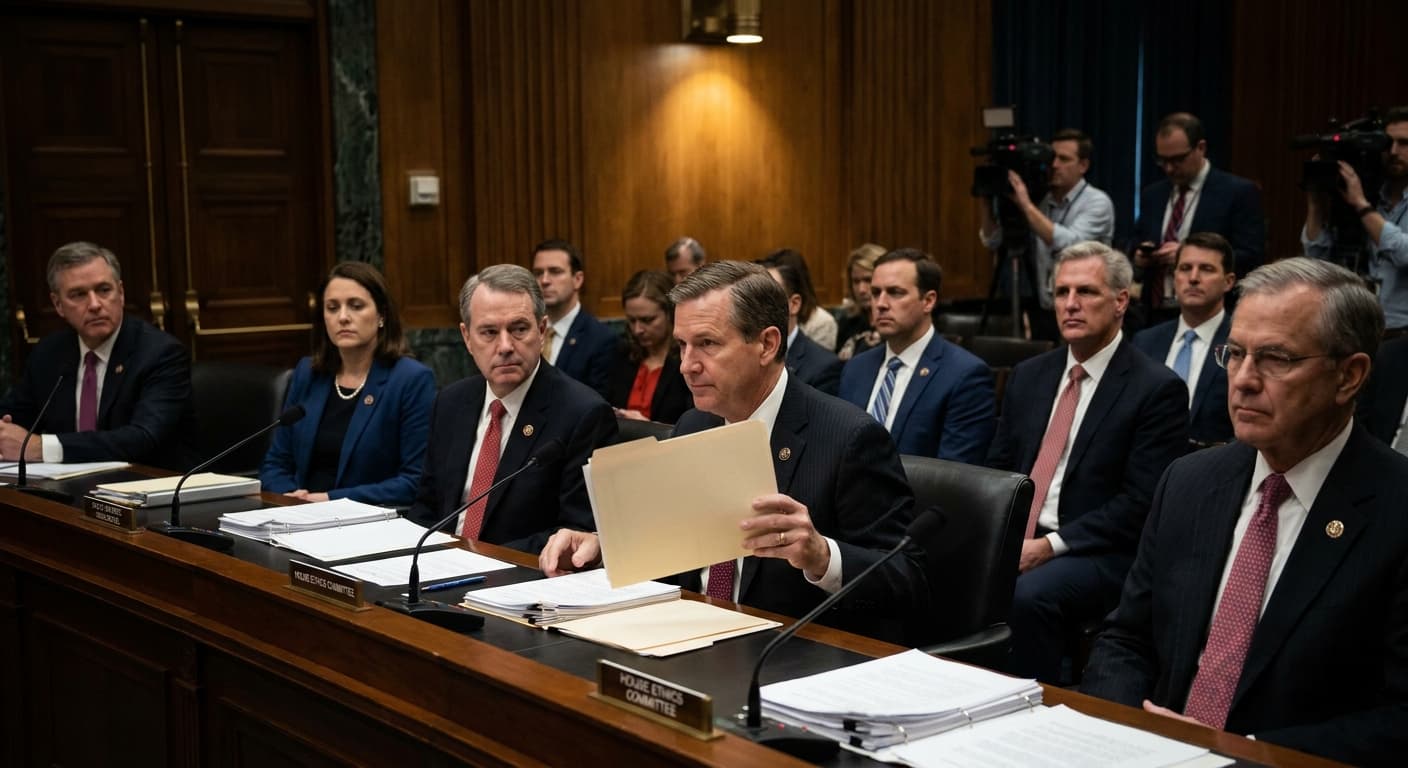
House Ethics Committee Pushes Sexual Miscond.
The House Ethics Committee has shifted responsibility for sexual harassment settlement records to the Office of Congressional Workplace Rights, complicating disclosure efforts.
India
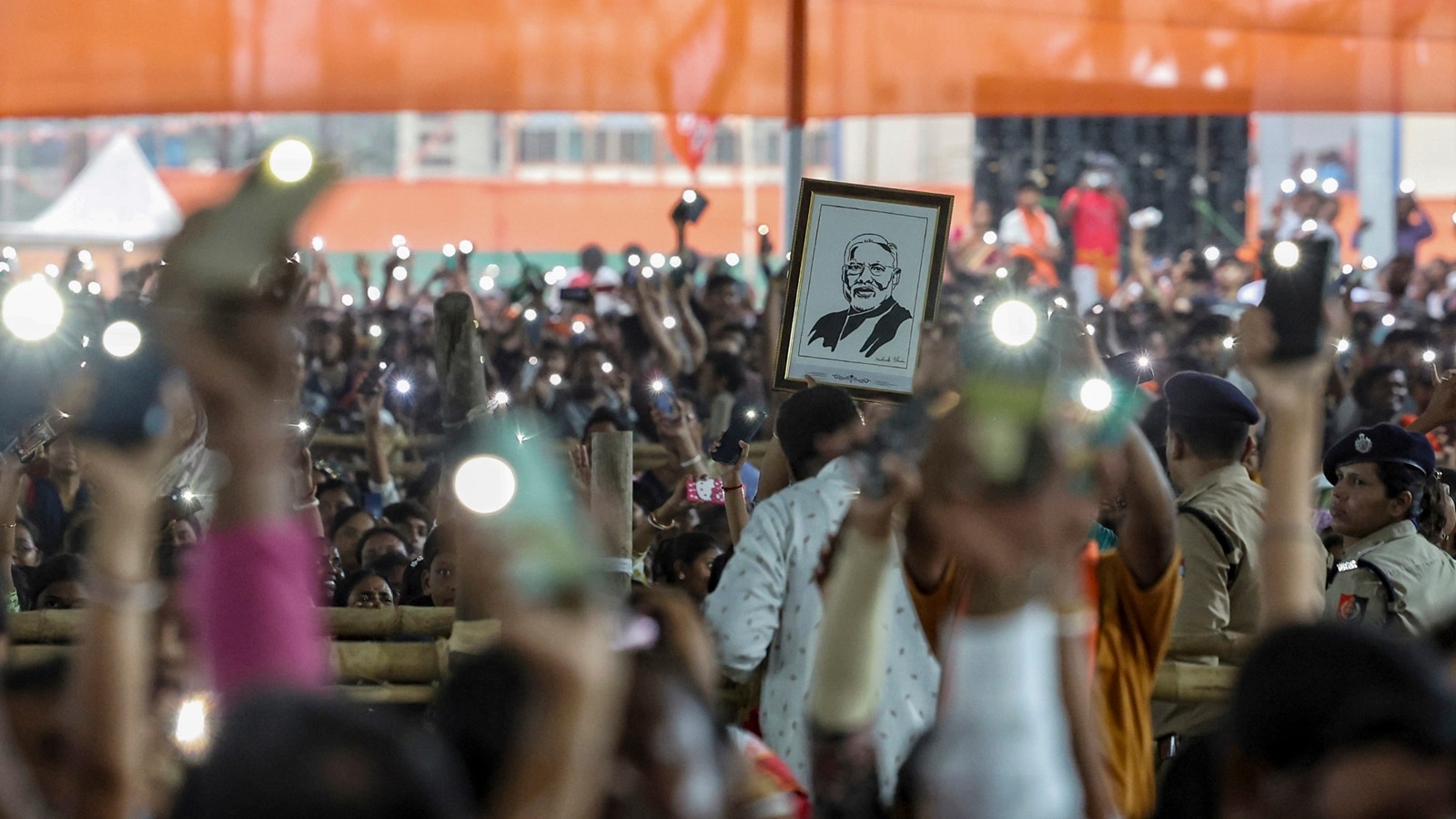
Modi's Women’s Convention in Varanasi
Modi's Varanasi rally frames women's reservation as a national mission, targeting the 2027 Uttar Pradesh elections with a strategic narrative.

Conflict & Security
Drone Warfare Killing Aid Workers at Unprec
Over 1,000 humanitarian workers killed in three years as cheap armed drones collapse legal protections. Gaza, Sudan, Ukraine, and DRC see deliberate targeting of aid convoys and hospitals with zero prosecutions.