Israel’s Lebanon Escalation Tests Ceasefire
Netanyahu raises costs for Hezbollah amid fragile diplomacy.
Model Diplomat3 min readMiddle East
Israel’s Lebanon Escalation Tests a Fragile Ceasefire
Netanyahu is raising the cost of Hezbollah attacks, but the real pressure point is the Washington track: Lebanon’s diplomacy now sits under fire.
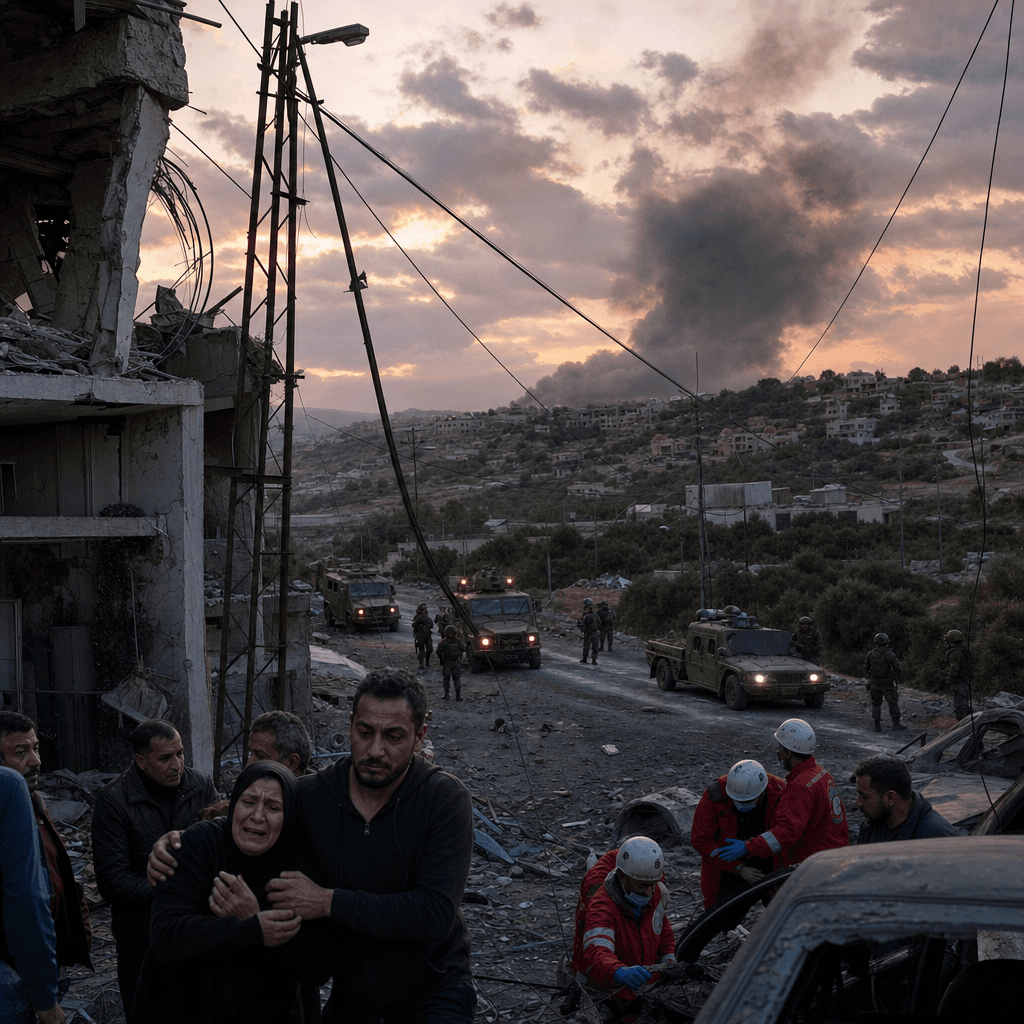
Israel’s overnight barrage in Lebanon killed 11 people in Mashghara, including two children, after Prime Minister Benjamin Netanyahu ordered the military to “press the pedal even harder” against Hezbollah, the BBC reported. The Israeli army said it struck more than 100 Hezbollah sites and fighters, while Hezbollah answered with rockets and drones into northern Israel, showing that neither side is treating the ceasefire as binding.
BBC
Why Israel is escalating
Netanyahu is not just trying to punish Hezbollah; he is trying to restore deterrence on Israel’s terms. The BBC reported that he ordered heavier strikes after a soldier was killed in southern Lebanon, and that Israel widened its bombing across southern and eastern Lebanon, hitting nearly 50 locations in one night. BBC
That matters because Israel has a clear leverage strategy: keep Hezbollah off balance, increase the military cost of firing drones and rockets, and force Beirut to negotiate from weakness. Al Jazeera, citing Reuters, reported that the escalation followed Netanyahu’s public vow to “deal them a crushing blow,” while far-right ministers Bezalel Smotrich and Itamar Ben Gvir pushed for even more extreme options, including striking Beirut again. Al Jazeera
The immediate beneficiary is Israel’s domestic security establishment and Netanyahu’s coalition hawks; the loser is Lebanon’s already strained state, which has little ability to control Hezbollah’s independent military decisions. For readers tracking the broader regional pattern, this is a familiar Global Politics dynamic: military escalation is being used as bargaining power, not just battlefield punishment.
The ceasefire is fraying, not holding
The core problem is that the truce line exists on paper while both sides keep using force. BBC said Israel’s strikes have continued daily since the ceasefire began in mid-April, while Hezbollah has kept firing rockets and drones at Israeli positions and northern towns. BBC
That puts Lebanon in a weak position ahead of the next diplomatic round. Asharq Al-Awsat reported that Lebanese and Israeli military delegations are due to meet at the Pentagon on May 29, part of a US-brokered track that has already produced a 45-day extension to the cessation of hostilities. Asharq Al-Awsat The timing is telling: Israel is using the battlefield to improve its hand before talks, while Beirut wants a withdrawal from the south and an end to the strikes.
Asharq Al-Awsat
Hezbollah benefits in one narrower sense: every Israeli strike that kills civilians helps it argue that the ceasefire cannot protect Lebanese territory, and that it remains the only actor willing to confront Israel. But that is a political gain at the expense of Lebanon’s civilian population, which already faces repeated evacuations and mounting displacement. BBC
What to watch next
The next decision point is the May 29 Pentagon meeting. If the talks produce no restraint mechanism, Israel is likely to keep widening strikes and issuing evacuation orders, and Hezbollah will keep firing enough to claim it has not been deterred. Asharq Al-Awsat
Watch three things: whether Israel expands strikes beyond the south and Bekaa; whether Hezbollah raises the tempo or range of drone attacks; and whether Washington presses both sides to preserve the negotiation track. For now, the leverage sits with the side willing to keep shooting — and Israel is signaling it intends to use that leverage first.
Discover more

Global Politics
US Seizes Iranian Ship, Tensions Surge
The US seizure of the Iranian ship Touska highlights a shift in control over the Strait of Hormuz, favoring Iran's strategic position.

Conflict & Security
Drone Warfare Killing Aid Workers at Unprec
Over 1,000 humanitarian workers killed in three years as cheap armed drones collapse legal protections. Gaza, Sudan, Ukraine, and DRC see deliberate targeting of aid convoys and hospitals with zero prosecutions.

Global
World Normalises Taliban as Afghan Women Eras
UN data shows Afghan women erased from public life as Russia recognises the Taliban, EU hosts officials in Brussels, and ICC warrants for gender persecution go unenforced.
Conflict & Security
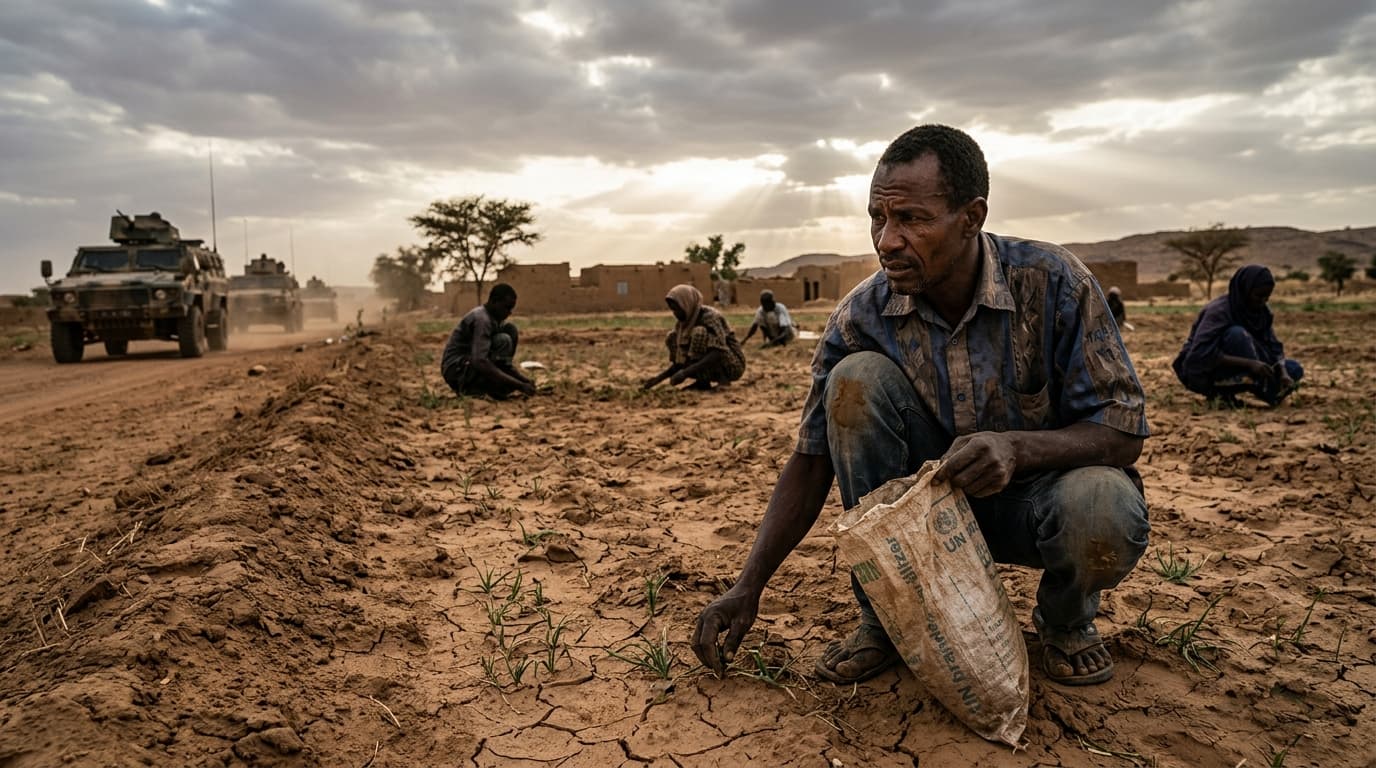
West Africa Food Crisis: Three Shocks in 2026
Conflict, climate extremes, and the Strait of Hormuz closure drive a severe food crisis in West and Central Africa, with fertilizer prices surging 80% and millions displaced.