Israel Escalates Tensions in Lebanon
Military actions push Beirut to negotiate under pressure.
Model Diplomat3 min readMiddle East
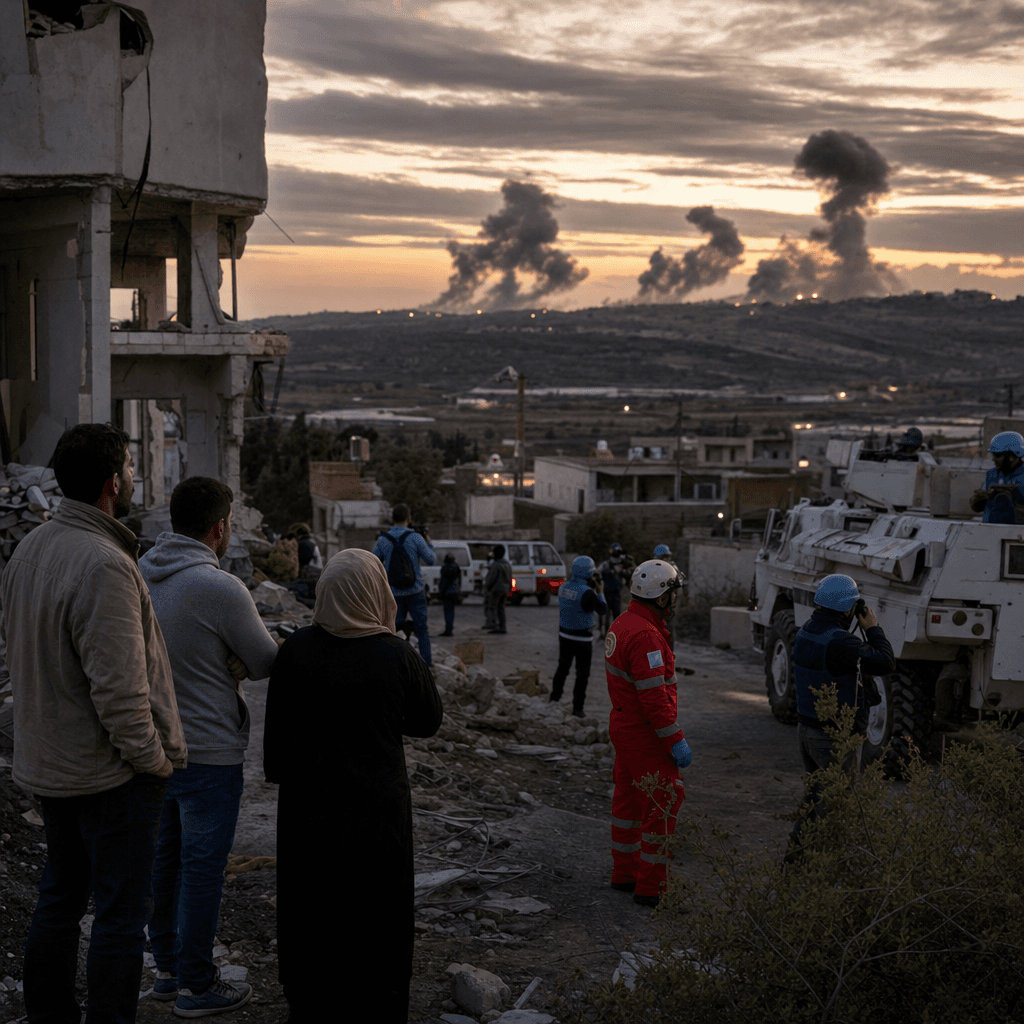
Israel Raises the Stakes in Southern Lebanon
Strikes, evacuation orders and ground pressure are forcing Beirut to negotiate under fire, as Washington’s diplomacy collides with Israeli leverage.
Israel is using escalation to shape the talks, not merely to punish Hezbollah. At least 16 people were killed and 58 wounded in strikes across southern Lebanon on Thursday, while Israeli forces ordered broad evacuations south of the Zahrani River and hit roads, homes and civilian infrastructure, according to Al Jazeera. Lebanon’s National News Agency said six of the dead were members of one family killed while fleeing along the Adloun highway, and the Lebanese army said one of its soldiers was killed in Nabatieh, underscoring how quickly the front has widened beyond isolated border exchanges (
Al Jazeera).
The battlefield is becoming the negotiating table
This is not just a surge in firepower; it is a bid to redefine the bargaining space before the next U.S.-brokered round of diplomacy. Al Jazeera reported that Israel warned residents of Tyre and nearby villages to move north of the Zahrani River, describing all areas south of it as a combat zone. On Tuesday, Prime Minister Benjamin Netanyahu said a large Israeli ground force was pushing deeper into southern Lebanon to “fortify” a security zone, while Hezbollah claimed dozens of attacks on Israeli troops and vehicles operating in the south (
Al Jazeera). The message is plain: Israel wants to enter the Washington track with military facts already established on the ground.
That matters because Lebanon’s leverage is thin. Beirut wants an Israeli withdrawal and a halt to strikes; Hezbollah wants to keep its arms and preserve room to retaliate. Those goals collide with Israel’s demand that Hezbollah be pushed back far enough to end rocket and drone attacks on northern Israel, a logic also reflected in CP24/AP reporting that Israel has expanded operations and called up more troops ahead of direct talks in Washington. In practice, the strongest card right now belongs to the side that can keep firing while still talking.
Civilians are absorbing the pressure
The cost is being exported onto Lebanese civilians and the Lebanese state. Al Jazeera reported more than 3,100 people killed and over 9,700 wounded since fighting escalated on March 2, with more than 1 million displaced.
Asharq Al-Awsat added that Israel has issued more than 100 evacuation warnings since the April ceasefire, while one field survey found 970 homes destroyed and hundreds more heavily damaged. That pattern suggests a campaign designed not only to hit Hezbollah but to hollow out the south’s ability to sustain civilian life, administration and movement.
For Beirut, that narrows policy options. The Lebanese government can protest and negotiate, but it cannot stop Israeli aircraft or force Hezbollah to disarm quickly enough to satisfy Israel. Hezbollah, meanwhile, benefits politically from portraying itself as the only actor still resisting Israel, even as that resistance keeps the south under fire. The result is a trap: the more Israel escalates, the weaker Lebanon’s negotiating position becomes, and the easier it is for Hezbollah to argue that the state cannot protect its own territory.
What to watch next
The next decision point is immediate: a Pentagon meeting between military delegations on May 29, followed by a further round of talks in early June, both reported by Al Jazeera and
CP24/AP. Watch whether Washington presses Israel to pause strikes, whether Israel expands the “security zone” farther north, and whether Hezbollah escalates its own attacks to preserve its bargaining position. That will determine whether the diplomacy is a ceiling on the war — or just another cover for it.
Discover more

Global Politics
US Seizes Iranian Ship, Tensions Surge
The US seizure of the Iranian ship Touska highlights a shift in control over the Strait of Hormuz, favoring Iran's strategic position.

Economics
Fed's Amex AML order puts correspondent banking on notice
Federal Reserve's Amex AML order requires board-level controls and a 90-day plan; OCC fined the bank $350 million over enterprise-wide deficiencies.

Conflict & Security
Guatemala: El Niño 2026–27 becomes regional security test
UNICEF: 25.8M children face El Niño risks in Latin America; Guatemala maps 188 municipalities for drought and food insecurity amid regional security test.

Economics
Fed's stress-test overhaul is a capital-smoothing exercise
Federal Reserve finalized stress-test overhaul: two-year averaging for bank capital buffers and public input, expected to halve volatility.