Lebanon pilot zone plan masks Israeli hold
US-brokered pilot zone plan lets Israel keep 20% of Lebanon
Model Diplomat10 min readMiddle East
The Pilot Zone as Potemkin Withdrawal: How Washington's Lebanon Deal Rewards Israel While Asking Nothing
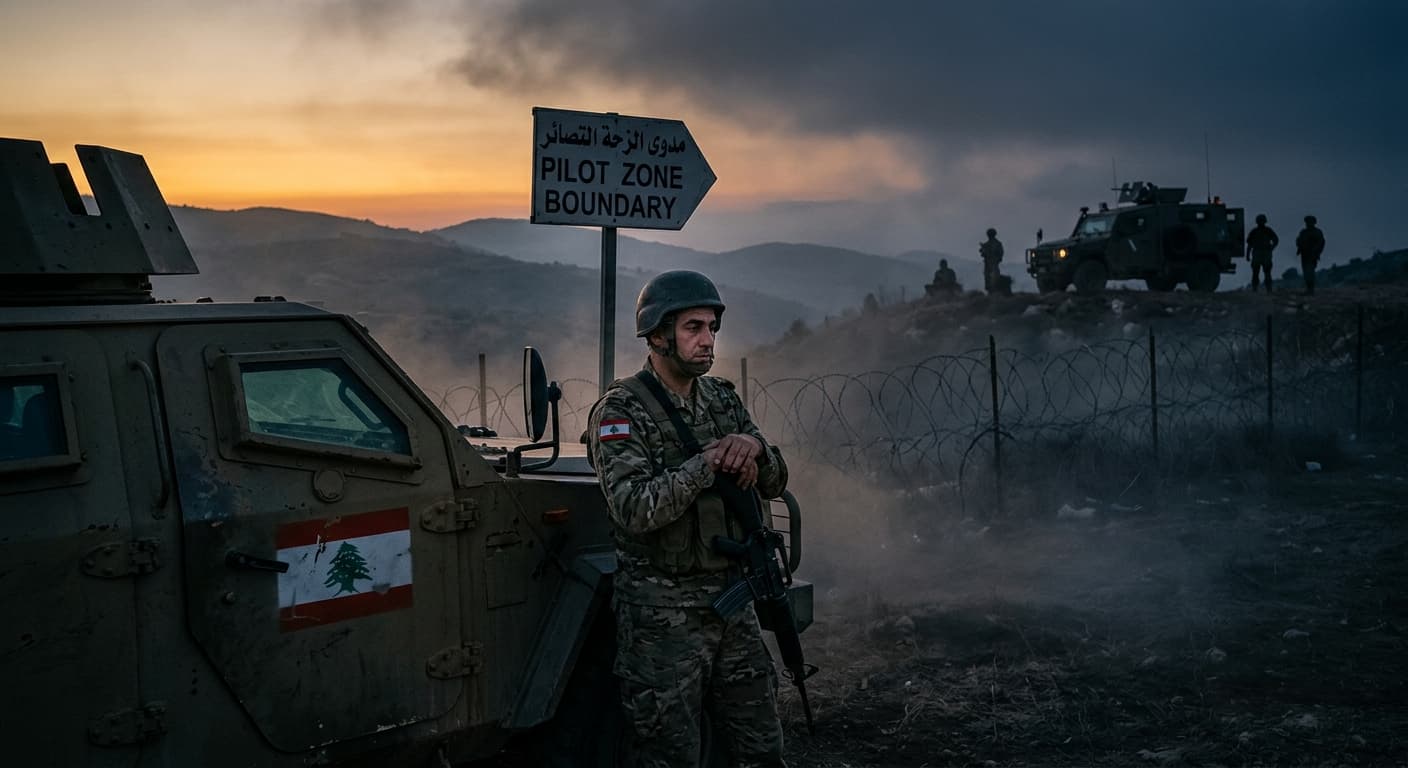
July 21, 2026 — The Lebanese army deployed to Zawtar al-Gharbiya this morning, activating the US-brokered "pilot zone" plan. But two of the three villages in Phase 1 were never occupied by Israel — and that is precisely the point of a framework designed to legitimize indefinite occupation under the cover of staged diplomacy.
Lebanese Armed Forces units entered Zawtar al-Gharbiya in Nabatieh district on Tuesday morning, the first operational step in a US-mediated trilateral framework signed in Washington on June 26. The Israeli military confirmed its withdrawal from the village overnight, and the US State Department released a statement describing the move as "a milestone" and "a direct outcome of last week's discussions between Israel and Lebanon in Rome." Al Jazeera
The choreography was precise, timed to coincide with Lebanese President Joseph Aoun's arrival in Washington for his Tuesday meeting with President Donald Trump. But the reality on the ground has already exposed the central flaw in the framework: two of the three Phase 1 villages were never occupied by Israeli forces at all. Froun and Srifa, designated alongside Zawtar al-Gharbiya in the inaugural rollout, sit entirely outside the 10-kilometre "security zone" Israel has enforced along the border since its March invasion.
The town that was never taken, and the withdrawal that cost Israel nothing, reveals the pilot zone for what it is: a mechanism that legitimizes Israel's continued occupation of roughly one-fifth of Lebanese territory. It shifts the burden of confronting Hezbollah onto a chronically under-resourced Lebanese army. It is a US-brokered pact in which Israel is asked to give up territory it did not hold, in exchange for Lebanese state forces doing the counter-insurgency work that four months of Israeli military operations failed to accomplish.
The Geography of a Phantom Withdrawal
The US State Department confirmed on Monday that the three villages of Phase 1 are Zawtar al-Gharbiya, Froun, and Srifa, with a second phase — likely including the village of Ghandouriyeh — to follow. BBC The German news agency dpa had previously reported negotiations covering Zawtar al-Gharbiyah, Zawtar al-Sharqiyah, al-Ghandouriyah, Burj Qalawiyah, Sarifa and Frun as candidate sites for early withdrawal.
Al Jazeera
Zawtar al-Gharbiya stands apart: it overlooks the Litani valley and was, unlike its Phase 1 counterparts, actually occupied by Israeli forces. That makes it the only village in the initial rollout where an Israeli withdrawal represents a tangible change on the ground. The Anadolu Agency confirmed that Zawtar al-Gharbiya was "the most sensitive site" among the three and "currently the only one of the villages occupied by Israeli forces." Anadolu Agency
For Froun and Srifa, the picture is starkly different. Al Jazeera's reporting from the ground confirmed that Lebanese security sources say neither village was occupied by Israeli forces at any point during the conflict. Srifa's mayor was blunt: "Nothing has changed; today is the same as yesterday and the Lebanese army has had a presence here throughout the whole war." The mayor of Froun was similarly dismissive: "There have been no new developments. The situation remains unchanged, and talk is just talk." Al Jazeera
The Israeli military currently occupies a self-declared "security zone" roughly 10 kilometres deep along the entire length of the Lebanese border — approximately one-fifth of Lebanese territory, according to the Congressional Research Service. CRS Report Israeli Prime Minister Benjamin Netanyahu and Defence Minister Israel Katz have repeatedly stated that forces will remain as long as Hezbollah is armed. Netanyahu told a press conference on June 27 that Israel was "allowing the Lebanese army to begin organising to take over some territory" — framing the pilot zones not as a withdrawal but as a permission Israel grants.
BBC
The security annex to the framework agreement, published by the Times of Israel, confirms the core sequence: a four-step model requiring clearance of non-state armed groups, third-party verification, LAF assumption of "sole operational control," and only then, and only in the designated pilot zones, Israeli redeployment. Times of Israel At no point does the framework commit Israel to withdraw from the 10km security zone as a whole. "Eventual IDF redeployment" is the operative phrase — deliberately elastic, conditioning Israeli movement on a standard that may never be met.
The Real Transaction: Disarmament as Precondition, Not Promise
The framework's architecture places every Israeli concession as conditional, every Lebanese obligation as prerequisite. The language of the June 26 text describes a "sequenced process" in which the LAF restores "effective sovereign authority over all Lebanese territory, pending the verified disarmament of non-state armed groups" — a clear reference to Hezbollah — before Israel is obliged to "progressively redeploy." Al Jazeera
The asymmetrical bargain can be stated simply. Israel gives up nothing substantial until Hezbollah is disarmed. Hezbollah must be disarmed before Israel gives up anything substantial. And the actor tasked with disarming Hezbollah — the Lebanese Armed Forces — is the weakest link in the chain.
The LAF numbers approximately 80,000 personnel, with about 55,000 troops in the army component. It has received roughly $3 billion in US security assistance since 2006 and remains Lebanon's most trusted public institution, with 94 percent public confidence in a 2025 Gallup poll. CFR But trust is not capability. The Institute for National Security Studies in Tel Aviv assessed bluntly that the LAF "lacks both the will and the capability to confront Hezbollah" and "to date has avoided violent clashes with the organization and has at times even cooperated with it."
INSS The Carnegie Endowment noted that LAF commander Rudolph Haykal has pushed back against demands to forcibly disarm the group, recognizing that such an operation "would place his institution on a collision course with the Shiite community as a whole."
Carnegie Endowment
This is the unspoken premise of the pilot zone framework: Washington and Jerusalem are betting that a combination of US training, conditionality-tied aid, and political cover from a president elected on a sovereignty mandate will produce an LAF willing to do what Israel's military campaign could not. The pilot zone is the laboratory. If the laboratory fails — if Hezbollah resists, as it has pledged to do — the framework provides Israel with a ready justification to maintain its security zone indefinitely.
Hezbollah's Position and the Iran Factor
Hezbollah's rejection of the framework has been absolute. On June 27, the day after the agreement was signed, Hezbollah Secretary-General Naim Qassem called it "humiliating, shameful and a surrender of sovereignty" and declared: "We will continue as a resistance in the field to defeat the occupation. We did not leave the field under difficult circumstances and we will not abandon it." Al Jazeera
Hezbollah MP Hassan Fadlallah went further, warning that any attempt by the Lebanese army to enforce the agreement would lead to "civil war." Al Jazeera Former US diplomat Nabeel Khoury called the agreement "advantageous" for Israel but "very dangerous" for Lebanon. And former Israeli ambassador Alon Pinkas told Al Jazeera he was "very doubtful and sceptical that this will work out because the deal is between Israel and Lebanon with the US, and Israel and Lebanon do not really have territorial issues; the issue here is Hezbollah."
Yet critically, Hezbollah has not escalated in response to the framework's implementation. The group has held its fire in Lebanon even as US-Iran tensions have reignited in the Gulf. This restraint likely reflects an Iranian calculation: Tehran, which has committed in the June 2026 US-Iran MOU to "the immediate and permanent termination of military operations on all fronts, including in Lebanon," is currently using the Lebanese file as a bargaining chip in broader negotiations. CRS Report
The ISPI, an Italian think tank, captured the dilemma precisely: "The main obstacle to the implementation of pilot zones in South Lebanon is not the Lebanese Armed Forces' capacity, nor Israeli noncompliance… The main obstacle is Hezbollah's political and military subordination to Iran. Tehran continues to regard Hezbollah, and Lebanon more broadly, as essential instruments of regional influence and bargaining leverage." ISPI So long as Iran needs Hezbollah as a card in US-Iran negotiations, the group will obstruct arrangements that expand state authority in the south.
What Lebanon's Villagers Actually Face
Strip away the diplomatic framing, and the pilot zone story is fundamentally about whether displaced families can return home. The war that erupted on March 2 has killed more than 4,300 people in Lebanon and displaced 1.2 million, according to the UN. UN News The WHO recorded 3,750 deaths and 1,268 injuries by April 1 alone.
WHO By June, the UN humanitarian coordinator estimated that "probably more than 200,000" people would be unable to return to destroyed villages even if hostilities ceased entirely.
UN News
On the ground in Froun and Ghandouriyeh, the return is partial, anxious, and unsupported. Al Jazeera's reporting documented families clearing rubble by hand. Abu Ali Miqdad, an elderly man who founded a family business decades ago, was pulling tyres, oil drums and spare parts from the wreckage of his building, saying he would keep "clearing the rubble and rebuilding, even under bombardment." Sumaya Haidar, a woman in her 70s, sat on her doorstep in traditional southern Lebanese dress — one of the few homes in Froun still standing — without water, electricity, or phone service. Al Jazeera
Ghandouriyeh has suffered even more: 250 of its 260 homes are destroyed or damaged, according to municipal council head Mohammed Nader. The framework that designates these villages as pilot zones conditions reconstruction funding on the successful disarmament of non-state armed groups — which Hezbollah has rejected. The Lebanese army patrols are visible. Soldiers from the Fifth Intervention Regiment have manned the southern entrance to Ghandouriyeh for three days, checking vehicles and residents' identification. But the army's presence is a display of sovereignty — "extending state authority," as President Aoun's agenda puts it — not a guarantee of safety. The roads remain under the surveillance of Israeli positions in Odaisseh al-Qusayr, Qantara, and Alma ash-Shaab.
The Aoun-Trump Calculus
President Aoun's White House meeting on Tuesday is explicitly designed to convert the theatrical start of the pilot zone into a political win. This is the first visit to Washington by a Lebanese head of state since Michel Sleiman met Barack Obama in 2009. Aoun, a former LAF commander elected in 2025 after more than two years without a head of state, has staked his presidency on the proposition that direct negotiation with Israel can deliver what decades of Hezbollah-led "resistance" could not.
Aoun told Secretary of State Marco Rubio on Sunday that Lebanon and the US needed to "align positions" to achieve "an initial Israeli withdrawal from the first pilot zone." Al Jazeera According to a Lebanese official who spoke to Reuters, Aoun planned to present Trump with a written proposal outlining how Hezbollah's arsenal could be dismantled while securing Israel's withdrawal. The same official said Aoun believes "Trump is uniquely placed to pressure Israel into withdrawing its troops."
But Aoun arrives with almost no leverage. The framework he is asking Trump to enforce was negotiated under heavy Israeli advantage. His army cannot disarm Hezbollah. Israel's security zone remains intact. And the pilot zone debut — two unoccupied villages plus one tactical redeployment — offers exactly the kind of cosmetic progress Washington can cite while the structural imbalance endures.
Trump has voiced support for Lebanon and publicly condemned Israel's June attack on Beirut. But the question Aoun cannot answer is whether Trump will apply the "necessary pressure" on Netanyahu that Aoun says is required — pressure that would mean conditioning US support on a withdrawal the Israeli prime minister's right-wing coalition will not accept. Finance Minister Bezalel Smotrich has already signalled Israel intends to remain "until Hezbollah disarms, and I think also beyond that, because we need defendable borders." Al Jazeera
What the Framework Does Not Do
The agreement's text contains several silences that define its operational reality. It contains no timeline for Israeli withdrawal from the security zone. It contains no enforcement mechanism beyond the trilateral Military Coordination Group, a US-chaired body that can facilitate coordination but cannot compel Israeli redeployment. It contains no requirement that pilot zones include occupied territory. As Al Jazeera's correspondent Zeina Khodr noted at the time of signing: "The word withdrawal is not in the text." Al Jazeera
Sami Halabi, director of policy at Beirut-based think tank Badil, crystallized the problem: "We're at the point where Lebanon is moving from performing its sovereignty to piloting its sovereignty through these pilot zones." Al Jazeera
And the framework contains no role for Hezbollah — the party with which Israel is, in fact, at war. The agreement is trilateral, between the US, Israel, and the Lebanese state. But the conflict is between Israel and a non-state armed group the Lebanese state cannot control. Negotiating peace without the belligerent is diplomacy by exclusion — and it works only if the excluded party is neutralised. It has not been.
The Bottom Line
The pilot zone framework is not a mechanism for Israeli withdrawal — it is a mechanism for legitimising indefinite occupation while transferring the burden of confronting Hezbollah to the Lebanese army. By selecting villages that were never held by Israeli forces as the test cases for "withdrawal," the agreement generates diplomatic momentum at zero cost to Israel's strategic position. The real question is not whether Phase 1 works — it is whether anyone in Washington, Beirut, or Tel Aviv believes Phase 2 will include territory Israel actually holds. The answer, for now, is no.
The joint statement after Aoun's White House meeting will signal whether Washington applies real pressure or accepts the pilot zone as a permanent status quo. If the Lebanese army's deployment in Zawtar al-Gharbiya meets Hezbollah resistance in the next 30 days, the framework's credibility collapses before Phase 2 begins. And with UNIFIL's mandate expiring at year's end, the gap before any replacement becomes Hezbollah's opportunity to reconstitute — and Israel's justification to dig in.
Discover more
India
700 Activists Accuse PM Modi of MCC Breach
Over 700 activists allege PM Modi breached election code with a televised address attacking opposition parties just before state elections.
Global Politics
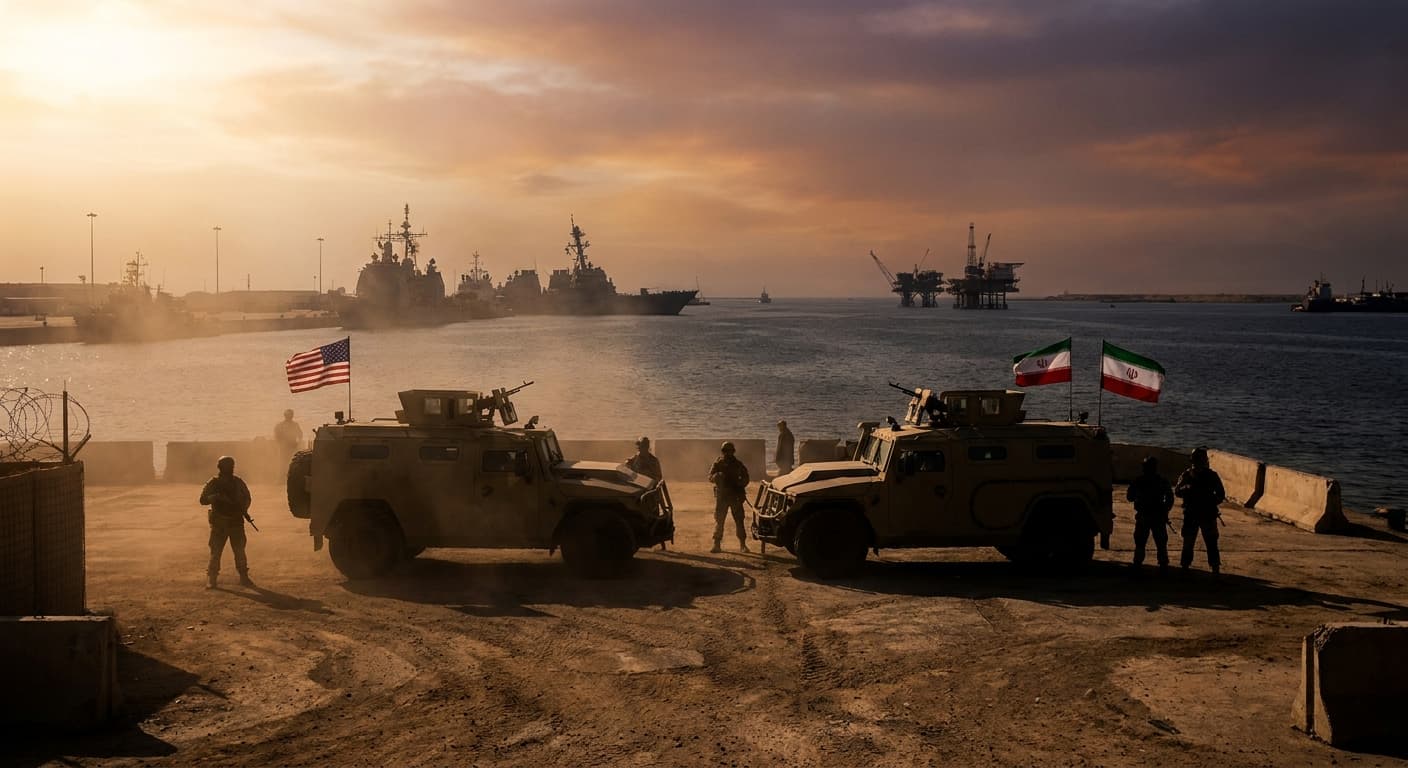
US-Iran Tensions Rise
Tensions escalate in the Strait of Hormuz as Iran and the US clash over maritime control, with a ceasefire hinging on a contested MoU paragraph.
India
Congress Accuses Modi of Stalling Women's Law
Congress accuses Modi of stalling women's reservation law by linking it to delimitation, revealing a deeper electoral strategy.

Economics
Fed's Amex AML order puts correspondent banking on notice
Federal Reserve's Amex AML order requires board-level controls and a 90-day plan; OCC fined the bank $350 million over enterprise-wide deficiencies.