Iran's Stance on Strait of Hormuz
Tehran asserts permanent control and transit fees.
Model Diplomat9 min readMiddle East

Iran's Stance on the Strait of Hormuz: Control Is Non-Negotiable
Tehran insists on permanent sovereign control and transit fees for the Strait of Hormuz, defying the US-Iran interim deal and rewriting maritime law from the wreckage of the 2026 war.
Iran's position on the Strait of Hormuz, as of July 2026, is that its control of the waterway is permanent, sovereign, and monetisable — a stance senior Iranian sources told Al-Monitor on July 1 they will "achieve by force" if necessary. The strait is no longer a bargaining chip; it is the prize. Tehran has emerged from a four-month war with the United States and Israel with its nuclear programme battered but its geography intact, and it is using the 60-day interim deal signed on June 17 to lock in a new legal and administrative regime — the Persian Gulf Strait Authority, a Türkiye-style transit doctrine, and a discount for "friendly" states — before that window closes on August 16.
That matters because it converts the world's most important oil chokepoint from a piece of neutral maritime commons into a Tehran-run tollgate. Roughly 20 million barrels of oil and a fifth of global LNG crossed Hormuz daily in 2024, according to the US Energy Information Administration. If Iran's position holds even partially past August, the shift is generational.
The stance, stated plainly
Iranian officials have converged on a single line since the ceasefire: control is non-negotiable, fees are coming, and friends will pay less than enemies.
Ebrahim Azizi, a former Islamic Revolutionary Guard Corps commander who chairs the parliamentary Committee for National Security and Foreign Policy, told the BBC that Tehran will "never" cede control. "It's our inalienable right," he said. "Iran will decide the right of passage, including permissions for vessels to pass through the Strait." Azizi confirmed a bill is being introduced under Article 110 of Iran's constitution to place strait administration formally under the armed forces — a domestic legal scaffold designed to outlast the MoU.
Deputy Foreign Minister Kazem Gharibabadi went further on June 26, telling Anadolu Agency that safe passage "cannot be guaranteed" under ambiguous multilateral frameworks and must be "coordinated with Tehran." Iran's ambassador in Beijing meanwhile promised
Al Jazeera on July 5 that "friendly countries" would receive "special treatment" in transit terms. The two-tier pricing model is now stated aloud.
Two senior Iranian sources briefed Al-Monitor on July 1 that Tehran will refuse to negotiate any other outstanding dispute — nuclear enrichment, sanctions architecture, Hezbollah — until Washington acknowledges Iranian control of the strait. Ghalibaf, the chief negotiator, has told domestic media that Hormuz "will never return" to its prewar status, per
Al Jazeera. The wording is deliberate. It is not a threat; it is a statement of fait accompli.
The chokepoint in one number
The scale is what makes the position dangerous rather than rhetorical. Roughly 27% of the world's maritime crude oil trade and 20% of world petroleum liquids consumption transit Hormuz, per the Congressional Research Service. Some 84% of that crude and 83% of Qatari LNG head to Asian markets. Japan sources close to three-quarters of its oil imports through the strait; South Korea, roughly 60%; India, almost half of its crude and 60% of its natural gas, per
Al Jazeera. These are not diversifiable dependencies. They are physical ones.
During the war, the disruption was immediate and severe. CSIS's maritime tracking found that Hormuz averaged more than 153 daily vessel transits before February 28, then collapsed to 13 per day within a week. Between February 23 and 28, 49 Chinese-flagged vessels transited the strait; after March 1, only two did. That number — 2 — is the datum that finalised Tehran's strategy. Even Beijing, Iran's closest patron, could not force its way through. If the IRGC could shut out China, it could shut out anyone.
What the June 17 memorandum actually says
The interim deal signed at Versailles gave the United States what it needed for headlines and Iran what it needed for time. The full text, published by the BBC, commits Iran only to "best efforts for the safe passage of commercial vessels with no charge, for 60 days only." Point 5 obliges Tehran to negotiate future administration of the strait with Oman and other Persian Gulf littoral states "in line with the applicable international law and the sovereign rights of coastal states of the Strait of Hormuz."
Read that phrase carefully. It embeds the sovereignty language Iran has demanded for two decades, and it says nothing about post-August pricing. The Council on Foreign Relations argued after publication that "Iranian officials insist that they will impose a transit fee after the sixty-day period of the MOU expires." Mostafa Khoshcheshm of the University of Applied Sciences in Tehran was blunter: "According to the MoU, Iran is not going to charge service fees for 60 days, but afterwards, Iran is definitely going to do that."
The Persian Gulf Strait Authority (PGSA), stood up by the Supreme National Security Council in May, has already published mandatory transit rules. Per the BBC's maritime verification unit, the PGSA states: "No vessel is permitted to pass through the Strait of Hormuz without a valid passage permit issued by the PGSA." The authority is US-sanctioned. It has not been dismantled. Brookings analyst Kari Heerman flags this as the tell in the
June 25 podcast: Iran's national insurance company has already opened a policy that transiting vessels must apply for, waived only for the 60-day window. When the window closes, the mechanism switches on.
The legal battle Tehran is quietly winning
The dispute is not really about money. It is about which body of maritime law governs the world's chokepoints.
Washington enforces UN Convention on the Law of the Sea (UNCLOS) Part III — the "transit passage" regime — as binding customary international law applicable to all states. Under transit passage, coastal states cannot suspend, condition, or tax passage; submarines transit submerged; warships transit in "normal mode." Iran rejects the frame. Neither Iran nor the United States has ratified UNCLOS, and Tehran invokes the 1958 Geneva Convention doctrine of "innocent passage," which lets a coastal state condition passage, require warship notification, and suspend traffic deemed "prejudicial" to security, per the Japan Institute of International Affairs.
The Observer Research Foundation traces this back to the Portuguese cartaz licence system of the 16th century — a paid permit for vessels transiting the Indian Ocean under Lisbon's imperial writ. ORF argues Iran is now assembling a modern equivalent: a Türkiye-Montreux-style regime over Hormuz that "can ultimately hand the sovereign keys of the strait to Iran and Oman." The historical parallel that reframes the argument is not Suez, and not Panama, but the Øresund — where Denmark taxed passage into the Baltic for four centuries before a coalition of maritime powers finally forced the tolls off. That took political will the current US administration has not signalled it has.
The Israeli think-tank INSS argues Iran's position is legally "weak" because transit passage now reflects customary law binding on non-parties, and cites UN Security Council resolution 2817, adopted 13-0 with two abstentions on March 11, 2026, condemning Iranian threats to Hormuz navigation. The
UN press release is the primary document. But 2817 is a demand without an enforcement mechanism — and the June 17 bilateral deal has since superseded it as the operative framework. The
JIIA analysis notes that Iran's dialogue with Oman on "future administration" — mandated by MoU Point 5 — is precisely the mechanism through which a de facto Hormuz regime crystallises into a de jure one, in the model of the 1989 Jackson Hole Agreement or the 2005 Malacca Strait Cooperative Mechanism.
Who benefits, who loses
The clearest losers are Qatar, Kuwait and Bahrain — small Gulf exporters with no pipeline bypass. As CFR observes, "the Saudis and Emiratis have options to go around the strait, but Kuwaitis, Qataris, and Bahrainis do not. They will be forced to comply with Iranian demands or experience economic dislocation." Saudi Arabia's East-West pipeline now runs at capacity carrying 7 million barrels per day to Yanbu on the Red Sea; the UAE's Habshan-Fujairah line moves 1.8 million barrels a day to the port of Fujairah, according to
Brookings. The rest of Gulf oil has nowhere else to go.
The UAE has publicly rejected Iran's May cartography, which extended PGSA "oversight" over 22,000 sq km of Gulf waters — some of it inside UAE and Omani territorial claims. Presidential adviser Anwar Gargash called the claim "nothing but fragments of dreams," per the BBC. ADNOC chief executive Sultan al-Jaber has described any restriction of passage as "economic terrorism," per
Al Jazeera. None of that has caused Tehran to withdraw the map.
The counter-intuitive winner is Oman. MoU Point 5 elevates Muscat from bystander to co-administrator, and Omani Foreign Minister Badr Albusaidi has told Al Jazeera that "future arrangements related to the strait do not involve imposing any transit fees." Yet Oman is a service-fee jurisdiction. Services can be priced — for demining, escort, insurance, inspection — and the MoU explicitly requires Iran to complete demining "within 30 days," creating the invoice line for a permanent "safety" charge.
The China question
Beijing is the pivot. China imports up to 40% of its oil and 30% of its LNG through Hormuz, according to CSIS. Iran's oil exports, roughly 90% of which go to China, averaged about 1.7 million barrels per day in early 2025 per the EIA, cited by
Al Jazeera. Yet by May 2026, Iranian crude accounted for only about 11% of Chinese imports, down from 14% in 2025, per the
Atlantic Council. Beijing has spent the last 18 months quietly reducing dependence on the very supplier now trying to price the chokepoint.
But Iran's post-ceasefire pitch to Beijing is a discount rate. A March report in Al Jazeera documented that at least two vessels have already paid transit fees in yuan through a Chinese maritime intermediary — one voyage reportedly costing $2m. Lloyd's List has tracked 26 vessels using an IRGC "pre-approved" route in the space of two weeks, each requiring the operator to submit IMO numbers, cargo manifests and crew lists to IRGC-linked intermediaries. The White House claimed after Trump's meeting with Xi Jinping that Beijing "made clear China's opposition to the militarisation of the strait and any effort to charge a toll for its use." Beijing has never publicly repeated the line. That silence is the story.
What to watch
The interim MoU expires on August 16, 2026 — 60 days from Versailles. Three concrete catalysts fall inside that window:
- The Iranian parliamentary bill under Article 110 of the constitution. Azizi says it will place strait administration under the armed forces. If passed before August 16, Iran will have created a domestic legal basis to enforce PGSA rules the day the MoU lapses.
- The Oman-Iran joint mechanism under MoU Point 5. A framework text is expected before the next round of Islamabad talks. Watch for the word "services" — the legal wedge that turns a prohibited toll into a permissible fee.
- The Islamabad talks mediated by Pakistan and Qatar. Iran has signalled it will refuse to negotiate nuclear stockpile dilution or Hezbollah until Washington concedes on Hormuz. If Secretary of State Marco Rubio holds the line — "no country is allowed to charge tolls or fees on an international waterway," he told reporters in Abu Dhabi per
Al Jazeera — the talks collapse and Iran resumes selective enforcement of PGSA rules on September 1.
The IEA's 400-million-barrel emergency release, the largest in history, will be exhausted by July or August according to Brookings. If negotiations fail after the buffer is gone, oil markets face a second shock without the cushion — and gasoline prices, which peaked near $5.35 per gallon in the United States in May, will spike again.
The Bottom Line
Iran's stance on the Strait of Hormuz is not a bargaining position — it is a settled policy that the Islamic Republic will formalise sovereign control, charge for passage, and price access politically. The June 17 memorandum bought 60 days of oil flow at the cost of embedding Iranian sovereignty language in a US-signed document, and unless Washington reverses that concession before August 16, the world's most important chokepoint will operate on Tehran's licence for the foreseeable future. The strategic winner is not Iran alone; it is the precedent that a coastal state, with enough leverage and enough patience, can convert an international strait into a toll road.
Discover more
Global
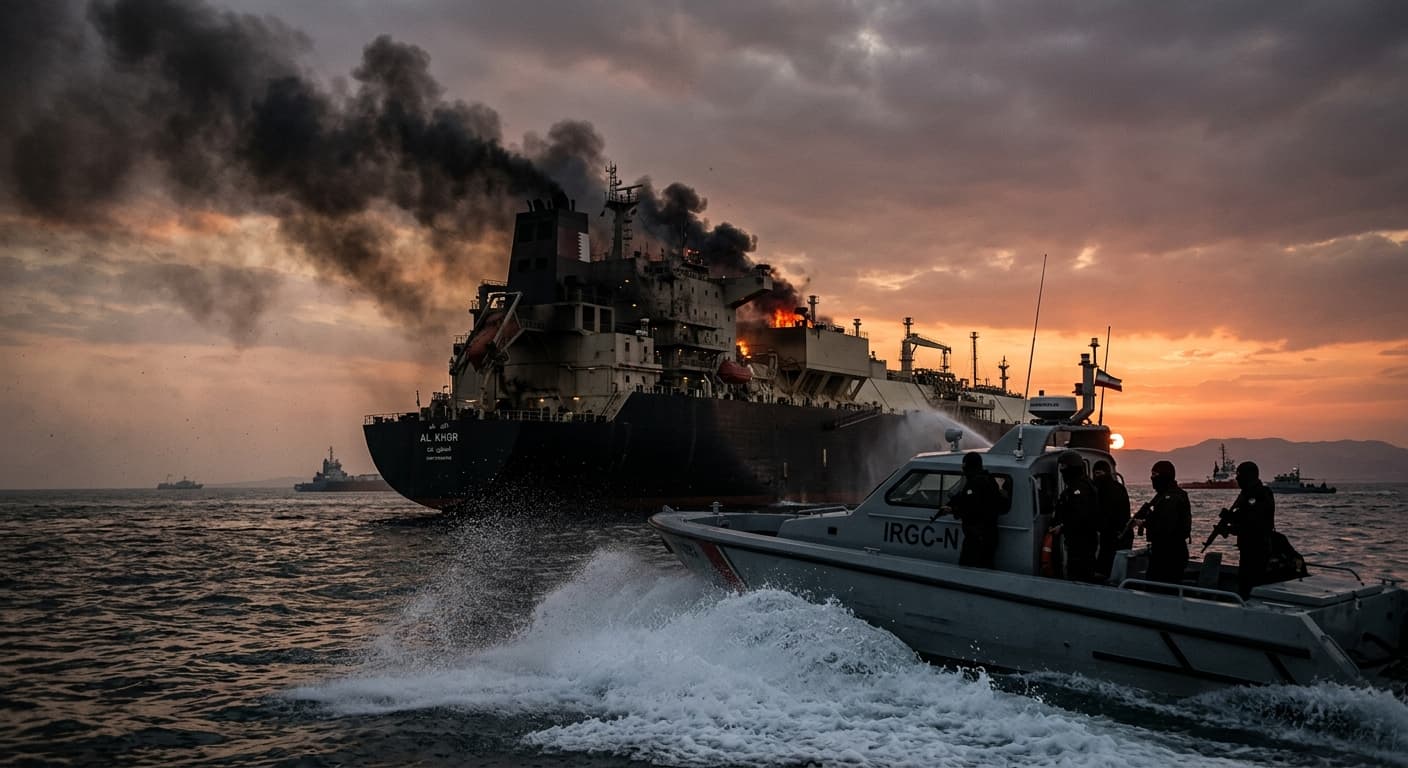
Qatari Tanker Strike Exposes Hormuz Tensions
A Qatari tanker was struck off Oman, revealing the fragility of the Hormuz ceasefire and Iran's influence over maritime security.
Global
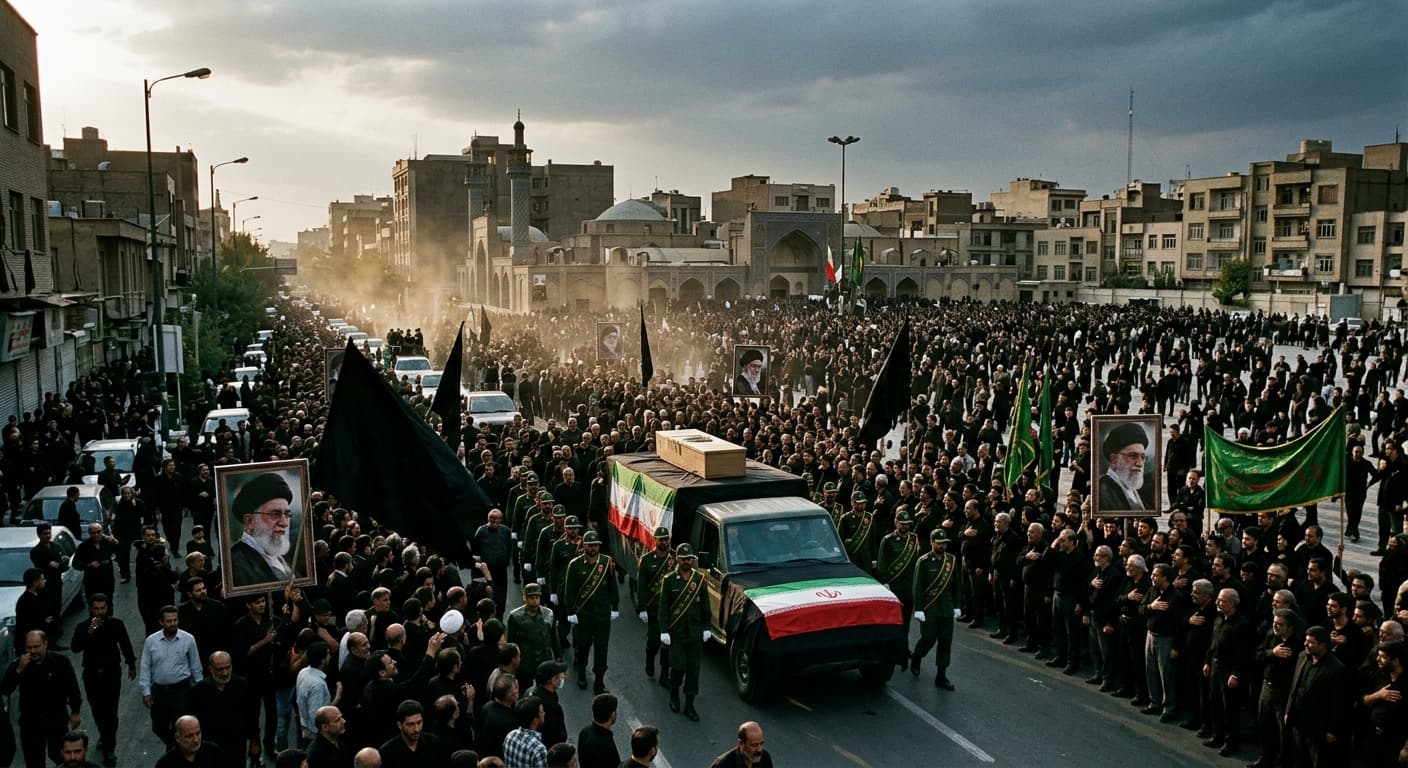
Khamenei's Funeral Signals Iran's Decline
The funeral of Ayatollah Khamenei highlights Iran's diminished influence in the Gulf, with regional powers now dictating terms.
Global
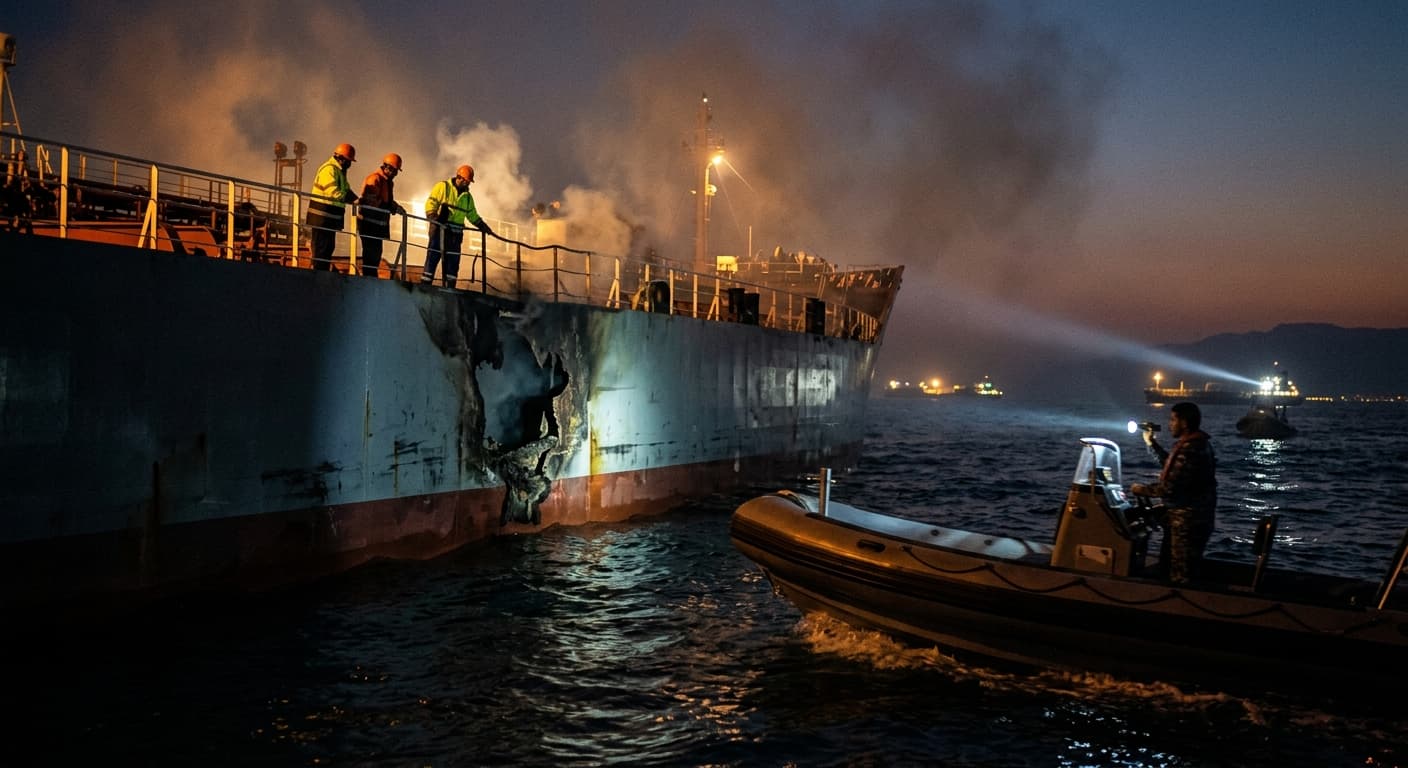
Iran's Hormuz Missile Strikes: A Toll Booth
Iran's missile attack on a Qatari-linked tanker highlights Tehran's strategy to control the Strait of Hormuz, impacting Gulf states and maritime law.

Tech Policy
Iran's Cavern Manticore Targets Israel's IT
Cavern Manticore, an Iran-linked hacking group, targets Israeli IT vendors, prompting a shift in Israel's cybersecurity policy and legislative efforts.