Iran Rejects US Uranium Handover Demands
Tehran cites MoU for on-site down-blending of uranium.
Model Diplomat8 min readMiddle East
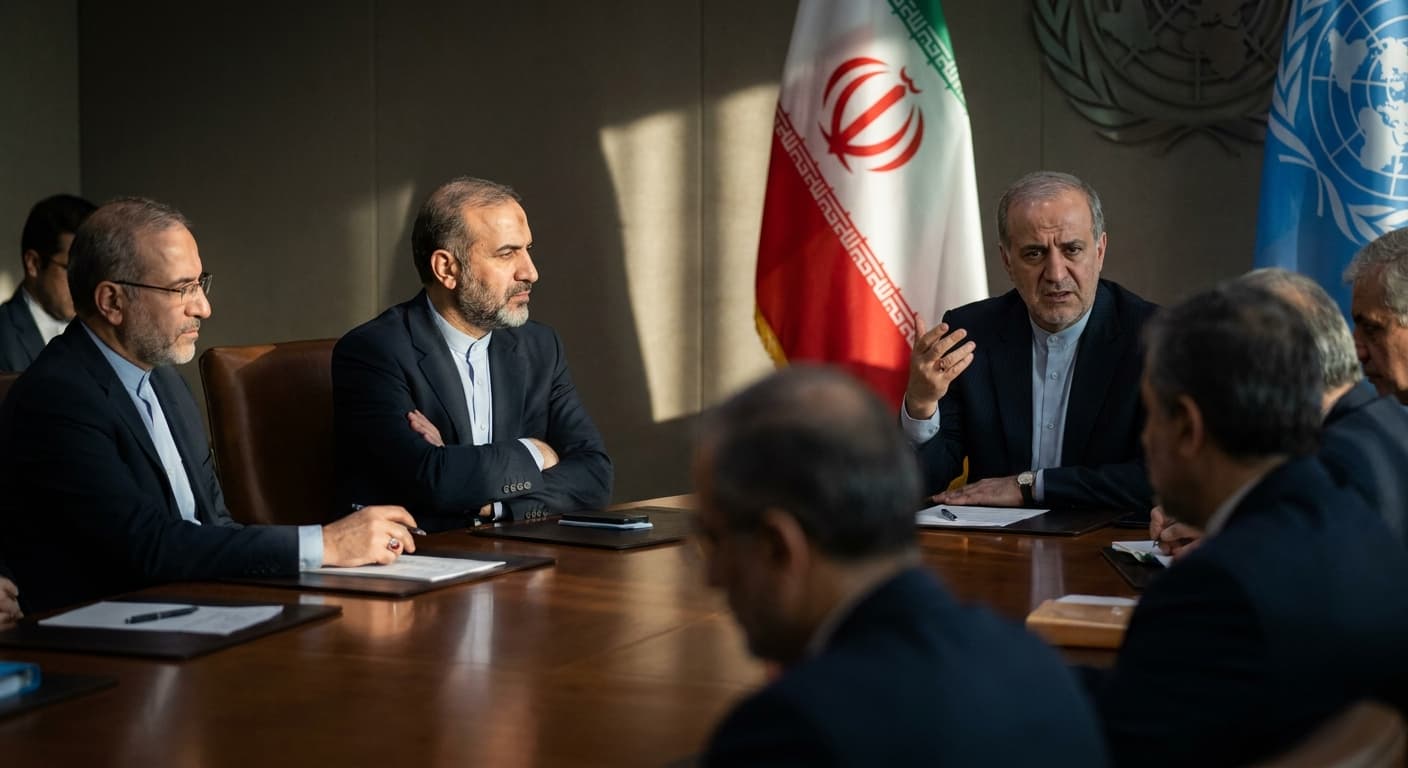
Iran Rejects US Uranium Handover Demands, Citing Signed MoU
Tehran refuses to ship its 440.9 kg enriched uranium stockpile to the US, pointing to the June 17 Islamabad memorandum that requires only on-site down-blending.
Iran's foreign ministry on July 3, 2026 reiterated that its stockpile of 440.9 kg of uranium enriched to 60% "is not going to be transferred anywhere," rebutting President Donald Trump's repeated public claim that Tehran had agreed to hand it over. The rejection is not a break with the truce — it is Iran holding Trump to the text his own administration signed in Versailles on June 17, which commits both sides to down-blending on Iranian soil under IAEA supervision, not export. The uranium handover Trump keeps demanding in public was already negotiated out of the deal his envoys signed in private — and that gap between rhetoric and paper is now the single largest risk to the 60-day timetable that expires on August 16.
What the paper actually says
The 14-point Islamabad Memorandum of Understanding, read out verbatim to reporters by a senior US official on June 17 and published in full by the BBC, settles the disposition question with a single sentence in Point 8:
"The United States of America and the Islamic Republic of Iran have agreed to resolve the disposition of stockpiled enriched material, pursuant to a mechanism that will be mutually agreed upon… with the minimum methodology to be down-blending on site under the supervision of the IAEA."
The clause does three things Tehran wanted and Washington had publicly resisted. It keeps the material inside Iran. It sets down-blending — not export or destruction abroad — as the floor, not the ceiling. And it hands verification to the International Atomic Energy Agency, an institution Iran can live with, rather than to US special forces, which the Wall Street Journal reported the Trump administration had considered dispatching to Isfahan as recently as April. Al Jazeera's parsing of the
14-point plan reached the same conclusion: the document "appears to suggest the US may agree to Iran diluting its stockpile back to nuclear power levels rather than handing it" over.
Trump has continued to say the opposite. On May 26 he told a cabinet meeting Iran would "give up their highly enriched uranium, not for sanctions relief. No, no, not at all," according to Al Jazeera. He has variously said the material will be "brought home and destroyed" in the US, or "destroyed in place." Vice-President JD Vance struck a middle note on Fox News in mid-June, saying the IAEA and the US would "help Iran destroy the highly enriched stockpile" — the first US acknowledgement that on-site disposal was on the table, per the
BBC.
Why Tehran can afford to say no
Three shifts have hardened Iran's position since the ceasefire took effect on April 8. The first is a leadership succession. Ayatollah Ali Khamenei was killed on the first day of the 12-day war in June 2025; his son Mojtaba Khamenei inherits an office whose legitimacy rests on refusing what his father called strategic concessions. On May 21, two senior Iranian officials told Reuters that Khamenei the younger had issued a directive that the stockpile "should not leave the country." Iran's parliament then codified access restrictions into law: Speaker Mohammad Bagher Ghalibaf told IRIB on July 2 that inspectors currently have access only to Bushehr and the Tehran Research Reactor, and that "parliament itself passed the law, and the Supreme National Security Council has also adopted a corresponding resolution."
The second is that Iran has already offered a technically credible alternative. On February 26, 2026 — two days before US-Israeli strikes reopened the war — Iranian negotiators in Geneva offered to down-blend the entire 60% stockpile to 3.67%, the JCPOA-era level, in an irreversible process. That offer, since confirmed in multiple accounts, sat on the table when the war restarted. Muhammad Sahimi, a professor of chemical engineering at the University of Southern California, told Al Jazeera that dilution under IAEA monitoring "is the most likely scenario."
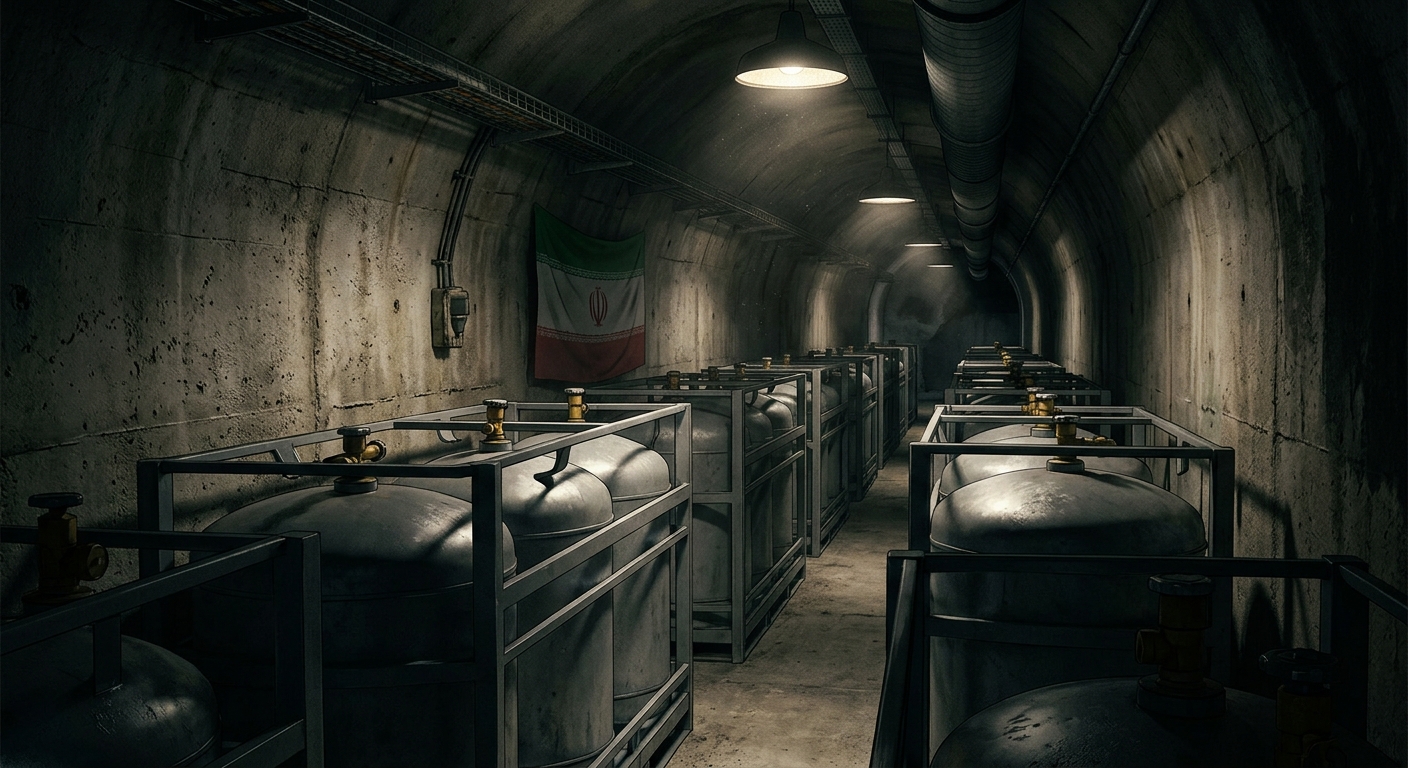
The third is that the material is physically hard to seize. A BBC investigation drawing on former US defence officials concluded that extracting the stockpile from tunnels at Isfahan and Natanz would require ground troops, heavy excavation equipment, and "several days or even weeks" under Iranian fire — a scenario Trump himself downplayed to CBS in April, saying the material was "so deeply buried it's gonna be very hard for anybody." Jonathan Ruhe of the Jewish Institute for National Security of America told the BBC there are "a million things that could go wrong" with a seizure operation. Diplomacy, in short, is the least bad option for both sides — and both sides know it.
The primary document that boxes Trump in
The IAEA's own reporting is the strongest constraint on the Trump administration's public position. In its September 2025 report to the Board of Governors, GOV/2025/50, the Agency estimated Iran's total enriched uranium stockpile as of June 13, 2025 — the day before US-Israeli strikes began — at 9,874.9 kg, including 440.9 kg enriched to 60% U-235. It has since lost line-of-sight: Director-General Rafael Grossi told the Board on
March 2, 2026 that the Agency had "not had access to Iran's previously declared inventories of LEU and HEU for more than 8 months, making their verification… long overdue." That is the number Trump wants shipped out. It is also the number no independent inspector has physically counted since the strikes.
That verification gap gives Tehran leverage the Trump team keeps overlooking. Only Iran knows how much of the 440.9 kg survived US-Israeli bombing of Isfahan, Natanz and Fordow — and only the IAEA can eventually certify it. Both facts point toward on-site down-blending as the sole workable path, because it can be verified without moving material through an active war zone.
What Doha revealed
The July 1 indirect talks in Doha, mediated by Qatar and Pakistan, closed with what Qatari foreign ministry spokesman Majed al-Ansari called "positive progress" but no breakthrough on the nuclear file. Iranian Deputy Foreign Minister Kazem Gharibabadi confirmed two working meetings: one on "violations of US obligations" that established a bilateral communication channel, and one on the release of $6 billion in frozen Iranian assets held in Qatari banks. Foreign Minister Abbas Araghchi and Speaker Ghalibaf — Iran's most senior negotiators — stayed home.
That absence is a signal. Middle East Institute senior fellow Alex Vatanka told Al Jazeera that "in the last two weeks or so, we've seen more pushback inside the Iranian regime. People were saying, 'This MoU sounds nice on paper, but where is the action?'" With Ali Khamenei's six-day funeral processions beginning July 4 in Iran and Iraq, the political cost of a photo op with US envoys was too high. That does not mean the deal is dead. It means Tehran is banking every concession — the down-blending clause, the sanctions schedule in Point 7, the $300 billion reconstruction plan in Point 6 — before granting Trump the optics of a signing ceremony.
The angle Washington keeps missing
Trump's demand for a handover is not primarily a nonproliferation position. It is a domestic one, aimed at showing a harder deal than Barack Obama's 2015 JCPOA, which required Iran to cut its stockpile by 98% to 300 kg but left it inside Iran. The Center for European Policy Analysis and Poland's OSW note that the June 17 memorandum "provides for" the negotiation of a comprehensive settlement of the nuclear issue but leaves the disposition mechanism to the final round, with provisions "open to fundamentally different interpretations in Tehran and Washington," per an OSW analysis. Kelsey Davenport of the Arms Control Association told the
BBC that "Iran is not going to agree to a deal that does not include sanctions relief" — and that Trump would need to secure a stockpile disposition Obama did not, likely "a temporary suspension of enrichment and the disposal of Iran's existing stockpile." Down-blending on site meets that bar. A handover does not, because Iran will not agree to it, and forcing it would collapse the truce and reopen the Strait of Hormuz to combat.
The Council on Foreign Relations noted on April 20 that Baghaei's early rejection was calibrated: Iran was not walking away, only refusing "excessive demands." That posture has held through five rounds — Geneva, Islamabad, Bürgenstock, Versailles, Doha.
What to watch
- August 16, 2026. The 60-day window written into the Islamabad MoU expires. Absent a final deal or a mutually agreed extension, the Point 13 obligation to negotiate exclusively on the final deal lapses, and each side is politically free to escalate on Hormuz or resume strikes.
- The IAEA Board of Governors September 2026 session. Grossi will report on whether "modalities" for inspecting Isfahan, Natanz and Fordow have been agreed. If parliament's access ban still stands, expect another censure resolution — which under Snapback provisions could reactivate pre-JCPOA UN sanctions and undercut Point 7 of the MoU.
- The $6 billion tranche in Qatari banks. Its release is the single most sensitive near-term test. If the funds move, Tehran will treat it as evidence Washington will implement the paper it signed; if they do not, hardliners in the Majlis will demand suspension of technical talks.
Diplomat View
The uranium standoff is not a real impasse. It is a rhetorical one Trump manufactures in public and his negotiators quietly settle in private, because the physics, the politics and his own signed memorandum all point to the same endpoint: on-site down-blending under IAEA supervision. Our forecast — 65% probability — is that the final deal, whether signed by August 16 or after a 30- to 60-day extension, will codify Point 8 essentially as drafted, with the 60% stockpile diluted to below 5% inside Iran and the 90-kilogram-plus 20% inventory folded into the same mechanism. What would revise that call: a second Israeli strike on Isfahan (roughly 20% probability if Netanyahu concludes Trump is settling too soft), a hardline Majlis vote to expel the IAEA entirely (roughly 15%), or a Trump decision to weaponise the $6 billion release as leverage for a physical handover — which would collapse the MoU and hand Tehran the political case for a dash to 90%. Watch the Qatari escrow account. It will tell you which way this is going before any communiqué does.
The Bottom Line
Iran is not rejecting the peace deal; it is rejecting a demand the deal does not contain. The June 17 memorandum requires on-site down-blending under IAEA supervision — not export, not surrender — and Tehran is simply holding Trump to what his envoys signed in Versailles. If the final agreement lands by August 16, it will be because Washington accepts the arithmetic already on the page. If it collapses, it will be because Trump valued the domestic optics of a handover more than the substance of nonproliferation his own negotiators secured.
Discover more
Global
Qatari Tanker Strike Exposes Hormuz Tensions
A Qatari tanker was struck off Oman, revealing the fragility of the Hormuz ceasefire and Iran's influence over maritime security.
Global
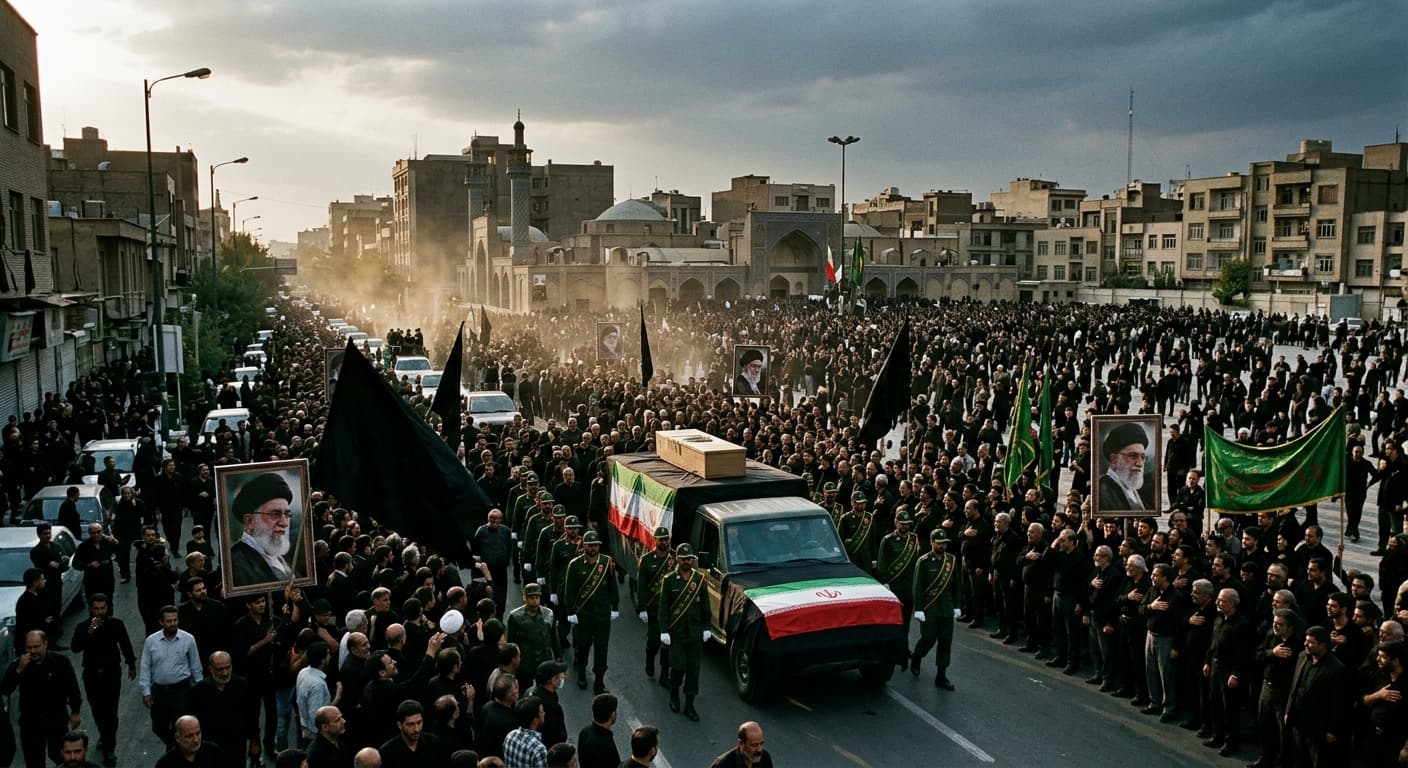
Khamenei's Funeral Signals Iran's Decline
The funeral of Ayatollah Khamenei highlights Iran's diminished influence in the Gulf, with regional powers now dictating terms.
Global
Iran's Hormuz Missile Strikes: A Toll Booth
Iran's missile attack on a Qatari-linked tanker highlights Tehran's strategy to control the Strait of Hormuz, impacting Gulf states and maritime law.
Tech Policy
Iran's Cavern Manticore Targets Israel's IT
Cavern Manticore, an Iran-linked hacking group, targets Israeli IT vendors, prompting a shift in Israel's cybersecurity policy and legislative efforts.