Iran Deal Talks Focus on Hormuz Access
U.S. and Iran negotiate terms before nuclear discussions.
Model Diplomat3 min readMiddle East
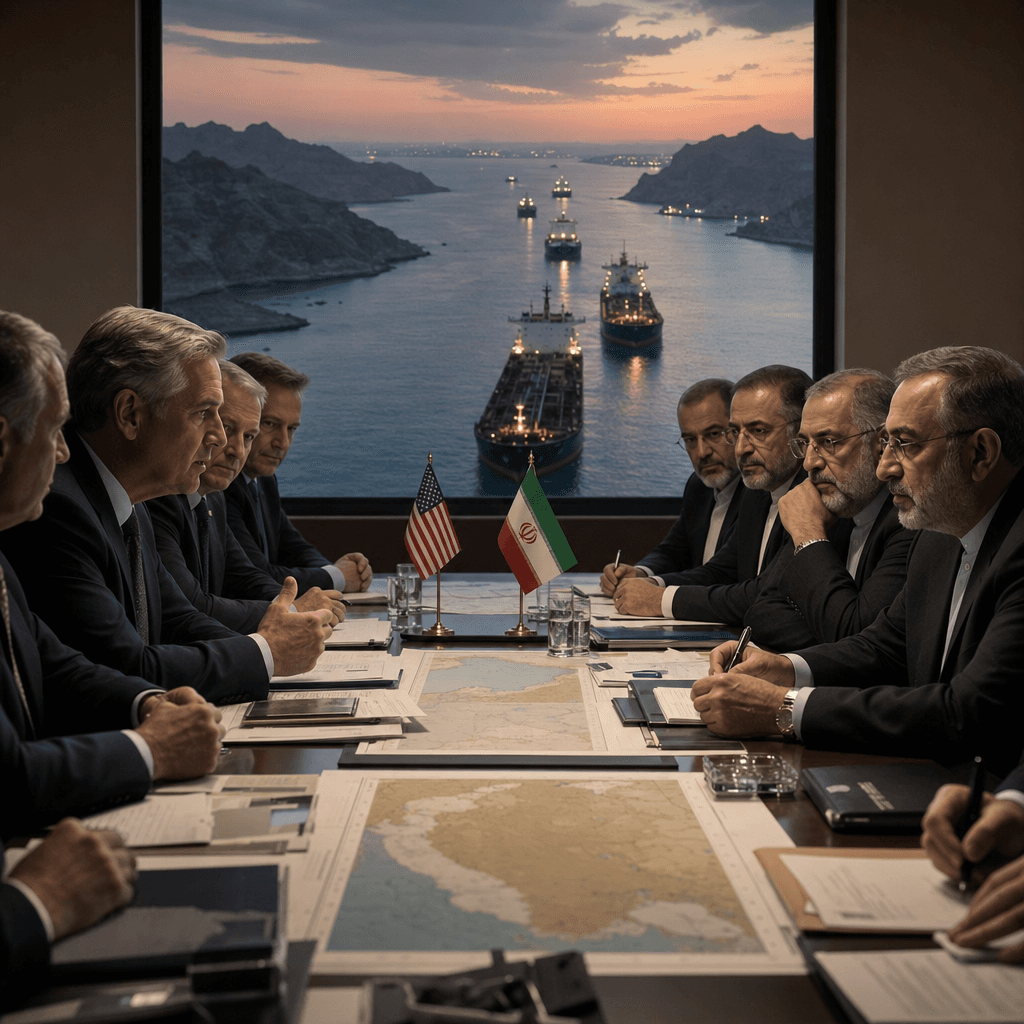
Iran Deal Talk Hinges on Hormuz Before Nuclear Talks
Washington is using the Strait of Hormuz and sanctions relief as leverage, while Tehran tries to lock in economic gains before any harder nuclear bargain.
The United States says it is close to a “solid” agreement with Iran, but the emerging deal is not the nuclear settlement both sides still want to claim. In New Delhi, Secretary of State Marco Rubio said Washington had “something pretty solid on the table” on Iran’s ability to reopen the Strait of Hormuz and enter further negotiations, while cautioning that the nuclear file is too technical to settle “in 72 hours” (France 24). Donald Trump, meanwhile, said on Truth Social that an agreement had been “largely negotiated” and would reopen Hormuz, but insisted no final deal would be signed until it is “certified” (
BBC).
Why this matters
This is a leverage trade, not a breakthrough. Washington wants free passage through Hormuz and a pause in the escalation cycle; Tehran wants sanctions relief and the release of frozen assets. Several outlets report that the draft would let ships transit the strait again, ease pressure on Iranian ports, and potentially unlock some Iranian funds held abroad (France 24,
Anadolu Agency). That sequencing matters: the immediate prize is shipping and market stability, not a final answer on Iran’s enrichment program.
That structure benefits the White House politically. Rubio is selling a deal that can be framed as lowering oil-market risk and avoiding another round of strikes, while Trump keeps the option to say he did not concede on the nuclear file. It also benefits Iran’s leadership, which can present any easing of the blockade as proof that pressure forced Washington back to the table. The loser, for now, is the hardline position on both sides that demanded an all-or-nothing outcome.
The nuclear issue is being parked, not solved
The central dispute remains the same one that has sunk prior talks: enrichment, stockpiles of highly enriched uranium, and verification. Al Jazeera reports that the current framework would split the process into stages — first Hormuz and sanctions, then a 30- to 60-day negotiation window for the nuclear file (Al Jazeera). That is exactly why the deal is fragile. A staged arrangement can reduce immediate risk, but it also creates new veto points: one side can walk if the other delays implementation, and both can accuse the other of bad faith.
Israel is the main external spoiler. France 24 reports that Benjamin Netanyahu told Trump any final agreement must “eliminate entirely” the nuclear threat (France 24). That gives Israel leverage over Washington’s endgame, especially if the emerging text looks like a temporary de-escalation rather than a permanent constraint on Iran’s program. Pakistan’s role as mediator, highlighted by both France 24 and Al Jazeera, shows how far the diplomacy has moved beyond a bilateral channel (
France 24,
Al Jazeera).
What to watch next
The next decision point is whether the reported framework is announced as a 30-day or 60-day interim deal, and whether Tehran gets any frozen assets released up front. That will tell you whether this is a genuine de-escalation or just a timeout. Watch Trump’s next statement, Iranian confirmation through Tasnim or Fars, and any sign that Israel is trying to narrow or harden the text before signature. The date that matters is the moment this framework becomes binding — or collapses before it does.
Discover more

Global Politics
US Seizes Iranian Ship, Tensions Surge
The US seizure of the Iranian ship Touska highlights a shift in control over the Strait of Hormuz, favoring Iran's strategic position.

Conflict & Security
Drone Warfare Killing Aid Workers at Unprec
Over 1,000 humanitarian workers killed in three years as cheap armed drones collapse legal protections. Gaza, Sudan, Ukraine, and DRC see deliberate targeting of aid convoys and hospitals with zero prosecutions.

Global
World Normalises Taliban as Afghan Women Eras
UN data shows Afghan women erased from public life as Russia recognises the Taliban, EU hosts officials in Brussels, and ICC warrants for gender persecution go unenforced.
Conflict & Security
West Africa Food Crisis: Three Shocks in 2026
Conflict, climate extremes, and the Strait of Hormuz closure drive a severe food crisis in West and Central Africa, with fertilizer prices surging 80% and millions displaced.