Iran Blames US for Nuclear Talks Stalemate
Tehran cites Islamabad memorandum to freeze negotiations.
Model Diplomat8 min readMiddle East
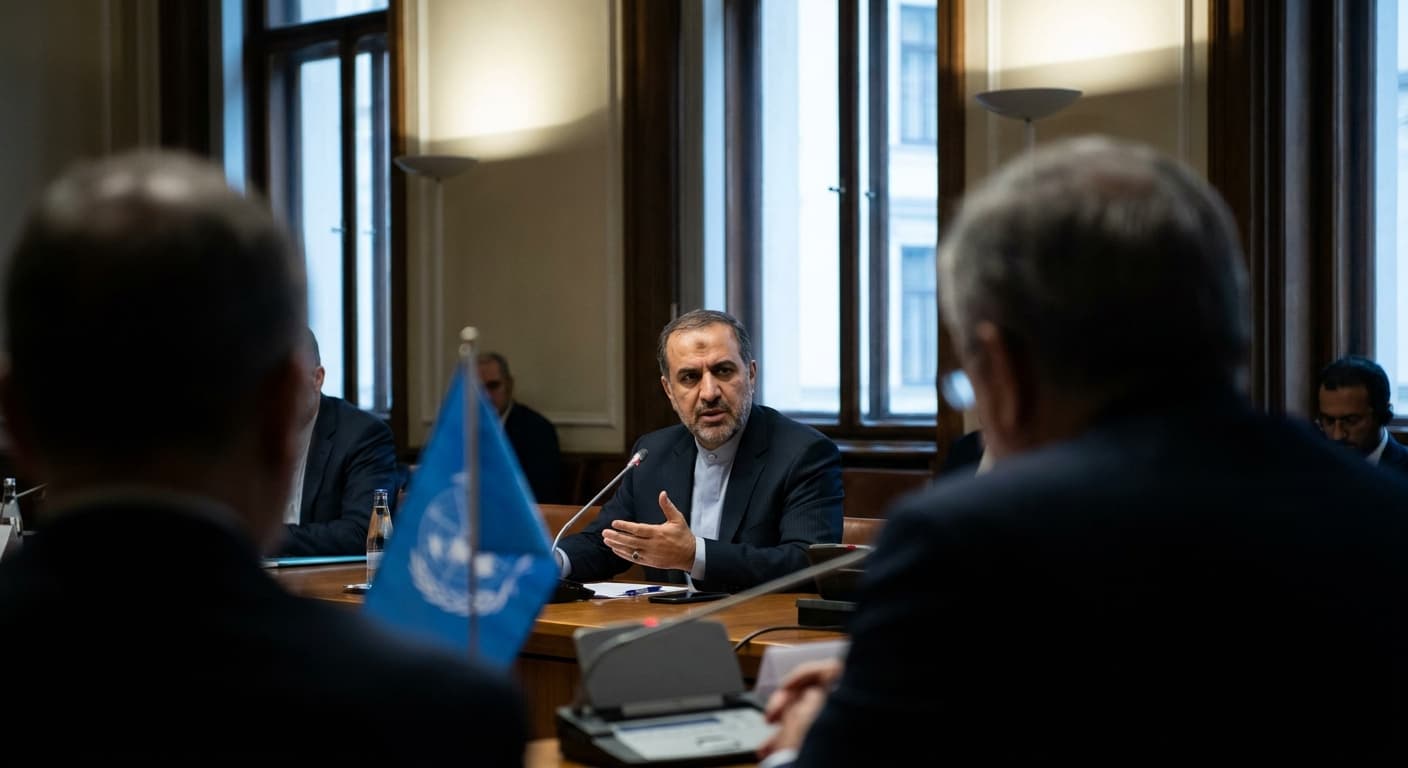
Iran Blames US for Nuclear Talks Stalemate as MoU Clock Ticks
Tehran cites Paragraph 13 of the Islamabad memorandum to freeze final-deal talks after Trump's July 6 warning to "finish the job" — with 40 days left on the clock.
Iran's Foreign Minister Abbas Araghchi on July 7, 2026 invoked a specific clause of the interim Islamabad memorandum — Paragraph 13 — to declare that negotiations over a final nuclear deal cannot begin while US threats continue, freezing a diplomatic track that Washington had insisted was on schedule. The thesis: Tehran is not walking away from the table — it is running out the clock on a 60-day window that expires on August 16, using the MoU's own text to shift the political cost of collapse onto Donald Trump before he can present a "final offer" ultimatum.
That reframes the story from a familiar Iranian complaint about "excessive demands" into something more consequential: a legal-textual dispute over what triggers the final-deal negotiations at all. If Iran wins the argument, the 60-day timer never really started; if Washington wins it, Tehran is in breach.
What Araghchi actually said, and why the wording matters
"Para 13 of the MoU is clear: Negotiations on final Deal will not commence if threats continue. Honor your signature," Araghchi wrote on X, according to Anadolu Agency. The post landed hours after Trump told reporters at the White House: "We're either going to make a deal or we're going to finish the job… I don't want to affect 91 million people."
Paragraph 13 of the memorandum, as read out by a senior US official to reporters on June 17 and published by the BBC, makes the launch of final-deal talks conditional: "After signing this MOU, and subject to the beginning of the implementation of paragraphs 1, 4, 5, 10, and 11… the United States of America and the Islamic Republic of Iran will start negotiations regarding the final deal exclusively." Paragraph 1 commits both parties to "refrain from the threat or use of force." Araghchi's argument is procedural, not rhetorical: Trump's public threats, in Tehran's reading, mean the trigger for Paragraph 13 has not fired.
That is a departure from Iran's previous complaint, voiced by ministry spokesman Esmail Baghaei to Mehr News, that Washington had been "moving the goal posts." This is narrower and harder to dismiss. It anchors Iranian obstruction to a document Trump himself signed electronically with President Masoud Pezeshkian on June 17.
The stalemate underneath the statement war
The July 7 flare-up masks a more concrete deadlock the technical delegations left behind in Doha last week. On July 1 in Doha, according to Al Jazeera, Deputy Foreign Minister Kazem Gharibabadi announced Iran would open a "communication channel" to log US violations of the MoU, and reviewed with Qatar's central bank a mechanism to spend part of an initial $6 billion in unfrozen assets on goods for Iran. On nuclear substance, there was no movement.
Three unresolved questions are doing the real work:
First, the 440-kilogram stockpile of uranium enriched to 60 percent — the pre-war figure the BBC and
Al Jazeera both cite from the Islamabad text. Point 8 of the MoU commits both sides to "resolve the disposition" of that material, "with the minimum methodology to be down-blending on site under the supervision of the IAEA." That is a floor, not a ceiling. Washington wants the stockpile out of the country; Tehran, on the direct instruction of new Supreme Leader Mojtaba Khamenei, has refused to ship any of it abroad.
Second, IAEA access. Parliament Speaker Mohammad Bagher Ghalibaf, quoted by Iran's IRIB and relayed by Al Jazeera, said inspectors currently reach only Bushehr and the Tehran research reactor — not Fordow, Natanz or Isfahan, the three sites the US bombed in late February. That directly contradicts what Vice President JD Vance told reporters in Bürgenstock — that Iran had "agreed to invite IAEA inspectors back" — a claim the BBC catalogued without a source URL attached to Vance's quote. Rafael Grossi has since
insisted the inspections "will indeed take place," but his June 8, 2026 statement to the Board of Governors conceded that the Agency stopped all in-field verification in Iran in February. The most recent Board resolution,
GOV/2026/40, records that the Director General "is unable to draw a conclusion" on the non-diversion of Iran's declared material — a formal safeguards finding that gives Tehran little cover if it holds inspectors out much longer.
Third, the Strait of Hormuz. The MoU committed Iran to "best efforts" on safe passage; in practice, Al Jazeera reports that Tehran is insisting on sole control of routing, and MarineTraffic has logged at least 49 attacks on commercial vessels since February. Traffic on July 2 hit 38 confirmed transits, up from 22 on June 29, but still well below the pre-war baseline of roughly 130 a day. That is the Trump administration's most concrete political vulnerability: gasoline prices peaked above
$4.31 a gallon in early June, per Brookings analysts Kari Heerman and David Wessel, and midterm campaigns start in September.
Why the timing serves Tehran
Two events narrow the window. Ayatollah Ali Khamenei's six-day funeral processions, which began July 3 in Tehran and reach Mashhad on July 9, have effectively suspended active negotiations; Trump himself told Axios both sides were "taking a week off," the BBC reported. Iran's new leadership, still consolidating around Mojtaba Khamenei and a reappointed hardliner in a senior security post on July 6, cannot make concessions on stockpiles or inspections during a nationalist mobilisation that features anti-Trump posters and red vengeance flags.
Second, the 60-day MoU clock. Signed June 17, it expires on or around August 16. Vance told reporters at Virginia Beach he "can't commit" that the US will not return to combat before that deadline. Trump's July 6 comment — the "finish the job" line — is either a genuine ultimatum or negotiating theatre. Either way, it gives Araghchi cover to argue that Paragraph 13's precondition is unmet, and to keep the technical talks alive while refusing to open the substantive nuclear file.
Poland's OSW reads the same dynamic from Washington's side: Trump has "delegated responsibility for the negotiations to Vice President Vance" and preserved his own freedom to resume strikes, precisely so he can walk if Tehran overplays. Both principals have built personal off-ramps into the process; the MoU is holding not because either side trusts it, but because both need it to hold for a few more weeks.
Who benefits from the stall
Look past the tit-for-tat and the balance of interests becomes clearer.
Iran's Islamic Revolutionary Guard Corps is the clearest beneficiary. Brookings notes that IRGC-controlled "toll" collection on Hormuz transits — reportedly around $1 per barrel, or roughly $2 million for a very large crude carrier — is now a live revenue stream. Every day the final deal is delayed is a day this toll regime hardens into a fait accompli. A final deal that reopens the strait to free navigation without transit fees would eliminate that income. The IRGC has an institutional interest in Paragraph 13 arguments that never quite resolve.
Trump also benefits from a controlled stall, provided oil stays where it is. Brent settled at $72 on July 6, back to its February 27 pre-war level, and OPEC+ announced an additional 188,000 barrels per day for August, per Al Jazeera. As long as prices don't spike, the White House can present the June 17 MoU as a "historic breakthrough" — as it does in its own
June release — without absorbing the political cost of a compromise on enrichment.
The losers are Israel and the Gulf. Israeli Defense Minister Israel Katz's July 5 threat to "thwart" any future Iranian leader who targets Israel signals Jerusalem's fear that a mediocre deal will freeze Iran's nuclear programme in place rather than dismantle it. The Council on Foreign Relations' Steven Cook captures the Gulf's bind: Saudi Arabia and the UAE do not want Iran left with control of the Strait of Hormuz, but they also cannot afford a resumed war that resumes missile strikes on Abu Dhabi and Dhahran.
Diplomat View
The stalemate is stable, not broken — and that is the point. Iran's invocation of Paragraph 13 is a legal manoeuvre designed to run out the clock on a window Tehran did not want opened this fast. The likely outcome is an extension of the 60-day framework past August 16, dressed as a "technical rollover," with the $6 billion frozen-funds mechanism used as the sweetener that keeps Iran engaged and the IAEA verification file kicked into a working group. The nuclear stockpile stays in Iran; inspections resume in a narrow, choreographed form at Bushehr and possibly Natanz; the Hormuz transit regime is fudged. That is a bad outcome for Israel and a workable one for Trump, who can claim he prevented an Iranian bomb without ever securing dismantlement.
What would change this forecast: a documented Iranian move on enriched material above the 60% line, which would hand Trump both a casus belli and a domestic political case for resumed strikes; or a serious Israeli operation inside Iran during the funeral period, which would collapse the MoU from the outside. Absent either, the fight is now over the words in the memorandum — not the weapons underneath it.
What to watch next
- July 9, 2026 — Khamenei's burial in Mashhad ends the funeral period; a new round of indirect talks in Doha or Muscat is expected within days.
- Board of Governors, September 2026 — the IAEA's next scheduled reporting cycle on Iran; another "unable to draw a conclusion" finding would harden the European E3 case for a snapback push.
- August 16, 2026 — nominal expiry of the 60-day MoU window. Watch for a joint Qatari-Pakistani statement announcing an extension rather than a final deal; that is the most likely form the "success" will take.
The Bottom Line
Iran is not blaming the US for the stalemate as a talking point — it is using Paragraph 13 of the Islamabad memorandum to legally freeze the final-deal clock while Trump's threats give it cover to keep 440 kilograms of 60%-enriched uranium on Iranian soil. The August 16 deadline will almost certainly be extended, not met; the deal that eventually emerges will look less like dismantlement and more like a managed status quo. The beneficiary hiding behind the impasse is the IRGC, which is quietly monetising a Hormuz transit regime that any final agreement must eliminate — and hasn't yet.
Discover more
Global
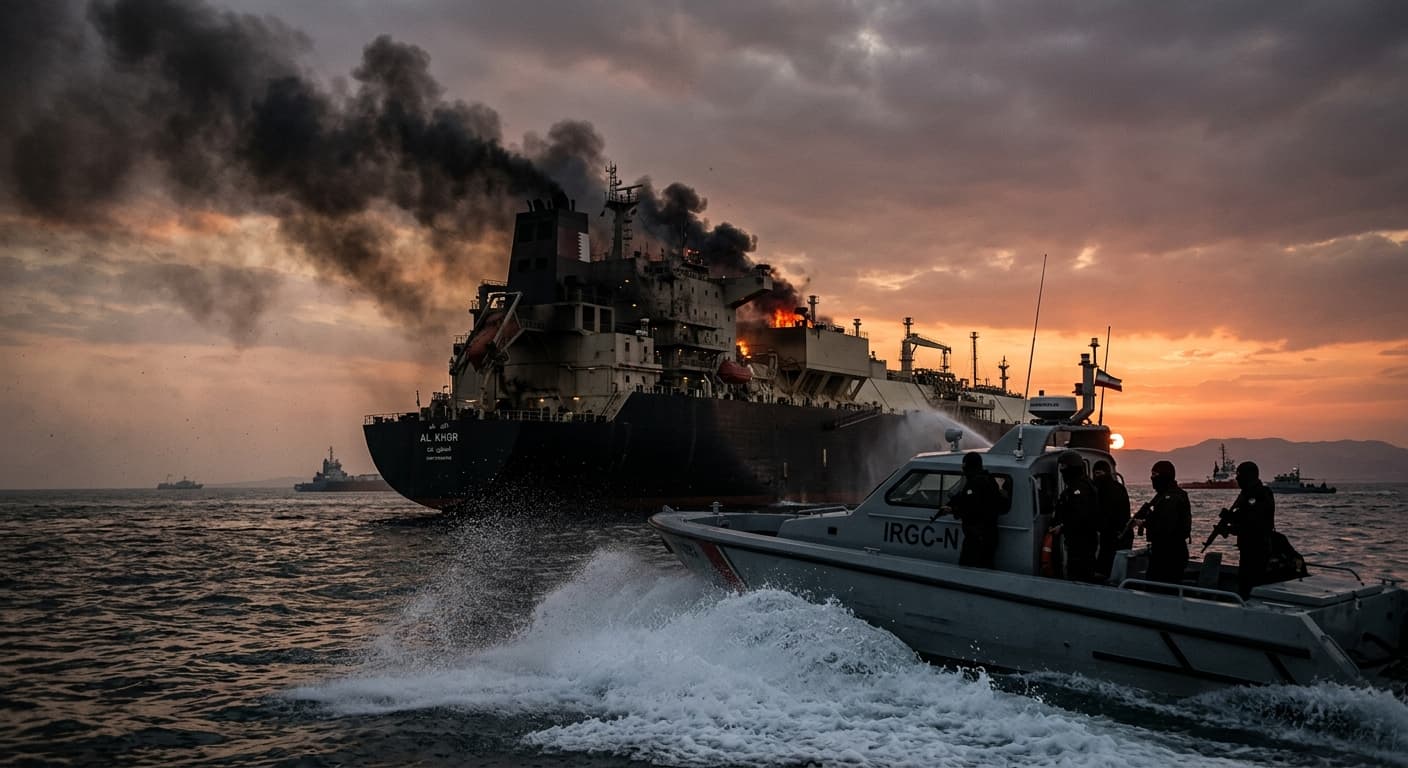
Qatari Tanker Strike Exposes Hormuz Tensions
A Qatari tanker was struck off Oman, revealing the fragility of the Hormuz ceasefire and Iran's influence over maritime security.
Global
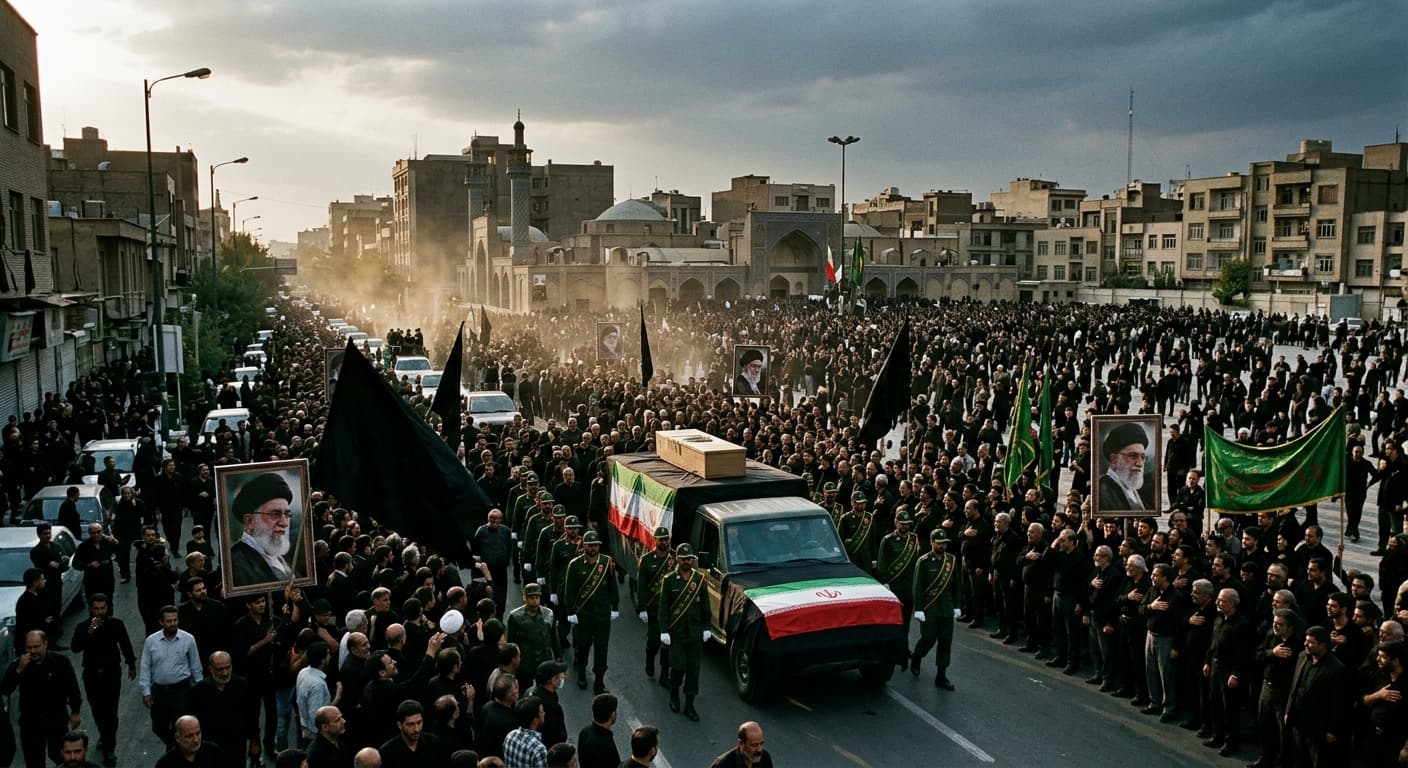
Khamenei's Funeral Signals Iran's Decline
The funeral of Ayatollah Khamenei highlights Iran's diminished influence in the Gulf, with regional powers now dictating terms.
Global
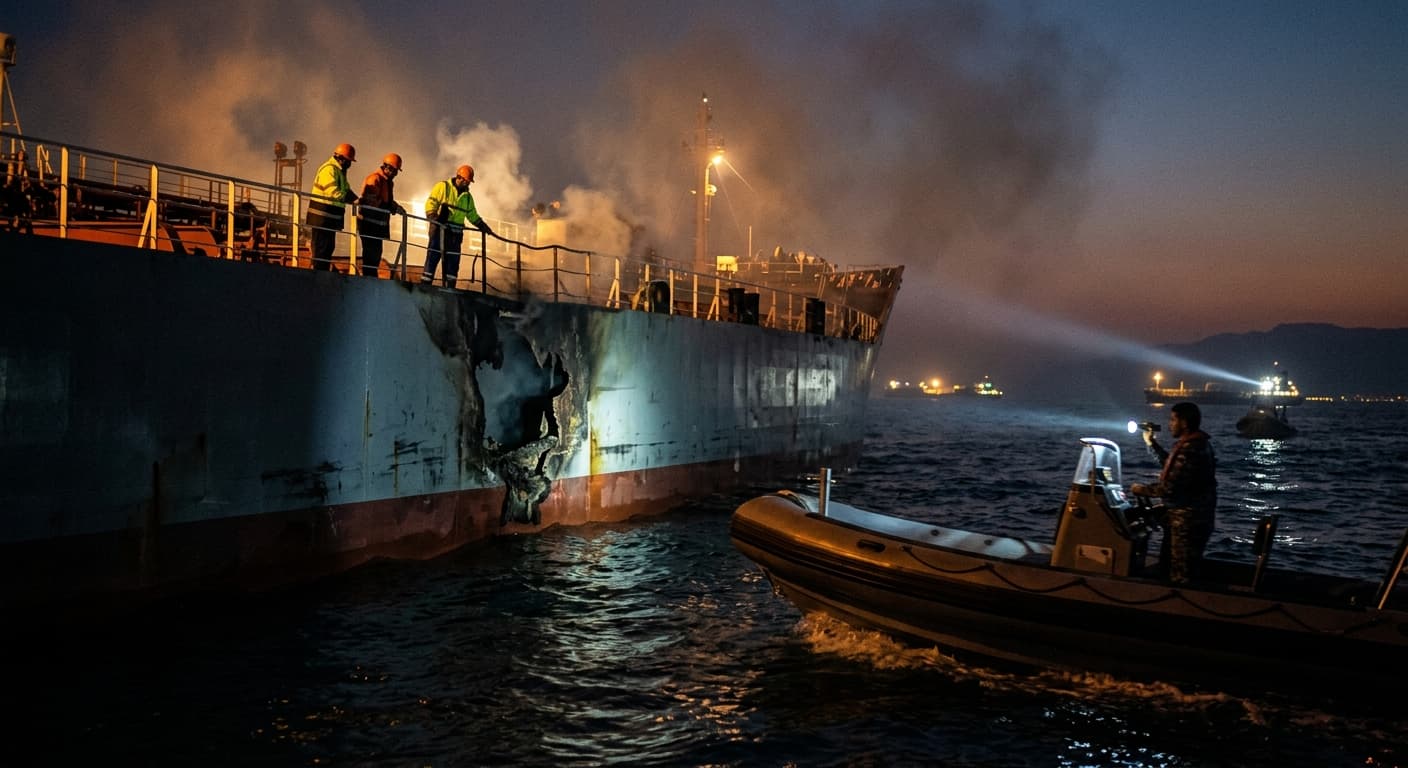
Iran's Hormuz Missile Strikes: A Toll Booth
Iran's missile attack on a Qatari-linked tanker highlights Tehran's strategy to control the Strait of Hormuz, impacting Gulf states and maritime law.
Tech Policy
Iran's Cavern Manticore Targets Israel's IT
Cavern Manticore, an Iran-linked hacking group, targets Israeli IT vendors, prompting a shift in Israel's cybersecurity policy and legislative efforts.