Indonesia Warned on U.S. Military Overflights
Jakarta weighs risks of U.S. military ties in South China Sea
Model Diplomat3 min readSoutheast Asia

Indonesia Urged to Dial Back U.S. Military Overflight Plan Amid South China Sea Tensions
Indonesia’s foreign ministry warned its defense counterparts against rushing a U.S. proposal for military overflights, highlighting risks of entanglement in regional tensions and diplomatic fallout with China.
Indonesia’s foreign ministry sent an urgent, confidential letter to its defense ministry advising caution in approving a U.S. request to conduct military overflights in Indonesian airspace. The letter, reported by Reuters on April 14, 2026, underscores Jakarta’s sensitivity to being drawn deeper into the strategic rivalry playing out in the South China Sea and the broader Indo-Pacific region. With China casting a long shadow over Southeast Asia, Indonesia is balancing its longstanding policy of strategic autonomy against mounting pressure from Washington to deepen military ties.
Why the Caution Matters
Unlike treaty allies such as Japan or South Korea, Indonesia is a non-aligned regional power that carefully calibrates its foreign policy between the U.S. and China. The South China Sea—adjacent to Indonesia’s Natuna Islands—has become a flashpoint where Chinese territorial ambitions routinely clash with Southeast Asian claims, raising stakes for maritime security and freedom of navigation.
The U.S. military seeks overflight rights to bolster surveillance and signal presence in this contested space. But for Jakarta, acquiescing too quickly risks provoking Beijing, its largest trading partner and a major investor. Indonesia’s foreign ministry fears such moves could jeopardize trade and diplomatic relations, especially as China has shown readiness to leverage economic ties to shape regional defense policies.
The letter’s call to slow-walk the approval process reflects Jakarta’s intent to avoid appearing as an open U.S. proxy in the South China Sea dispute. This nuanced stance is consistent with Indonesia’s long-standing "free and active" foreign policy, which steers clear of alliances that might drag it into external conflicts. Indonesia has repeatedly emphasized multilateralism and regional mechanisms like ASEAN to manage South China Sea tensions.
Implications for Indo-Pacific Geopolitics
Jakarta’s hesitation complicates Washington’s Indo-Pacific strategy, which increasingly depends on Southeast Asian cooperation to counterbalance China. The U.S. military’s presence remains a cornerstone for regional security architecture, but Indonesia’s resistance signals limits to U.S. influence among key maritime states.
For China, the letter’s leak is a subtle diplomatic win. It exposes cracks in U.S. efforts to secure regional military footholds and reinforces Beijing’s narrative that many Southeast Asian states prefer engagement and economic cooperation over hard security alignment with the U.S.
Indonesia’s position also sends a message to other ASEAN members facing similar dilemmas: economic dependence on China complicates defense cooperation with the U.S. This dynamic risks leaving ASEAN fractured or lukewarm toward fully supporting broader U.S. security initiatives.
What to Watch Next
-
Jakarta’s Final Decision: Whether Indonesia ultimately approves the overflight will define its path amid rising great power competition. A move to reject or indefinitely delay could prompt Washington to recalibrate its regional military posture.
-
China’s Response: Beijing’s diplomatic and economic reactions to Indonesia’s handling of the proposal will reveal how far China is willing to push influence in Southeast Asia.
-
ASEAN Cohesion: Indonesia’s approach may encourage other Southeast Asian states to similarly hedge, impacting collective regional responses to South China Sea disputes and U.S.-China rivalry.
Indonesia remains a pivotal swing state in the Indo-Pacific. How it manages this overflight request encapsulates the delicate balance Southeast Asian powers must strike between security and economic imperatives in a fractious geopolitical landscape.
For more insights on this evolving strategic contest, see our Indonesia profile and broader
International Relations analysis.
Reuters: Indonesia’s Foreign Ministry Urges Caution over U.S. Military Overflight Proposal
Discover more
Global Politics
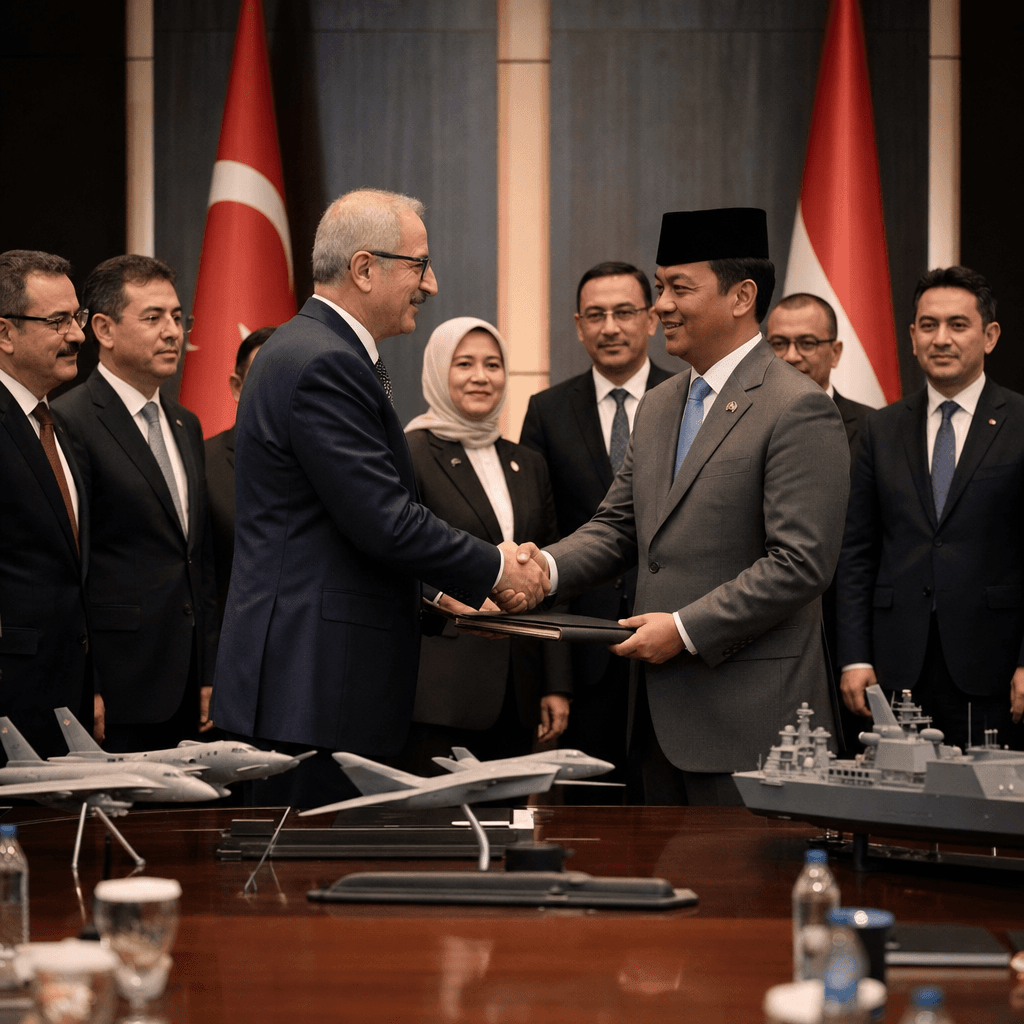
Turkey’s $10B Defense Alliance with Indonesia
Turkey is pursuing a $10 billion trade and defense alliance with Indonesia, deepening cooperation on military hardware, technology, and trade across regions.

Economics
Fed's Amex AML order puts correspondent banking on notice
Federal Reserve's Amex AML order requires board-level controls and a 90-day plan; OCC fined the bank $350 million over enterprise-wide deficiencies.

Conflict & Security
Guatemala: El Niño 2026–27 becomes regional security test
UNICEF: 25.8M children face El Niño risks in Latin America; Guatemala maps 188 municipalities for drought and food insecurity amid regional security test.

Economics
Fed's stress-test overhaul is a capital-smoothing exercise
Federal Reserve finalized stress-test overhaul: two-year averaging for bank capital buffers and public input, expected to halve volatility.