Trump-Linked Firm Secures $1.2B Pipeline
A politically connected firm wins a major gas deal in Bosnia.
Model Diplomat3 min readEurope
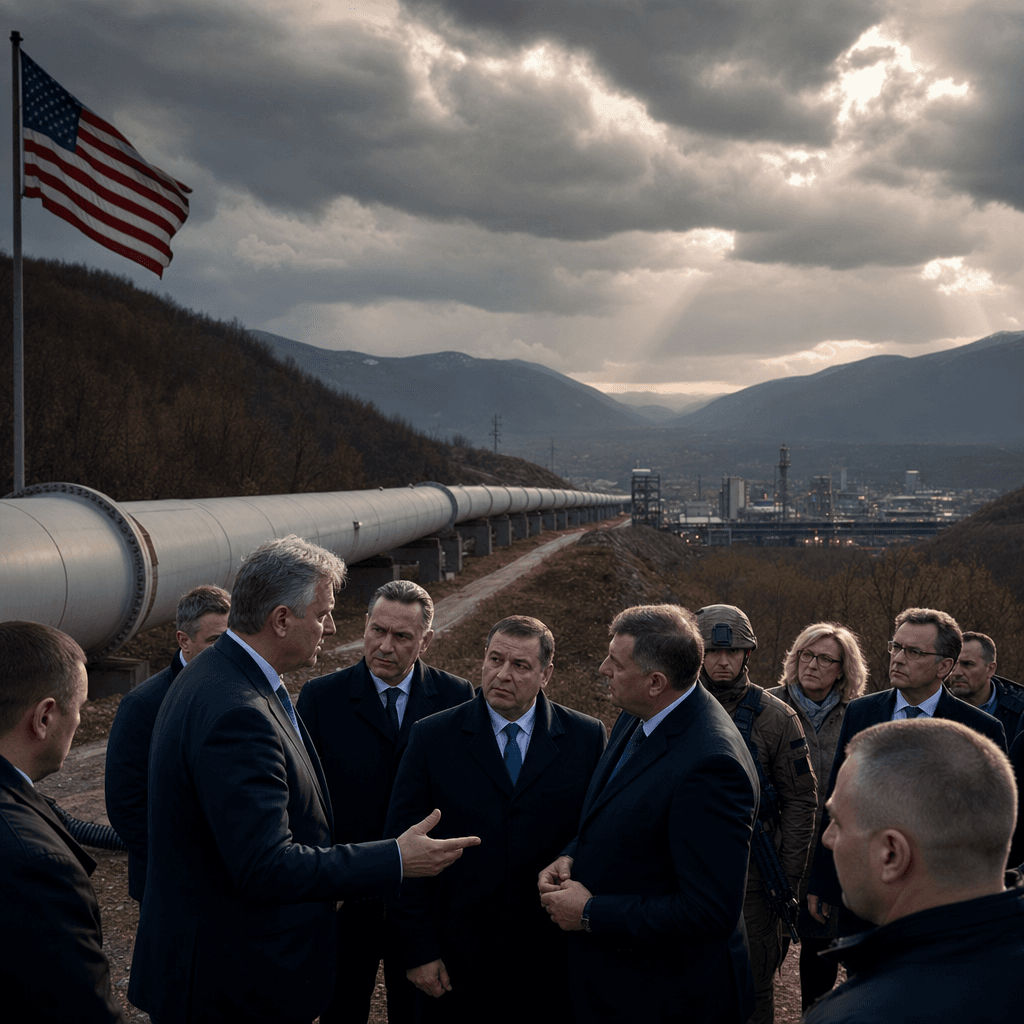
How Trump-Linked Insiders Hooked a $1.2B Balkan Pipeline
A newly created firm with tight circles to Donald Trump has secured a massive gas infrastructure deal in Bosnia, bypassing EU competition standards to trade geopolitical leverage.
A quiet regulatory carve-out in Sarajevo has handed control of the Balkans’ most strategic energy project to a newly formed, politically connected American firm without a competitive tender. According to an investigation by The Guardian, Binnall Law Group’s office in Washington serves as the registered headquarters for AAFS Infrastructure and Energy, which is on the verge of securing exclusive rights to develop the €1.2 billion Southern Interconnection pipeline and associated power plants in Bosnia and Herzegovina. The company is spearheaded by Jesse Binnall, a prominent lawyer who defended President Donald Trump against election fraud cases, and Joseph Flynn, the brother of Trump’s former National Security Adviser. This sudden entry demonstrates how the Trump administration is conflating state-driven energy strategic priorities with private commercial windfalls for political loyalists.
Rewriting the Balkan Energy Map
The Southern Interconnection pipeline, running from the Croatian coast to central Bosnia, has long been a key Western geopolitical goal in Global Politics. The project aims to link Bosnia’s gas network to the liquefied natural gas (LNG) terminal on Croatia’s island of Krk, effectively ending Sarajevo’s near-total reliance on Russian gas import monopolies. As reported by
Al Jazeera, Bosnia and Croatia signed a bilateral agreement in late April in Dubrovnik to formalize the link. However, the commercial execution of this diplomatic success is heavily tilted in favor of AAFS.
Left with few options to secure capital and seeking to navigate the region's notoriously fragile, split-entity politics, Bosnian lawmakers chose to bypass standard competitive bidding. By passing direct legislation in March to name AAFS as the exclusive developer, Sarajevo essentially used the Trump connection as a political wrecking ball to break local legislative deadlocks. Beyond the pipeline itself, AAFS’s commercial proposal incorporates three gas-fired power plants to replace domestic coal production, raising the total scale of the direct concession to roughly $1.5 billion.
Geopolitics vs. EU Accession
While the U.S. State Department publicly champions the pipeline as a vital tool to weaken Russian leverage, the exclusive, non-tendered award to Trump-aligned interests has triggered alarm bells in Brussels. The European Union, which Bosnia is actively seeking to join, has reacted with sharp warnings. The EU’s ambassador to Bosnia, Luigi Soreca, criticized the lack of transparency, warning that violating procurement mandates could jeopardize Bosnia’s official accession bid and put over $1 billion in European aid at immediate risk. This creates a sharp friction point in International Relations: Sarajevo is trading its adherence to EU governance standards to secure immediate political protection and energy independence from Washington.
What to Watch Next
The immediate hurdle for the project is local political alignment inside Bosnia’s fragmented federal structure. The pipeline’s path relies on the compliance of Milorad Dodik, the pro-Russian leader of the Serb-dominated Republika Srpska, who has spent years threatening to break up the country. Yet, the Trump network’s personal diplomacy seems to have neutralized this veto. Shortly after a visit to the region by Donald Trump Jr. and quiet lobbying by Joseph Flynn, Dodik announced he would not obstruct the AAFS pipeline plan. Watch the June 2026 EU-Western Balkans summit next, where European officials are expected to deliver a strict ultimatum on whether Bosnia must choose between Brussels’ funding rules and Washington’s backroom energy dealmakers.
Discover more
Conflict & Security
De la Espriella's Razor Win Resets US-Colomb
De la Espriella's razor-thin election win signals a reset in US-Colombia relations, reshaping security ties and the agenda under a Trump-aligned approach.
International Relations
Colombia's Razor-Thin Rightward Pivot
Colombia swings right as Abelardo de la Espriella narrowly wins the presidential runoff by under one percent, exposing a deeply divided and polarized nation.
Global Politics
Iran Demands US Enforce Ceasefire
Iran insists the United States must enforce a ceasefire in Lebanon to uphold the memorandum of understanding, raising pressure on Washington and Netanyahu.

Conflict & Security
Trump's Iran Deal Faces Bipartisan Backlash
Trump's Iran deal draws fierce criticism from both Republicans and Democrats, exposing deep political divides over the ceasefire and the terms of the agreement.