Iran Demands US Enforce Ceasefire
Tehran leverages MoU to extract concessions on Lebanon
Model Diplomat3 min readMiddle East
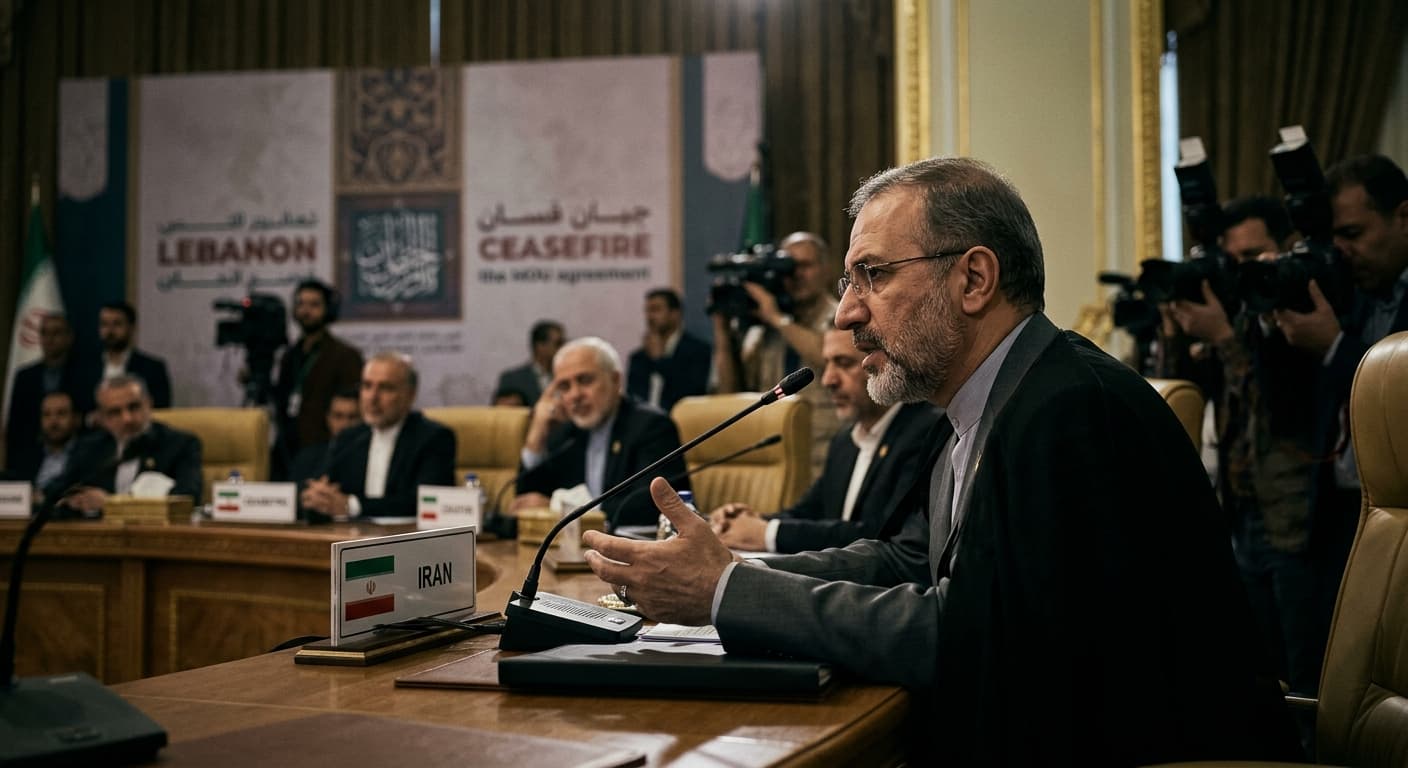
Iran Demands US Enforce Ceasefire—Test of Trump's Deal-Making
Tehran leverages the US-Iran MoU to extract concessions on Lebanon, threatening negotiations if Washington doesn't rein in Netanyahu
Al Jazeera reported on June 20 that Iran's Deputy Foreign Minister Saeed Khatibzadeh has demanded the United States enforce the ceasefire in Lebanon, warning that ongoing Israeli strikes violate the June 18 memorandum of understanding (MoU) between Washington and Tehran. Hours after a reported Israel-Hezbollah ceasefire began on Friday,
multiple Israeli strikes killed at least 47 people in southern Lebanon—exposing the fragility of both that local truce and the broader US-Iran deal it was meant to support.
The lever is Lebanon. Iran's position is straightforward: the MoU's opening clause mandates "the immediate and permanent termination of military operations on all fronts, including in Lebanon." Iran's parliament went further, with committee head Ebrahim Azizi accusing the Trump administration of "failure to commit to the first clause" and warning that violations would have "serious and immediate consequences." The bet is that Trump's appetite for a final nuclear deal gives Iran leverage to force him to pressure Netanyahu. If Washington delivers on that—or fails to—it signals whether the MoU survives the next 60 days of technical negotiations.
The immediate cost is diplomatic. US-Iran talks scheduled for Switzerland on Friday were cancelled after Thursday night's bombardment, when Iranian negotiators refused to travel while southern Lebanon was under fire. That delay itself is a message: Iran demonstrating that it can withhold cooperation if the deal's terms are honored only selectively.
Trump has begun applying the private pressure Iran is publicly demanding. The president criticized Netanyahu at the G7 summit for bombing "too much" and "senselessly killing civilians," and in recent weeks has escalated his complaints, with reports of "heated conversations" between the two leaders. But words have limits. Netanyahu faces domestic political pressure from right-wing coalition members—National Security Minister Itamar Ben Gvir responded to losses by vowing "Lebanon must burn"—and the Syrian government explicitly argued that Israeli occupation of southern Lebanon is essential to Israel's security. Israel controls roughly 20 percent of Lebanese territory and shows no sign of withdrawing.
The core asymmetry: Trump depends on closing a final deal with Iran more than Netanyahu depends on Trump's approval for Lebanon operations. The US-Iran MoU unlocks sanctions relief worth hundreds of billions and reopens the Strait of Hormuz—critical to global oil markets. Netanyahu, meanwhile, has already weathered months of direct US criticism and faces a domestic Right that treats Lebanon withdrawal as capitulation. Trump has threatened to use his leverage—Israel receives billions in annual US military aid—but has not yet deployed it in concrete form: no conditions on aid, no halt to weapons transfers, no public ultimatum with a date attached.
Iran is testing whether Trump will make good on the deal's letter, not just its spirit. Khatibzadeh told Al Jazeera that Tehran is "ready to continue diplomacy" but only if Washington proves it is "serious about respecting" the MoU and forces Israeli compliance. The next decision point is whether talks resume in Switzerland, and under what conditions. If Iran demands a verifiable halt to Lebanon strikes before committing to final negotiations—a credible threat given Friday's cancellation—Trump faces a binary: either use concrete leverage on Netanyahu or tell Tehran he cannot, which collapses the deal pathway.
Watch for: (1) Whether Trump sets a public deadline for Israeli withdrawal from southern Lebanon, tied to sanctions relief or military aid conditions. (2) Whether Hezbollah honors ceasefire terms or resumes attacks, which would give Netanyahu cover for continued operations. (3) Iran's next move if talks remain stalled past mid-week—escalation rhetoric, military signaling, or further diplomacy delays would each signal Tehran's confidence in its leverage.
Discover more

Global Politics
US Seizes Iranian Ship, Tensions Surge
The US seizure of the Iranian ship Touska highlights a shift in control over the Strait of Hormuz, favoring Iran's strategic position.

International Relations
Pakistan's Key Role in US-Israel-Iran Meddle
Pakistan is seeking to mediate the US-Israel-Iran conflict, balancing high-stakes diplomacy against severe economic pressures and steep regional challenges.
Global Politics
Trump's Conflicting Messages on Iran War
Trump's mixed messages on Iran reflect a strategy of audience management, benefiting Tehran amid a complex geopolitical landscape.

Conflict & Security
Drone Warfare Killing Aid Workers at Unprec
Over 1,000 humanitarian workers killed in three years as cheap armed drones collapse legal protections. Gaza, Sudan, Ukraine, and DRC see deliberate targeting of aid convoys and hospitals with zero prosecutions.