De la Espriella's Razor Win Resets US-Colomb
Colombia's election marks a shift back to security-first governance
Model Diplomat3 min readSouth America
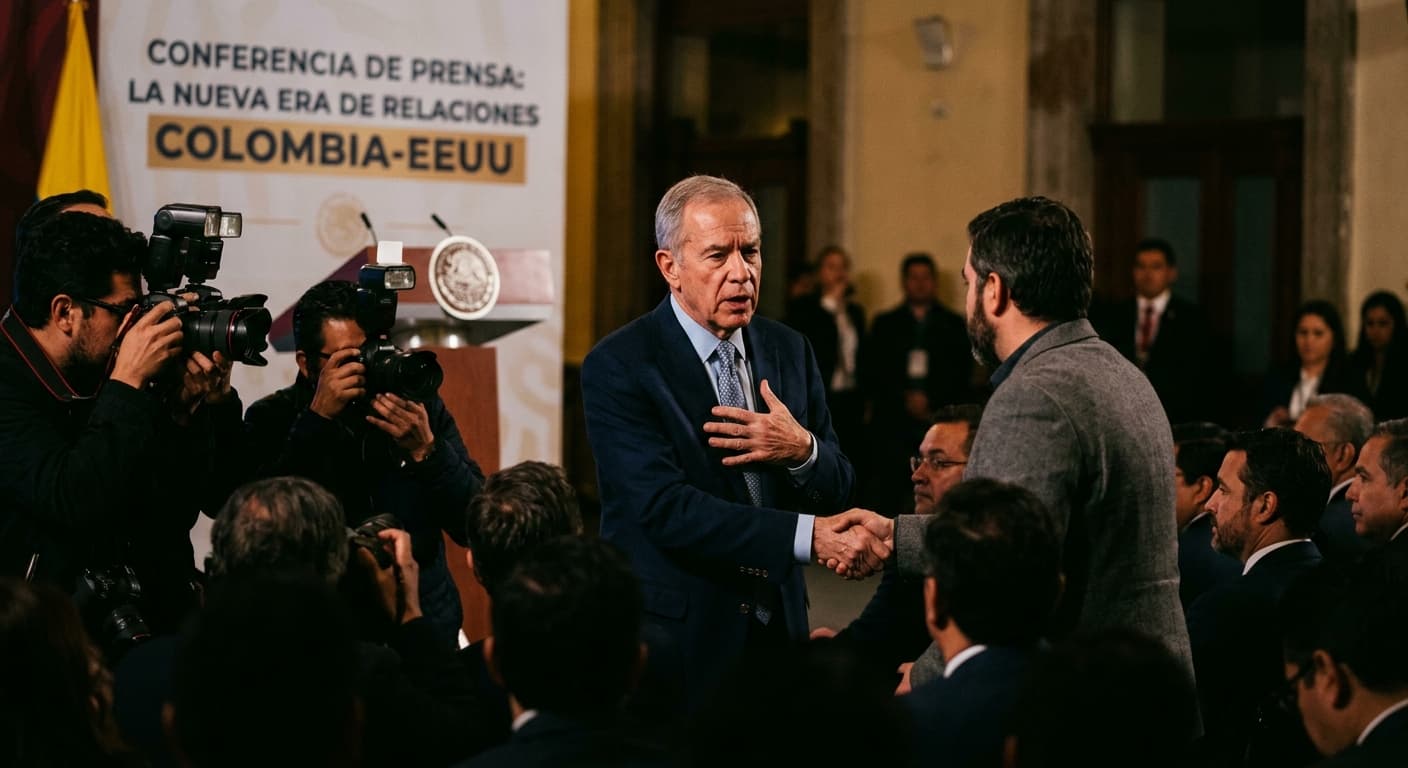
De la Espriella's Razor Win Resets US-Colombia Alliance
Right-wing outsider takes Colombia with 49.7% as Petro's left-wing successor falters; Trump signals deep collaboration ahead
On Sunday, Abelardo de la Espriella, a lawyer and businessman with no prior political experience, won Colombia's presidential runoff with 49.7 percent of the vote, defeating leftist Senator Iván Cepeda's 48.7 percent by fewer than 250,000 votes. The margin—less than one percentage point—masks a decisive realignment: de la Espriella's victory ends a decade of leftward drift and returns Colombia to security-first governance backed explicitly by Trump and his administration.
The Trump endorsement was not peripheral theater. De la Espriella, a dual US-Colombian citizen living in Miami, received Trump's public backing and a statement that he would have "the total support and strength of the United States behind him." After the polls closed, Trump posted simply: "He Won, BIG!" On Monday morning, Secretary of State Marco Rubio formalized the shift,
congratulating de la Espriella and pledging to work "closely with your incoming administration to advance regional security cooperation, end illegal immigration to the United States, and strengthen our economic ties."
That language matters because it signals a return to transactional alignment after years of friction under President Gustavo Petro, whose "total peace" strategy over four years secured only limited disarmament while cocaine production hit record highs and homicides soared. De la Espriella has promised the opposite: a withdrawal from peace talks with armed groups, a 90-day military campaign of US-backed airstrikes against guerrillas, and megaprisons modeled on El Salvador's Nayib Bukele. Critics worry about human rights; the US security establishment wants results.
Why the Margin Matters
The tightness of the race is not mere suspense—it reveals the depth of Colombia's polarization and the limits of de la Espriella's mandate. Cepeda has refused to concede, pledging to challenge results from over 30,000 polling stations, and outgoing President Petro has cast doubt on the count without evidence, claiming irregularities.
No recount has ever flipped a Colombian presidential result, but the institutional standoff matters: with Petro controlling the executive until August 7, his resistance to de la Espriella's legitimacy could fray the transition or embolden street protests.
The left's core fear is real. Colombia's murder rate climbed to 14,780 homicides in 2025, the highest since at least 2015, driven by cartels and FARC dissidents fighting for cocaine routes. Petro's negotiated path failed; voters—including many poor ones—chose the strongman pitch. De la Espriella must now deliver security without destabilizing the fragile 2016 peace accord that still underpins Colombia's institutions.
What Comes Next
De la Espriella takes office August 7. Within weeks, expect an operational pivot: tighter US military coordination, approval of deeper anti-narcotics operations, and likely a reversal of Petro's withdrawal from the Inter-American Court of Human Rights. The larger test is whether the left's legal challenges delay or derail that transition. Additionally, watch for how regional right-wing leaders react—Argentine President Javier Milei and Ecuadorian President Daniel Noboa have already congratulated him, signaling a broader rightward swing in South America that may amplify pressure for tougher stances on migration, crime, and military intervention across the continent.
Discover more
US Politics
House Ethics Committee Pushes Sexual Miscond.
The House Ethics Committee has shifted responsibility for sexual harassment settlement records to the Office of Congressional Workplace Rights, complicating disclosure efforts.

Global Politics
US Seizes Iranian Ship, Tensions Surge
The US seizure of the Iranian ship Touska highlights a shift in control over the Strait of Hormuz, favoring Iran's strategic position.
India
Romanian Coalition Party Demands PM Resign
Romania's Social Democrats withdrew from coalition, joining far-right AUR to topple PM Bolojan, risking €10 billion in EU funds by August 2026.

Conflict & Security
Drone Warfare Killing Aid Workers at Unprec
Over 1,000 humanitarian workers killed in three years as cheap armed drones collapse legal protections. Gaza, Sudan, Ukraine, and DRC see deliberate targeting of aid convoys and hospitals with zero prosecutions.