Colombia's Razor-Thin Rightward Pivot
Abelardo de la Espriella wins presidency by narrow margin.
Model Diplomat3 min readSouth America
Colombia's Razor-Thin Rightward Pivot
Far-right lawyer Abelardo de la Espriella wins by less than one percentage point, inheriting a divided nation with a Trump endorsement but no governing mandate.
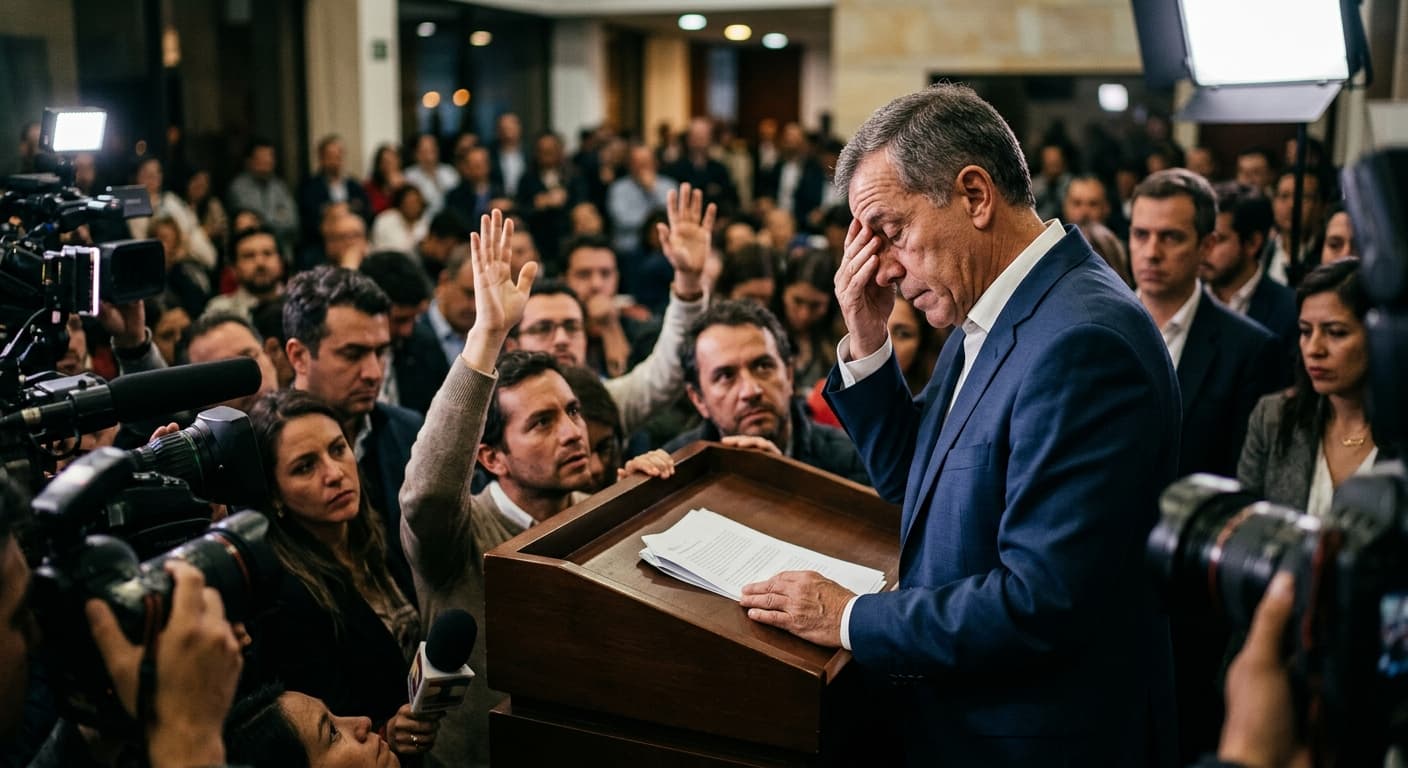
Far-right political outsider Abelardo de la Espriella has won Colombia's presidential runoff by the narrowest margin in the country's modern history. With 99.9% of ballots counted, de la Espriella secured 49.66% of the vote to leftist Senator Iván Cepeda's 48.7% — a gap of fewer than 250,000 votes out of 26.3 million cast on Sunday. The lawyer, businessman, and U.S. citizen who lives in Miami will assume office August 7, ending four years of leftist rule. But the near-tie that elected him also revealed a country split down the middle — and a political victory that masks governing paralysis.
The Trump Card That Wasn't Enough
De la Espriella's campaign mirrored the Trump-Bukele playbook: tough on crime, anti-establishment, media-saturated. He received an explicit endorsement from Donald Trump and congratulatory calls from U.S. Secretary of State Marco Rubio on election night.
His digital campaign dominated Colombian social media with AI-generated videos, bot networks, and influencer armies — far outpacing Cepeda's low-energy, sober campaign. On the ground, de la Espriella performed as a showman: flashy rallies, heavy security theater, fireworks.
Yet the margin told a different story. Pre-election polls had projected him ahead by four to eight points. His first-round victory had signaled momentum — 43% to Cepeda's 40% in May. The runoff tightened dramatically. Cepeda consolidated the leftist vote. More than 427,000 voters submitted blank ballots — a quiet protest against both candidates. The result: de la Espriella has no mandate, only a technicality.
The Governing Trap
The arithmetic is brutal. Cepeda's Historic Pact controls more seats than any other party in both chambers of Congress, though no party holds a majority. De la Espriella campaigned on dismantling President Gustavo Petro's agenda: scrapping peace negotiations with armed groups, shrinking the state by up to 40%, boosting oil and gas, cutting taxes. He also promised a 90-day military shock campaign against dissident groups — echoing El Salvador's Nayib Bukele model. But
to pass anything, he will need support from a Congress controlled by opponents of his core platform.
He has already begun hedging. De la Espriella pledged to preserve Petro's 23% minimum wage increase and other popular social measures — a retrenchment from his deregulation platform. His business record adds vulnerability.
An investigation by Colombian outlet La Silla Vacía found that many of de la Espriella's companies have been dissolved, carry debt, or posted losses overall, undermining his credentials as a successful businessman.
What to Watch
Three pressure points will define his first months. First: the final vote tally. Cepeda is challenging results from roughly 33,000 polling stations — 27% of the 122,000 total — out of alleged irregularities, including unsigned tally sheets.
Colombian law requires a manually verified final count overseen by judges and notaries. Though historical precedent suggests the margin will hold — variations between preliminary and final counts have historically been nil — the process will consume weeks of legal uncertainty and feed opposition claims of delegitimacy.
Second: security escalation. De la Espriella's 90-day military offensive against armed groups will likely trigger armed strikes and infrastructure attacks, particularly in the southwest, Catatumbo, and Pacific regions where dissident groups hold territory. This is not an idle threat — it is how armed groups respond to the option of negotiation being closed.
Third: congressional dealmaking. De la Espriella must either negotiate with the left-controlled Congress or accept defeat on his most ambitious promises. Either path signals that his mandate is fragmented — and Colombia, despite electing him, remains divided.
Discover more
India
Romanian Coalition Party Demands PM Resign
Romania's Social Democrats withdrew from coalition, joining far-right AUR to topple PM Bolojan, risking €10 billion in EU funds by August 2026.
US Politics
Next Generation Republicans
A leaked survey shows 39% of Republicans under 30 do not identify as MAGA, revealing a split in the GOP's future leadership.

Global Politics
US Seizes Iranian Ship, Tensions Surge
The US seizure of the Iranian ship Touska highlights a shift in control over the Strait of Hormuz, favoring Iran's strategic position.

Conflict & Security
Drone Warfare Killing Aid Workers at Unprec
Over 1,000 humanitarian workers killed in three years as cheap armed drones collapse legal protections. Gaza, Sudan, Ukraine, and DRC see deliberate targeting of aid convoys and hospitals with zero prosecutions.