India’s Labour Codes Go Live as Wage Formula Vanishes
The Centre has operationalised all four labour codes, but by dropping the minimum-wage formula it has kept the key lever: who gets to define pay.
The Centre has now notified final rules for all four labour codes, completing a reform package first brought into force in November 2025, but the decisive move is in the fine print: the final  Indian Express report says the government dropped the minimum-wage calculation criteria from the Code on Wages rules and reserved the formula for a later order. That gives New Delhi more discretion over wage-setting just as it is claiming to simplify labour regulation.
The power shift is from formula to executive control
In the draft rules published in January, minimum wages were tied to a transparent basket: calories, clothing, housing, fuel, education and contingency costs, a framework the Indian Express traced back to the Reptakos Brett judgment and the 15th Indian Labour Conference. That formula is gone from the final notification. Instead, the Centre says the criteria will be “separately specified” by order, which means the government now controls both the level and timing of the benchmark.
That matters because the new rules also create a national floor wage, to be fixed by the Centre in consultation with a board, with states unable to go below it, as noted by  The Economic Times. The practical effect is not full wage uniformity; it is a federal wage ceiling disguised as a floor. For employers, especially multi-state firms, that is cleaner and more predictable. For workers, it weakens the statutory benchmark they could use to push wages up.
Who benefits, who loses
The immediate winners are the Centre and large employers. The government gets to claim a completed labour overhaul — four codes, 29 old laws consolidated — while retaining room to calibrate wages politically and economically, according to  The Hindu and The Economic Times. Employers gain clearer rules on appointment letters, wage slips, an eight-hour normal workday and a 48-hour weekly cap, all of which reduce compliance ambiguity.
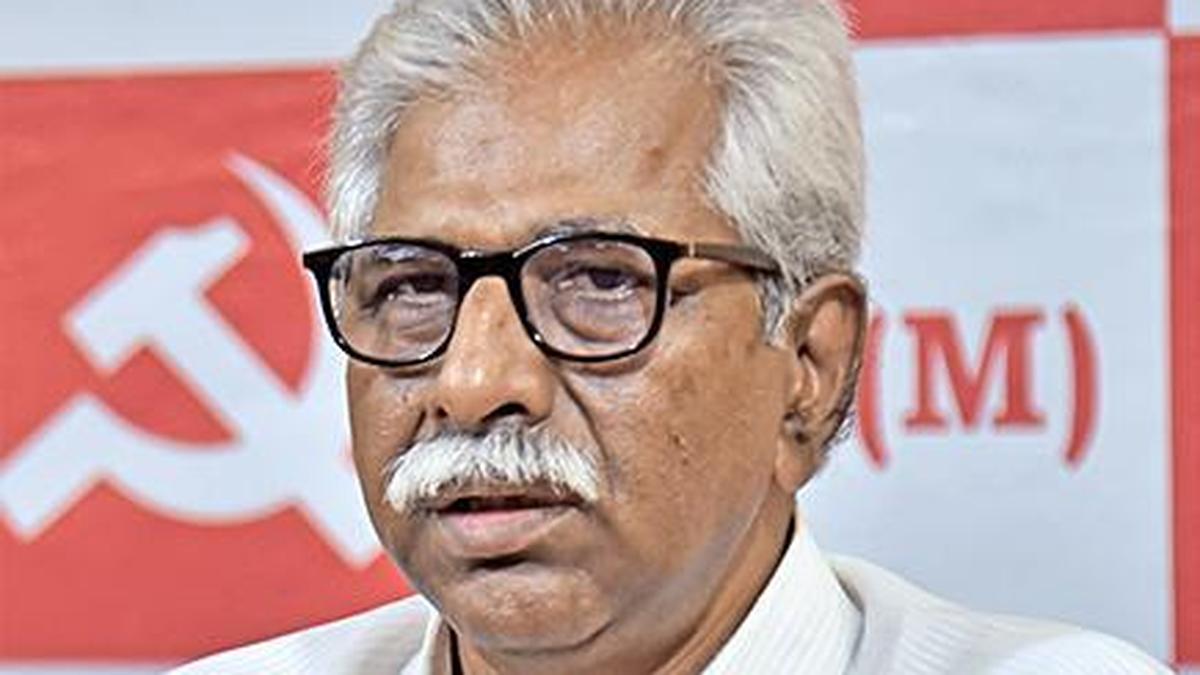
The losers are more specific: low-wage workers, unions and states with higher labour standards. The Indian Express cited labour economist K R Shyam Sundar saying the removal of the formula will produce “unscientific and inconsistent” minimum wages across states and widen gaps between workers doing the same job. That is the real story here: not simplification, but centralisation of discretion.
For a wider view of the politics of reform, see  India and Global Politics.
What to watch next
The next decision point is the Centre’s first floor-wage notification and how quickly states issue their own rules, because labour is a concurrent subject and full enforcement depends on both levels of government, as The Economic Times notes. Watch for two things: whether the Centre publishes a floor wage that is politically defensible in industrial hubs, and whether major states align with it or quietly preserve higher local minima. If they diverge, the “one nation” labour code will become a patchwork again — only this time with the Centre holding the most important lever.