India's Electoral Map Amendment Sparks Outcry
Rahul Gandhi criticizes government’s bill as a political maneuver.
Model Diplomat3 min readIndia
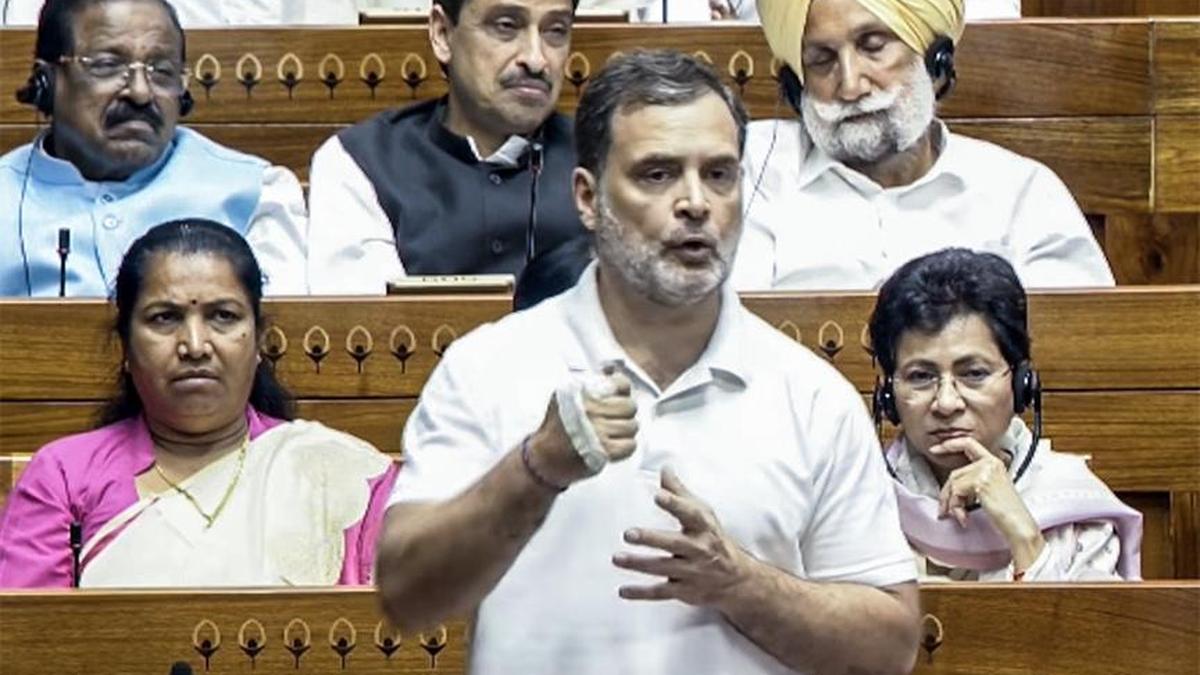
Government’s Electoral Map Amendment Sparks Fierce Opposition in India
Rahul Gandhi brands the government’s constitution bill a “panic reaction” aimed at altering regional representation, signaling a crucial political battle ahead.
The Indian government’s proposed Constitution Amendment Bill, which ostensibly seeks to extend women’s reservation in Parliament and state assemblies, has instantly drawn sharp criticism from Opposition leader Rahul Gandhi. Gandhi denounced it as a “panic reaction” not genuinely about promoting women’s rights but a strategic move to redraw India’s electoral map at the expense of southern, northeastern, and other regional representation. The bill’s fate now hangs in the balance amid a consolidation of opposition forces vowing to defeat it.
What’s the Bill Really About?
While the government frames the amendment as a continuation of the 33% reservation for women—a measure originally introduced in 2010 and due to expire—opposition leaders argue this is a smokescreen. The real intent appears to be the reallocation of parliamentary and assembly seats in ways that disproportionately undermine certain regions, particularly the south and northeast.
This marks a significant deviation from past attempts where seat demarcation was based strictly on population data and census figures, efforts supervised broadly by independent commissions. Critics, led vocally by Rahul Gandhi, claim the bill’s provisions favor northern regions politically aligned with the ruling party, weakening traditionally less dominant or opposition-friendly states.
The government’s move comes as part of a larger political strategy, likely designed to consolidate its power base ahead of the 2029 general elections. By altering the electoral balance, the ruling party could dilute opposition strongholds while appearing to champion gender equity, co-opting progressive causes to blunt criticism.
Why This Matters
India’s electoral geography is fiercely sensitive because it embodies the country’s deep regional, linguistic, and ethnic diversity. Past attempts to reconfigure representation have triggered prolonged political crises and even violence. For example, the 2008 delimitation exercise escalated tensions in southern states like Tamil Nadu and Andhra Pradesh, where political parties accused New Delhi of disenfranchisement.
The northeast, often marginalized in national politics, sees this bill as an existential threat to their limited voice. The resistance is not just political but cultural, reflecting decades of struggle for meaningful inclusion in India's democratic framework.
Rahul Gandhi’s strong public repudiation and promise to defeat the bill suggest the opposition is rallying broadly—across party lines and regions—to present a united front. The issue also exposes splits within civil society, where women’s groups are divided between endorsing the reservation extension and opposing the contested electoral changes.
What to Watch Next
The bill now proceeds to parliamentary debate, where opposition parties are expected to use every procedural mechanism to delay or block passage. Street protests and regional political mobilizations will likely intensify, especially in southern and northeastern states.
This confrontation could galvanize alliances among opposition parties in India’s famously fractured landscape, potentially reshaping political equations ahead of the next election cycle.
For the government, balancing a progressive agenda on gender reservation with entrenched regional political interests will be a tricky tightrope. How it manages backlash will say a lot about India’s democratic resilience and the evolving contours of its electoral politics.
Learn more about India’s political landscape and
global electoral reforms as this story unfolds.
Opposition will defeat the bill, says Rahul Gandhi | The Hindu
Discover more
India
Delimitation Bill Controversy
India's Delimitation Bill ignites fierce debate, raising fears over federal representation and shifting the balance of political power among the states sharply.
India
Congress Accuses Modi of Delimitation Deceit
Congress accuses Modi's government of deceit over delimitation, charging it skips a caste census and reshapes political dynamics to its favor before elections.
India
Congress: Modi's Delimitation Manipulation
Congress accused the Modi government of using delimitation to consolidate power in Jammu and Kashmir, urging it be separated from the women's reservation bill.

Conflict & Security
Drone Warfare Killing Aid Workers at Unprec
Over 1,000 humanitarian workers killed in three years as cheap armed drones collapse legal protections. Gaza, Sudan, Ukraine, and DRC see deliberate targeting of aid convoys and hospitals with zero prosecutions.