Discharge Petitions: A Tool for House Action
Exploring the impact of discharge petitions on House legislation
Model Diplomat3 min readUnited States

How Discharge Petitions Can Force the U.S. House to Act
Discharge petitions offer a rarely used but powerful tool for lawmakers to bypass leadership and push legislation to the House floor, reshaping the power dynamics in Washington.
Congressional gridlock is nothing new. But when bills languish despite broad support, some members turn to discharge petitions—a procedural mechanism that can force the House of Representatives to act. As detailed in a recent Washington Post analysis of House rules and political strategy, understanding this tool reveals a lot about how power operates inside the Capitol—and who really pulls the strings. Washington Post, April 15, 2026.
Why Discharge Petitions Matter
Under normal circumstances, the Speaker and committee chairs control what legislation reaches the floor. This gatekeeping power can stall bills that have majority public support or bipartisan interest but threaten party priorities or leadership agendas. Discharge petitions bypass this bottleneck by allowing a simple majority (218 signatures) of House members to bring a bill directly to the floor for a vote, regardless of leadership opposition.
The tool is rare, partly because it requires publicly defying party leadership, and partly because it demands broad coalition-building across party lines or factions. Over the last 70 years, fewer than a dozen discharge petitions have successfully forced a bill to the floor, underscoring both their difficulty and viral potential as a lever of change.
This procedural weapon’s importance has increased in an era of sharp partisan divides and tightly controlled legislative agendas. Members frustrated by leadership inaction or partisan gridlock use discharge petitions to push for bills with wide, but stalled, support—ranging from infrastructure and environmental measures to social policy and government transparency mandates.
What This Reveals About House Dynamics
Discharge petitions illuminate the tensions between individual House members’ legislative goals and party leadership’s strategic control. Historically, the Speaker’s influence over the legislative calendar is near total, but discharge petitions serve as a counterweight grounded in House rules and majority will.
The threat alone of a discharge petition can sometimes prod leadership to bring certain bills to the floor to avoid public rebellion. Thus, they act not only as a last-resort tool but also as a negotiating lever within the party and across the aisle.
In recent decades, shifts in party cohesion, increasing ideological purity tests, and the rise of activist factions have affected the use and success of this tool. For moderate or cross-party coalitions, discharge petitions remain one way to break through leadership gridlock and deliver legislative wins to their constituencies.
What to Watch Next
This year’s House cycle may see discharge petitions gaining traction amid contentious issues where leadership hesitates to move forward. Watching which members sign or withhold support will reveal intra-party fault lines and emerging legislative priorities. Also important is how the Senate and White House respond when discharge petitions force a House vote—they can catalyze broader momentum or diplomatic deadlock depending on the alignment.
For anyone tracking U.S. politics and Congressional strategy, the use of discharge petitions is an ongoing barometer of the interplay between grassroots legislative will and centralized party control. As Washington grapples with polarization and voter frustration, these procedural maneuvers expose the subtle power struggles shaping the laws that govern daily life.
For more on the mechanics and historical use of House procedures, see our General Politics overview. For a deeper dive into party dynamics and legislative strategy, check out the
United States profile.
Discharge petitions might seem technical, but they are a crucial fissure within the House’s hierarchical power. When wielded effectively, they can reshape legislative priorities without waiting for leadership’s blessing—a potent reminder that in democracy, rules matter as much as raw power.
Discover more

US Politics
House Vote on Trump Iran Strikes Reveals Divs
The House narrowly declined to block Trump from striking Iran, a close vote that laid bare deep partisan divides over war powers and U.S. military action.
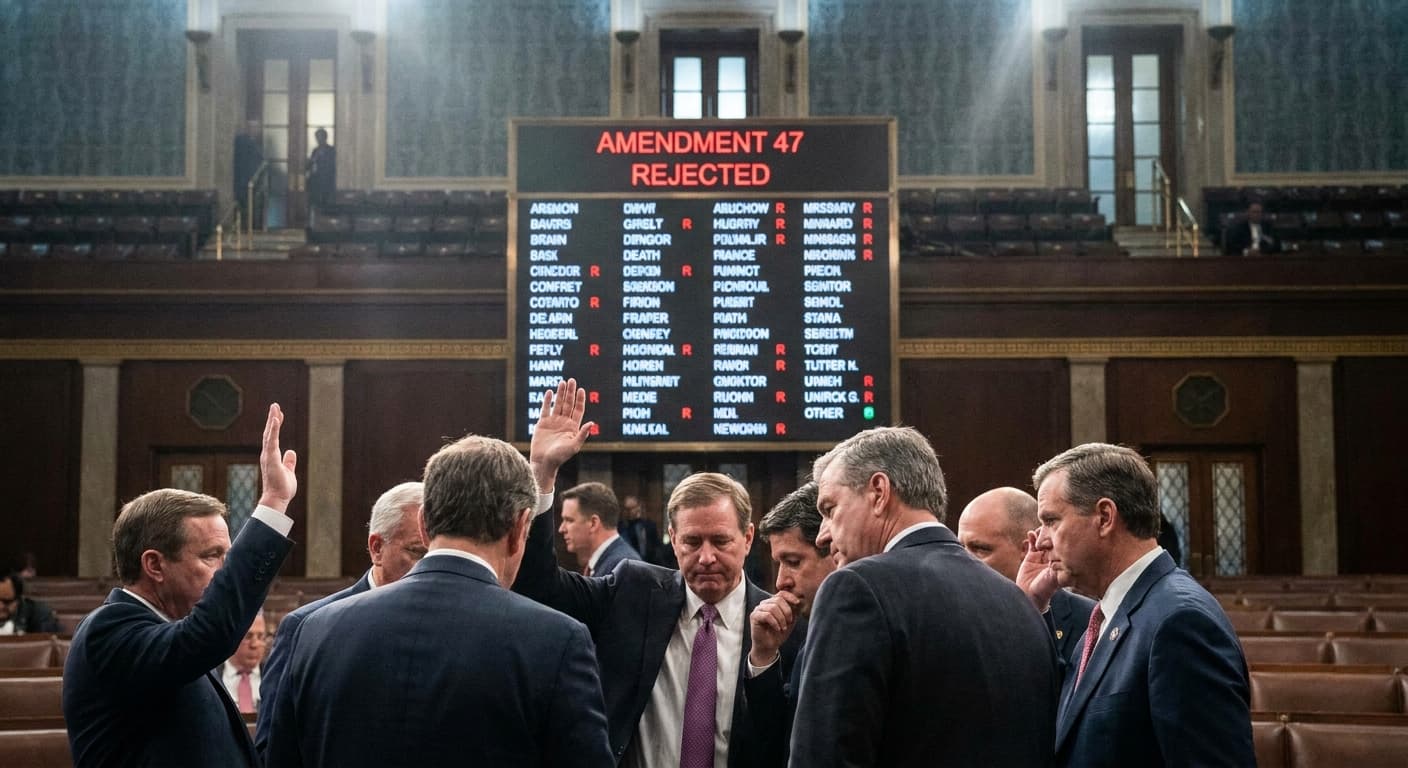
US Politics
House Rejects Resolution on Trump's Iran Host
The House voted down a resolution to limit Trump's military actions in Iran, laying bare partisan divides and reigniting debate over presidential war powers.

US Politics
GOP House Blocks Limits on Trump's Iran War
House Republicans narrowly defeated a resolution to limit Trump's war powers over Iran, intensifying the fight in Congress over presidential military authority.

Conflict & Security
Drone Warfare Killing Aid Workers at Unprec
Over 1,000 humanitarian workers killed in three years as cheap armed drones collapse legal protections. Gaza, Sudan, Ukraine, and DRC see deliberate targeting of aid convoys and hospitals with zero prosecutions.