House Vote on Trump Iran Strikes Reveals Divs
House narrowly rejects resolution to limit Trump's military actions.
Model Diplomat3 min readUnited States

How the House Split on Blocking Trump’s Iran Strikes Reveals Deeper Divides
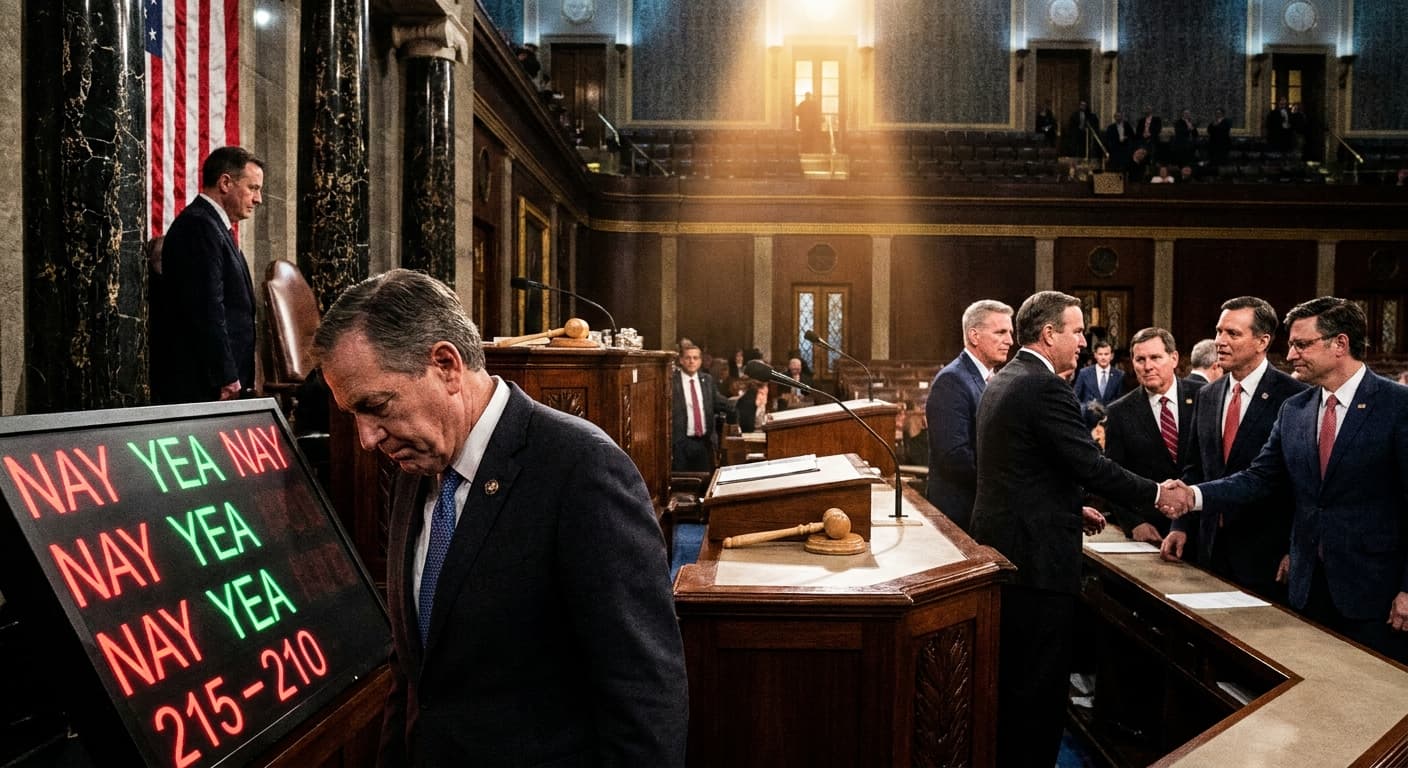
The House narrowly rejected a resolution to bar Trump from launching more strikes against Iran, underscoring sharp partisan lines and the fragile balance over U.S. military authority.
On April 16, 2026, the House of Representatives voted 214-213 against a resolution aimed at preventing then-President Donald Trump from ordering further military strikes against Iran. The vote followed a starkly partisan pattern: 212 Democrats opposed the resolution while 212 voted in favor, with a scattering of Republicans crossing the aisle. One Independent also broke with the majority against the resolution, and three Republicans did not vote.
This razor-thin margin is revealing in both what it shows about the Democratic caucus and the GOP’s fractured stance on Trump’s military authority. While the resolution came from a Democratic push to reclaim Congress’s war powers, the close vote indicates no guarantee the party is unified on restricting executive action on Iran, especially given the international stakes.
Context: Why the Vote Matters
The 1973 War Powers Act requires the President to seek congressional approval for military engagements barring a short emergency window. Congress has long struggled with enforcement, particularly when presidents exploit vague authorizations or unilateral powers. Trump’s aggressive rhetoric and previous strikes (e.g., the 2020 drone killing of Iranian General Soleimani) intensified calls to rein in the executive’s war-making powers.
That the Democrats—who historically favor more congressional say in military affairs—are split almost evenly here demonstrates the tension between anti-war sentiment and the imperative some lawmakers feel to counter perceived Iranian threats robustly. GOP members split as well, with a few backing the resolution, signaling unease with Trump’s handling of Iran but also skepticism over congressional limits on the presidency.
This vote occurred in the wake of a broader U.S. strategy pivot in the Middle East amid rising conflicts and nuclear concerns. The divided vote suggests lawmakers are not just disagreeing on Trump’s Iran policy but also wrestling with the broader question of U.S. military engagement and presidential authority in a volatile region.
What to Watch Next
This vote is a bellwether for future confrontations over war powers and Trump’s influence in Republican ranks. Key signals include:
- Democratic Cohesion: Watch if Democrats consolidate around a clearer, unified stance on war powers, especially with midterms approaching. The one Democratic defector, Rep. Jared Golden, may highlight fissures that GOP strategists could exploit.
- Republican Maneuvering: The GOP split could widen or harden depending on Trump’s next steps and the party’s stance heading into the 2026 midterms. Will Trump’s base support unchecked executive action, or will a new GOP leadership push back?
- Congressional Oversight: Look for legislative proposals to clarify or strengthen congressional war powers beyond this symbolic resolution. Success may hinge on bipartisan cooperation—still elusive after this vote.
- Iran-U.S. Relations: On the diplomatic front, escalating legislative gridlock makes executive flexibility in negotiations or military responses more unpredictable, complicating diplomatic channels essential for de-escalation.
The vote is one of several tense moments that reveal a deeply fractured U.S. political landscape where military decisions—especially about Iran—remain contentious and divisive. For the latest developments on U.S. foreign policy and congressional politics, visit our U.S. Politics page.
House votes on war powers and Iran, Washington Post
Discover more
Global Politics
House Rejects Iran War Powers Resolution
The House narrowly rejected a resolution to limit Trump's war powers in Iran, deepening political divides over the scope of U.S. military involvement abroad.

US Politics
GOP House Blocks Limits on Trump's Iran War
House Republicans narrowly defeated a resolution to limit Trump's war powers over Iran, intensifying the fight in Congress over presidential military authority.

US Politics
Democrats Aim to Curb Trump's Iran War Powers
US Democrats introduce measures to curb Trump's war powers on Iran, demanding congressional approval for military action in a critical test of oversight.

Economics
Fed's Amex AML order puts correspondent banking on notice
Federal Reserve's Amex AML order requires board-level controls and a 90-day plan; OCC fined the bank $350 million over enterprise-wide deficiencies.