House Rejects Iran War Powers Resolution
House vote highlights partisan rifts over U.S. military action in Iran.
Model Diplomat3 min readUnited States
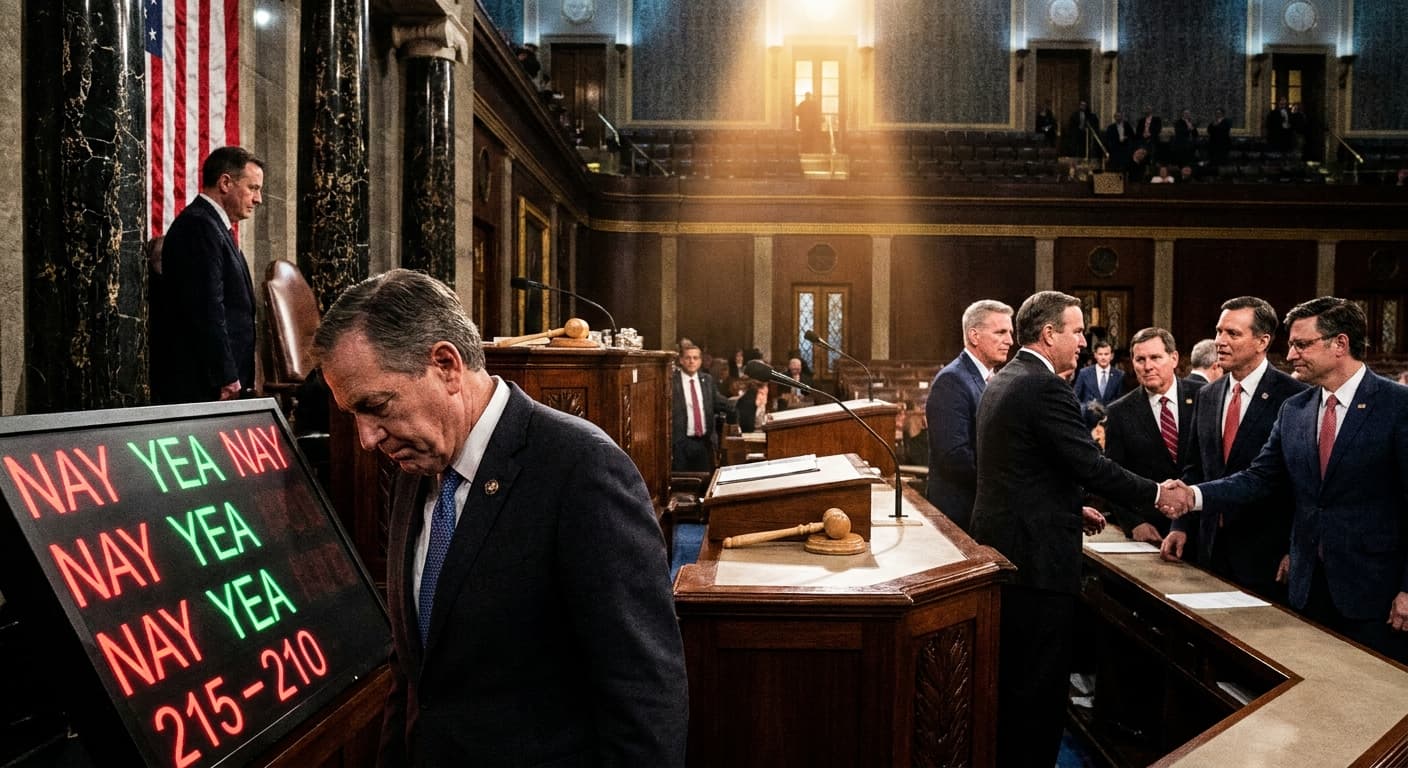
House Rejects War-Powers Resolution on Iran, Deepening US Political Divide
The House narrowly voted down a measure to force troop withdrawal from Iran without congressional approval, underscoring partisan rifts over U.S. involvement in the Middle East.
The U.S. House of Representatives delivered a razor-thin rebuke on April 17, 2026, to efforts aimed at curbing presidential war powers in the ongoing Iran conflict. By a 213-214 vote, lawmakers rejected a resolution that would have mandated President Trump to withdraw American forces engaged in the region absent explicit congressional authorization. The outcome fell largely along party lines: most Republicans endorsed Trump’s posture, while Democrats pushed back against what they see as unauthorized military entanglement.
A Flashpoint Over War Powers and Executive Authority
The stalled resolution spotlights persistent tensions over the proper scope of executive vs. legislative authority in U.S. military interventions. War Powers Clause debates have punctuated American foreign policy since the 1970s, but this is the most acute challenge since Trump escalated U.S. presence in Iran following the killing of Qasem Soleimani in 2020. Democrats argue the president’s deployment of troops without Congress’s formal declaration of war illegally bypasses the Constitution, raising risks of open-ended conflict. Republicans counter that rapid response and flexible military options are imperative given Iran’s persistent provocations, including attacks on U.S. interests and allies.
This divide echoes historical disputes during the Vietnam and Iraq wars, when congressional frustration mounted over presidents conducting sustained combat operations without legislative consent. The close vote—just one vote shy of passage—signals a narrowly divided legislature increasingly wary of the risks of an Iran war dragging on without clear endgame or congressional oversight.
Why This Matters
The decision not to restrain Trump sets a precedent where presidents may continue expanding military operations without explicit congressional mandate. This could normalize limited but prolonged American engagement in Iran, with attendant human and fiscal costs. It also complicates U.S. diplomacy, as adversaries see a fragmented American political will that hampers cohesive strategy.
For the Biden administration—set to take office in January 2027—this leaves a fraught inheritence. Whether the next president opts to de-escalate or intensify efforts in Iran remains to be seen, but Congress is now on notice that reverting to more assertive checks on presidential war-making authority will require broader bipartisan consensus.
What to Watch Next
- Whether Senate Democrats and some Republicans will push a new version of the war-powers resolution.
- How President Trump responds publicly to this rebuke amid his broader foreign policy approach.
- Congressional hearings or investigations into the strategic rationale and legal basis for U.S. troop deployments in Iran.
- Shifts in Iran’s regional behavior in response to unresolved U.S. military presence and diplomatic stalemate.
As this deepening divide plays out, the intersection of constitutional authority, military engagement, and political calculation will shape U.S. policy in one of the world’s most volatile regions.
For more on U.S. politics and foreign policy implications, see our United States and
Global Politics pages.
AP News: House rejects effort to withdraw US forces from the Iran war
Discover more

US Politics
Democrats Aim to Curb Trump's Iran War Powers
US Democrats introduce measures to curb Trump's war powers on Iran, demanding congressional approval for military action in a critical test of oversight.
Global Politics
Trump's Bold Move
Trump announced a U.S. exit from Iran with or without a deal, a bold move that heightens tensions across the Middle East and risks serious diplomatic fallout.
Global Politics
GOP Impeaches Mayorkas Over Immigration Fail
House Republicans push to impeach Secretary Mayorkas over alleged immigration enforcement failures, deepening partisan divides in a bitter border-policy fight.

Economics
Fed's Amex AML order puts correspondent banking on notice
Federal Reserve's Amex AML order requires board-level controls and a 90-day plan; OCC fined the bank $350 million over enterprise-wide deficiencies.