GOP House Blocks Limits on Trump's Iran War
House Republicans reject measure to curb Trump's military actions in Iran
Model Diplomat3 min readUnited States

US House GOP Blocks Bid to Limit Trump’s Iran War Powers
House Republicans narrowly reject a measure aiming to require congressional approval before ongoing Iran military actions continue — the 214-213 vote exposes fault lines in US war powers debate.
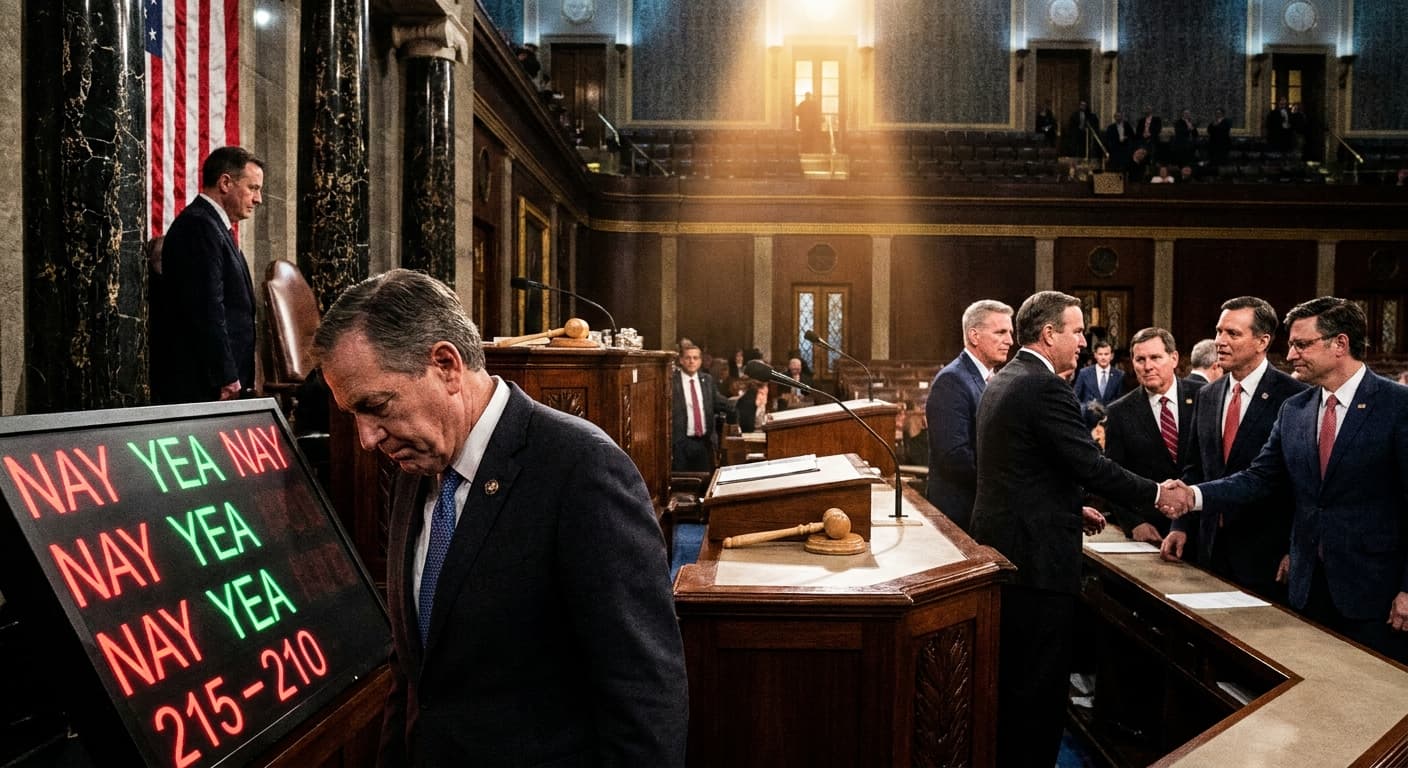
On April 16, 2026, the U.S. House of Representatives voted down a Democratic-led resolution to rein in President Donald Trump’s war powers concerning Iran. With Republicans holding the House majority, the measure was defeated in a razor-thin 214-213 vote. The proposed legislation aimed to halt ongoing military actions related to Iran until Congress explicitly authorized them—a direct challenge to Trump’s expansive view of presidential war authority.
The Stakes: War Powers and Congressional Oversight
This episode is the latest skirmish in a long-running battle over the constitutional balance of power between the executive and legislative branches when it comes to military action. Historically, Congress has tried to reclaim its war-declaring authority eroded since the 1973 War Powers Resolution, but presidents have often circumvented these constraints under broad interpretations of their commander-in-chief role.
The Trump administration has notably pushed this boundary with aggressive moves against Iran, including sanctions, support for proxy conflicts, and targeted strikes. Critics argue this bypasses Congress and risks entangling the United States in another protracted conflict without democratic oversight. The close House vote reveals both Republican loyalty to Trump’s assertive foreign policy and bipartisan concern over unchecked war powers.
Why This Matters Now
The timing is particularly sensitive given escalating tensions in the Middle East. Iran’s strategic position and regional proxy entanglements could drag U.S. forces into broader conflict. The resolution reflects Democratic fears of a stealth war—military engagement without legislative sanction—similar to past conflicts like Iraq in 2003, which sparked a fierce debate about the limits of presidential power.
That the vote was almost evenly split underscores a fracture in the Republican ranks and growing political risk in defending unilateral executive military action. It also highlights the zero-sum nature of Congress's power to constrain the president—a narrow majority can make or break oversight efforts.
This also serves as a partial sequel to previous war powers skirmishes during Trump’s presidency, where efforts to pass Congress-led restrictions have consistently fallen short in the face of GOP opposition. Notably, Democrats have made this a key issue to rally their base and cast Republicans as enabling reckless foreign entanglements.
What to Watch
The next flashpoint will be how Congress responds if hostilities escalate or if new strikes against Iran occur without congressional approval. Expect continued bipartisan pressure for transparency and limits on war powers, which could emerge in appropriations or defense authorization debates.
Watch also how this dynamic affects Trump’s standing within the Republican Party amid ongoing divisions between traditional conservatives and his populist wing. The close vote signals potential vulnerability if war powers become a wedge issue in 2026 midterms.
Lastly, the Senate’s stance will be crucial. Any push to constrain Trump’s Iran policy requires the upper chamber’s cooperation, where Democrats hold a slimmer majority and Republican defections would be necessary.
This battle over Iran war powers is more than a procedural fight—it’s a test of constitutional norms, presidential ambitions, and the strategic future of U.S. engagement in the Middle East.
For a deeper dive on war powers and U.S. foreign policy, see US Politics and the evolving
International Relations landscape.
US House Republicans block latest bid to rein in Trump Iran war powers, Reuters
Discover more
Global Politics
House Rejects Iran War Powers Resolution
The House narrowly rejected a resolution to limit Trump's war powers in Iran, deepening political divides over the scope of U.S. military involvement abroad.

US Politics
Democrats Aim to Curb Trump's Iran War Powers
US Democrats introduce measures to curb Trump's war powers on Iran, demanding congressional approval for military action in a critical test of oversight.
Global Politics
Trump's Bold Move
Trump announced a U.S. exit from Iran with or without a deal, a bold move that heightens tensions across the Middle East and risks serious diplomatic fallout.

Economics
Fed's Amex AML order puts correspondent banking on notice
Federal Reserve's Amex AML order requires board-level controls and a 90-day plan; OCC fined the bank $350 million over enterprise-wide deficiencies.