Havana Rallies for Raúl Castro's Defense
Cuba stages pro-Castro demonstration amid U.S. charges.
Model Diplomat3 min readNorth America
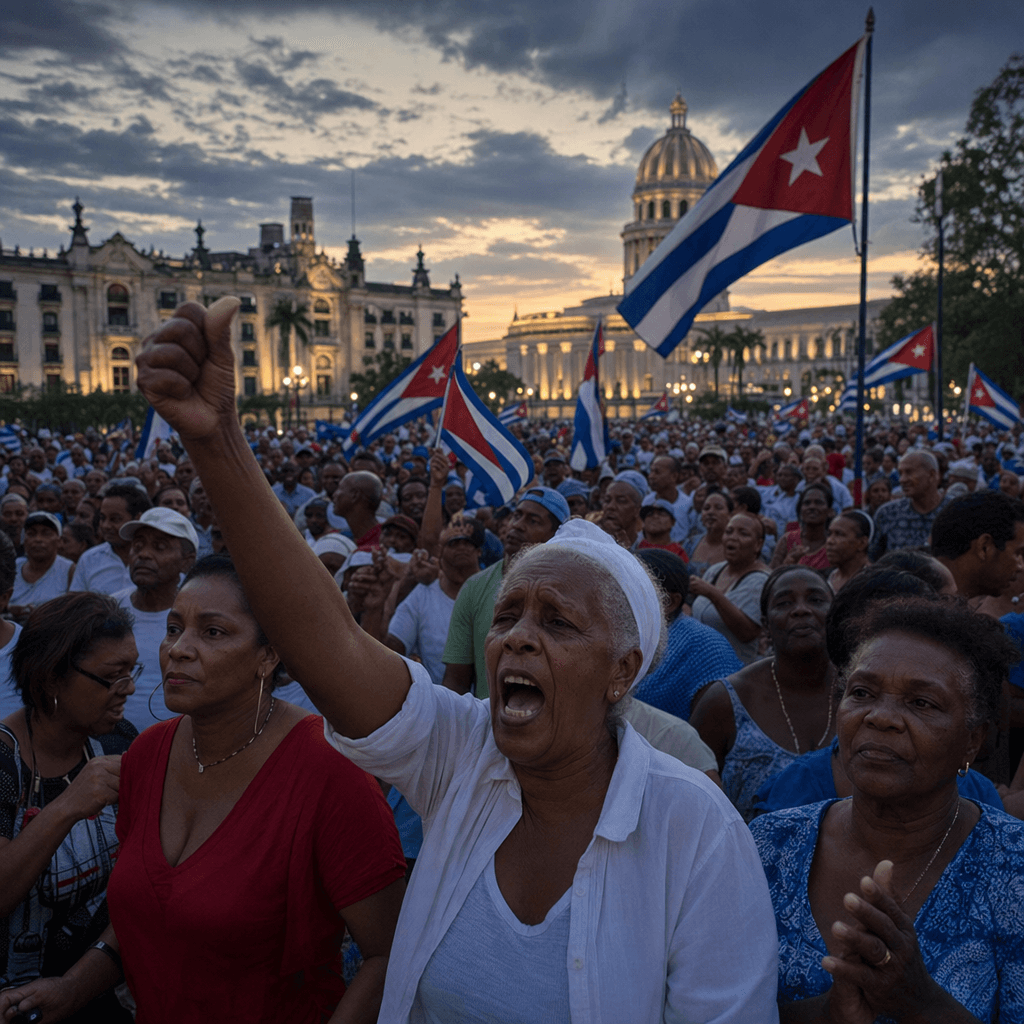
Havana Rallies for Raúl Castro After U.S. Indictment
Thousands marched outside the U.S. embassy as Cuba turned a 1996 killings case into a nationalist show of defiance and regime cohesion.
Havana is using the indictment to rally its base. The Cuban government staged a pro-Raúl Castro demonstration outside the U.S. embassy in Havana after Washington unsealed criminal charges against the 94-year-old former leader over the 1996 shootdown of two civilian planes, with crowds chanting “Long Live Raúl” and waving flags, according to BBC News. The indictment accuses Castro of conspiracy to kill U.S. nationals, murder and destruction of an aircraft, and the case was announced publicly in Miami by U.S. officials,
The Washington Post reported.
Havana is turning a legal case into a loyalty test
The point of the rally was not just to defend Raúl Castro. It was to signal that the revolutionary old guard still sets the terms of political loyalty in Cuba. By putting the crowd in front of the U.S. embassy, the Cuban state turned an American legal action into a domestic spectacle about sovereignty, not accountability. That is a familiar move in Havana: frame external pressure as evidence of imperial hostility, then use the backlash to tighten internal discipline.
That message matters because Raúl Castro is no ordinary retiree. BBC News notes he remains an influential figure on the island and is still treated as the surviving “leader of the Cuban Revolution.” His physical absence from the rally only underlined the symbolism: the state was defending the regime’s founding legitimacy, not just one man. For
Global Politics, this is the key power dynamic — the Cuban government gets to convert a foreign indictment into proof that it is still under siege.
Washington has legal leverage, but Havana has narrative leverage
The U.S. does have the stronger formal hand. The indictment, first outlined in Miami, charges Castro and five co-defendants over the 1996 Brothers to the Rescue shootdown that killed four people, including three U.S. citizens, BBC News reported. But legal leverage is not the same as operational leverage. Castro lives in Cuba, is nearly 95, and is unlikely to appear in a U.S. courtroom,
BBC News said. That means Washington can brand the case as justice, but Havana can still treat it as theater.
That gap benefits two actors for opposite reasons. In Miami, Cuban exile groups and the families of the dead finally have a federal indictment they can call accountability, The Washington Post reported. In Havana, Miguel Díaz-Canel gains an opening to present the U.S. as reviving coercion rather than law. He called the charges a “political manoeuvre, devoid of any legal foundation,”
BBC News reported, and that line is now the state’s script.
Al Jazeera described the move as a major escalation in pressure from the Trump administration against Cuba’s socialist government. That matters because once both sides harden into maximalist positions, the case stops being about the 1996 shootdown and starts becoming another obstacle to any quiet channel between Washington and Havana.
What to watch next
The next decision point is whether the U.S. treats the indictment as a one-off accountability move or the start of a broader Cuba pressure campaign. Watch Havana’s response over the next few days: if the government keeps staging rallies and tightening its anti-U.S. rhetoric, it is preparing the public for a deeper freeze in ties. If Washington follows with fresh sanctions or travel restrictions, the indictment will stop being symbolic and start shaping the bilateral agenda.
Discover more

Global Politics
US Seizes Iranian Ship, Tensions Surge
The US seizure of the Iranian ship Touska highlights a shift in control over the Strait of Hormuz, favoring Iran's strategic position.

Economics
Fed's Amex AML order puts correspondent banking on notice
Federal Reserve's Amex AML order requires board-level controls and a 90-day plan; OCC fined the bank $350 million over enterprise-wide deficiencies.

Conflict & Security
Guatemala: El Niño 2026–27 becomes regional security test
UNICEF: 25.8M children face El Niño risks in Latin America; Guatemala maps 188 municipalities for drought and food insecurity amid regional security test.

Economics
Fed's stress-test overhaul is a capital-smoothing exercise
Federal Reserve finalized stress-test overhaul: two-year averaging for bank capital buffers and public input, expected to halve volatility.